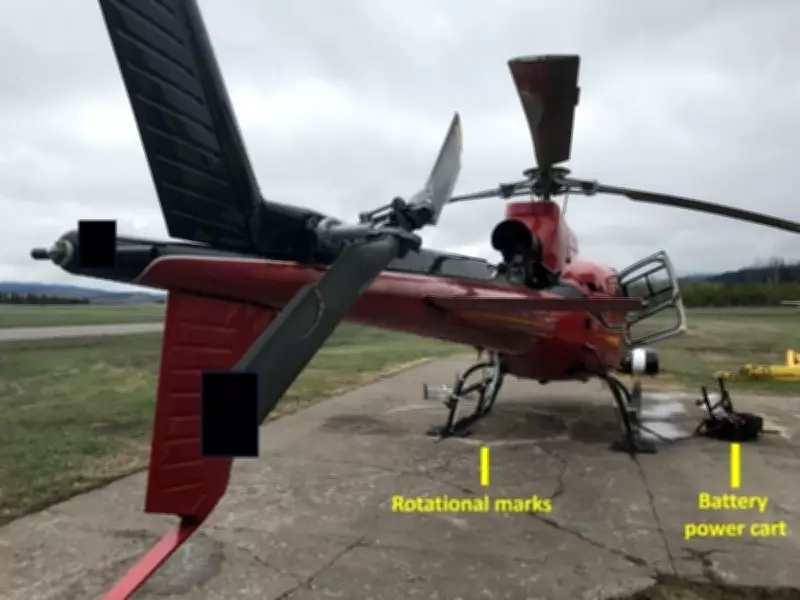
A helicopter pilot failed to complete key checklist steps during a maintenance ground run at a Smithers hangar and was caught off guard when the aircraft suddenly spun, killing one worker and injuring another, the Transportation Safety Board (TSB) says.
Incident Overview
The Airbus AS350 helicopter, operated by Mustang Helicopters, was undergoing maintenance at Smithers Airport on May 6, 2023. As part of the work, the helicopter had to be in 'flight idle,' requiring its rotor system to run at full RPM while staying on the ground. The crew—a pilot inside the cockpit and two aircraft maintenance engineers outside the helicopter—had completed two runs without incident. On the third run, the helicopter started an 'uncommanded rotation' to the right.
Pilot Actions and Distractions
The pilot had his head down at the time but quickly idled the engine and applied the overhead rotor brake when he realized the helicopter was rotating. The aircraft performed 1.5 complete rotations on the ground before stopping. The two engineers near the left cargo door tried to move away but were struck several times by the tail rotor. One engineer died; the other was seriously injured and flown to a hospital in Prince George, where he underwent multiple surgeries.

The TSB investigation found that the pilot's attention was not fully focused on the maintenance operations, which were viewed as routine and repetitive. The pilot shortened the checklist to expedite operations, leaving the right anti-torque pedal in a fully forward position—a step that went undetected for the third run. Additionally, the pilot's feet were 'lightly resting' at the bottom of the anti-torque pedals or not on them at all, making his response to the yaw force insufficient to prevent the rapid rotation.
Cellphone Distraction
The investigation also revealed that the pilot's attention was split between maintenance operations and his cellphone, which was connected to a Bluetooth earpiece in his left ear. He was listening to music and monitoring scores of a live game between operations. The TSB has previously identified risks associated with cellphone use in accidents, but no Canadian regulations prohibit cellphone use in the cockpit.
No Mechanical Defects
The investigation found no defects with the helicopter's tail rotor system or related components that would have affected normal functioning. The crash was attributed entirely to human factors.
Post-Incident Changes
After the incident, Mustang Helicopters changed its maintenance procedures to require the aircraft maintenance engineer to be inside the helicopter during ground run operations. The company also purchased wireless communication systems for the pilot and engineer and implemented a new policy requiring stowage of personal electronic devices.