Ryan Wedding's Arrest Sparks Conflicting Narratives Between U.S. and Mexico
The arrest of former Canadian Olympic snowboarder Ryan Wedding in Mexico has ignited a firestorm of conflicting accounts, with U.S. and Mexican officials presenting dramatically different versions of events. The case has become mired in political intrigue, allegations of fake AI-generated photographs, and competing narratives about how one of America's most wanted fugitives came into custody.
Dueling Official Accounts Create Confusion
According to FBI Director Kash Patel, Wedding's apprehension represented a high-risk operation executed with precision by elite forces. Speaking to reporters after Wedding was paraded in handcuffs from a U.S. government jet outside Los Angeles, Patel praised the FBI's Hostage Rescue Team for their work alongside Mexican partners. "This was a zero-margin, high-risk operation," Patel declared on Friday, describing an operation that conjured images of a dramatic raid.
Meanwhile, Mexican officials presented a completely different story, claiming that Wedding had voluntarily surrendered at the U.S. embassy in Mexico City. This conflicting narrative has created significant confusion about what actually transpired during the arrest of the former Olympian turned alleged drug kingpin.

Legal Team Challenges Official Version
Wedding's legal representatives have entered the fray with their own perspective, directly challenging the Mexican government's account. "He was arrested. And so any spin that the government of Mexico is putting on this, that he surrendered, is inaccurate," stated Wedding's lawyer, adding another layer to the already complex story.
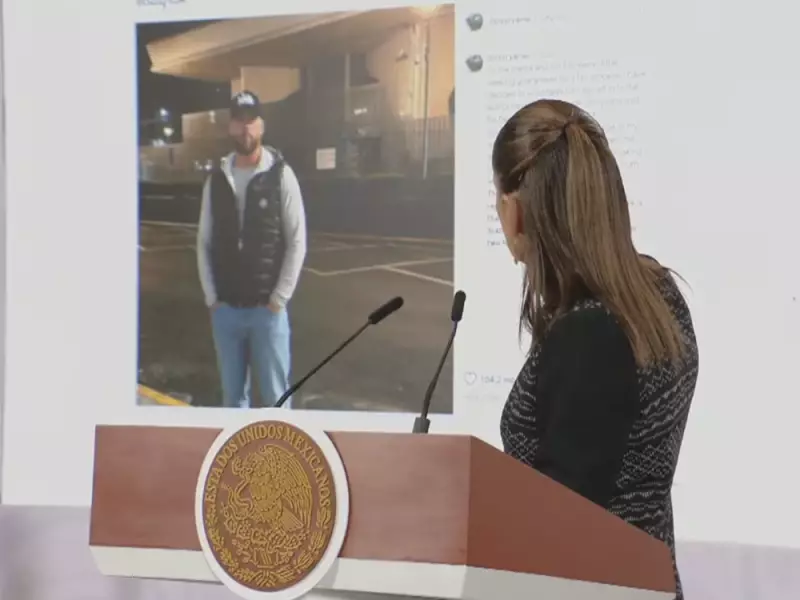
The situation grew even more bizarre when Mexican President Claudia Sheinbaum presented what appears to be an AI-generated image of Ryan Wedding during a news conference in Mexico City on Monday. This development has raised questions about the authenticity of evidence being presented to the public and media.
Background of the High-Profile Case
Ryan Wedding, who competed for Canada in snowboarding at the 2002 Winter Olympics, found himself in the global spotlight in 2024 following explosive allegations from the U.S. Department of Justice. American authorities accused him of being a major transnational cocaine kingpin operating from Mexico while allegedly protecting his criminal enterprise through violent means.
The case escalated further in 2025 with additional indictments naming Wedding as a top-tier threat who allegedly interfered with the federal investigation against him. Prosecutors claim he orchestrated a transnational hit that killed the FBI's star confidential witness in Colombia, adding murder charges to the already serious drug trafficking allegations.
International Manhunt Comes to Dramatic Conclusion
With a US$15-million bounty on his head and dozens of his alleged co-conspirators already arrested across Canada, Mexico, and the United States, Wedding's capture represents a significant development in an international investigation that has spanned multiple countries and jurisdictions.
Despite the dramatic conclusion to the manhunt, key questions remain unanswered:
- Did Wedding surrender voluntarily or was he captured in a high-risk operation?
- Why are U.S. and Mexican officials presenting conflicting narratives?
- What explains the use of potentially AI-generated images in official communications?
- How will these conflicting accounts affect the legal proceedings against Wedding?
The lack of consensus among the three parties who should know what happened—the U.S. government, Mexico's government, and Wedding himself—has created a vacuum filled with speculation, political posturing, and unanswered questions about one of the most significant international arrests in recent memory.