Canadian Police Agencies Defy Federal Gun Buyback Program in Unprecedented Show of Resistance
In an extraordinary display of collective non-compliance, a growing number of Canadian police agencies and provincial governments are openly refusing to participate in the federal government's long-awaited gun buyback initiative. This represents one of the most significant instances of law enforcement agencies across the country collectively choosing to ignore a federal mandate in recent Canadian history.
Territorial and Provincial Governments Join the Resistance
The federal Assault-Style Firearm Compensation Program, which officially launched on January 19, 2026, has encountered substantial opposition from multiple levels of government. Over the recent weekend, both Yukon and the Northwest Territories confirmed they would have nothing to do with the federal program designed to remove what the government terms "assault-style" firearms from private ownership.
These territories now join four provincial governments—Ontario, Alberta, Saskatchewan, and Manitoba—in their refusal to cooperate with the federal initiative. The coordinated resistance creates a significant implementation challenge for the Liberal government's flagship firearms policy.

Police Departments Voice Their Opposition
The opposition extends far beyond government offices to the front lines of law enforcement. Police departments and police unions across Canada are increasingly vocal about their unwillingness to allocate resources to the buyback program.
The Durham Regional Police Service and its governing board have publicly announced they will not participate in the program at this time, citing "significant gaps" in the federal initiative. Similarly, the Toronto Police Association issued a statement on January 20 declaring that it makes "no sense" to allocate limited resources toward what they characterize as a "misguided attempt at public safety."
Robert Bruce, Chief of the Saint John Police and head of the New Brunswick Chiefs of Police Association, delivered perhaps the most direct message to legal gun owners, stating plainly that police agencies in his province "won't be looking for you" if you choose not to comply with the buyback program.
A Growing Wave of Non-Participation
The past week has witnessed what can only be described as a cascade of Canadian police departments issuing terse press releases announcing their non-participation in the federal firearms initiative. The Brantford Police Service joined this growing list on January 26, stating that their "operational focus remains" elsewhere and they will not be facilitating firearm collection appointments.
This coordinated resistance creates an unprecedented situation for the federal government, which now faces the challenge of implementing a national program without the cooperation of numerous provincial, territorial, and municipal law enforcement agencies. The program's effectiveness and reach are now in serious question as more jurisdictions declare their intention to ignore the federal mandate.
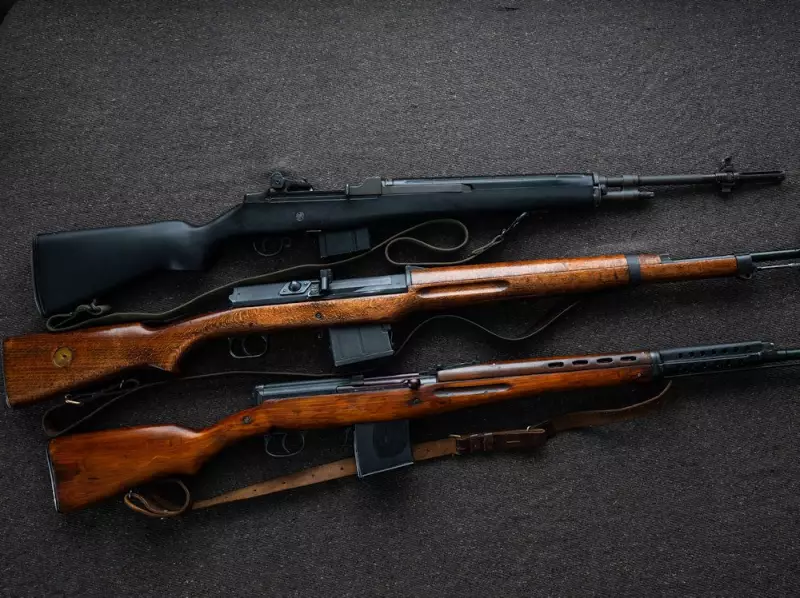
The firearms affected by this ban include various models that have been part of Canadian gun culture for decades, such as the M1 carbine, Swedish AG42, and Russian SVT rifle—firearms that many collectors and sports shooters have owned legally for years. The growing resistance suggests that the federal government may need to reconsider its approach to firearms policy implementation or face the reality of a program that exists largely on paper rather than in practice across much of the country.