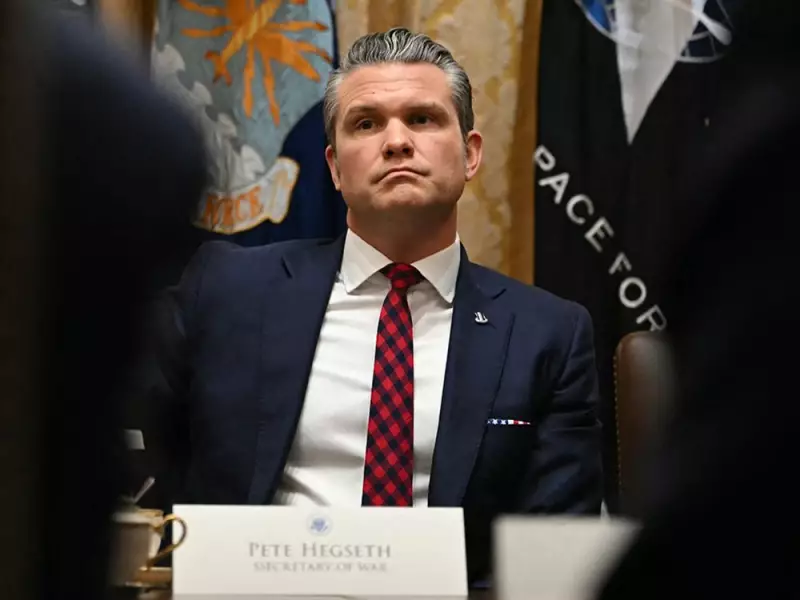
A damning report from the Pentagon's internal watchdog has concluded that U.S. Defense Secretary Pete Hegseth risked endangering American troops and the mission against Houthi rebels in Yemen by using the encrypted Signal messaging app to discuss attack plans. The findings, delivered to a Senate committee, mark a significant development in a security fiasco that first came to light earlier this year.
Violation of Security Protocols
The acting Pentagon inspector general's classified report, described by a person familiar with its contents, determined that Hegseth violated government policy by using his personal phone and the Signal app to transmit information marked as "Secret." The person requested anonymity to discuss the private findings. According to the report, Hegseth's actions potentially compromised operational security for U.S. forces engaged in counter-Houthi operations.
In his defense, Hegseth asserted he had the authority to declassify any material shared in the chat—a claim the inspector general rejected. The Defense Secretary maintained he only sent general updates that did not put anyone at risk. Notably, Hegseth refused to sit for an interview with investigators and provided only a handful of the messages he sent, severely limiting the scope of their inquiry.

The Atlantic Revelation and Fallout
The scandal erupted after The Atlantic magazine revealed that its editor-in-chief, Jeffrey Goldberg, had been accidentally added to the sensitive Signal group chat. The chat included top officials discussing precise plans for strikes against Houthi terrorists in Yemen, including attack timings and specific weapons platforms.
It was then-National Security Adviser Mike Waltz who erroneously added Goldberg to the group. However, the watchdog's report focuses on Hegseth as the official who transmitted the classified attack plans. Waltz was later removed from his national security role and appointed U.S. Ambassador to the United Nations. Despite the controversy, Hegseth has retained the support of President Donald Trump.
Pentagon spokesman Sean Parnell issued a statement claiming the report proved no classified information was shared and called it a "TOTAL exoneration" of the Defense Secretary. "This matter is resolved, and the case is closed," Parnell said.
Ongoing Scrutiny and Partisan Claims
The person familiar with the report said Hegseth criticized the investigation as a partisan attack. With the secretary providing limited cooperation, the inspector general was forced to rely heavily on screenshots of the chat published by The Atlantic to conduct the review.
This incident is not the only controversy dogging Hegseth. He has faced recent scrutiny over his role in a controversial September strike in the Caribbean Sea, where a second attack was ordered on survivors of an alleged drug-trafficking vessel. At a Cabinet meeting, Hegseth said he was not watching when a top admiral ordered the follow-up strike, attributing confusion around the event to "the fog of war." He later lashed out at questioning reporters, accusing them of nitpicking from their "air conditioned offices."
The Pentagon watchdog's report underscores persistent concerns about the use of non-secure, personal communication devices for discussing matters of national security, even as officials involved offer starkly contrasting interpretations of the events and their consequences.