Understanding NORAD: The Security Agreement That Permits U.S. Fighter Jets in Canadian Airspace
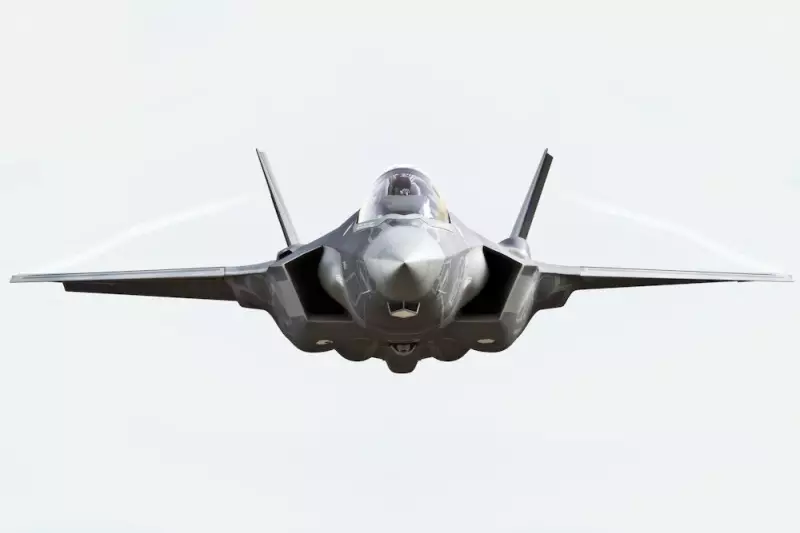
U.S. Ambassador to Canada Pete Hoekstra recently issued a stark warning that has reverberated through diplomatic and defense circles. He stated that if Canada fails to proceed with its promised purchase of 88 F-35 fighter jets, the United States would be compelled to acquire additional F-35s for its own air force and increase patrols into Canadian airspace to counter approaching threats. This declaration highlights the critical interdependence within the North American Aerospace Defense Command (NORAD), the longstanding military partnership between Canada and the United States.
The NORAD Partnership and Its Core Missions
NORAD represents a bi-national agreement that has been operational for over 67 years, dedicated to ensuring continental air security. According to Andrea Charron, director of the Centre for Defence and Security Studies and a political science professor at the University of Manitoba, NORAD executes three primary missions:
- Aerospace warning: Detecting and alerting about air threats including ballistic missiles, cruise missiles, drones, and aircraft like Russian bombers.
- Maritime warning: Monitoring maritime approaches for potential security risks.
- Aerospace defense: Implementing measures to deter or defeat identified air threats.
Retired Major-General Scott Clancy, former director of operations for NORAD in Colorado Springs, emphasizes that this framework guarantees coordinated air security responses across North America.

Operational Mechanics and Recent Examples
The partnership operates on a proximity principle: when a threat is detected, NORAD can scramble armed jets—whether Canadian or American, depending on which is closer—to intercept. A notable instance occurred in 2023 when a Chinese surveillance balloon drifted across Alaska, Western Canada, and the continental United States. The U.S. Air Force ultimately shot it down off the coast of South Carolina, demonstrating NORAD's response protocols in action.
Charron explains the standard procedure: "The first thing you do is let them know that we see you. And then sometimes we will scramble the jets and try and contact them by radio, especially if this is a civilian aircraft in a weird spot."
Evolving Threats and Strategic Implications
Contemporary adversaries such as Russia and China possess advanced technologies capable of targeting any location in North America. Charron's analysis details an increased threat complexity that includes:
- Advanced long-range cruise missiles
- Various uncrewed aerial systems
- Hypersonic weapons
- Intercontinental and submarine-launched ballistic missiles
- Potential fractional orbital bombardment systems
These weapons can reach North America within minutes from land, air, sea, or underwater launch sites, and many can be equipped with conventional or nuclear warheads. This evolving landscape underscores why Ambassador Hoekstra's warning carries significant weight—Canada's commitment to modernizing its fleet with F-35s is viewed as essential for maintaining effective NORAD operations and balanced burden-sharing.
The ongoing dialogue between military experts and policymakers continues to examine how NORAD adapts to these challenges while preserving the collaborative defense framework that has protected North American airspace for nearly seven decades.