Nuclear Arms Control Era Ends as New Start Treaty Expires This Week
The final legal framework limiting deployed nuclear weapons between the United States and Russia is set to expire this Thursday, marking a significant turning point in global security arrangements. The New Start treaty, which has served as the last remaining arms control agreement between the world's two largest nuclear powers, will terminate without immediate prospects for renewal or replacement.
The End of an Era in Nuclear Diplomacy
For more than half a century, Moscow and Washington have engaged in various attempts to limit their respective nuclear arsenals, despite persistent levels of mistrust between the two nations. These efforts spanned multiple administrations, beginning with Richard Nixon and Leonid Brezhnev in 1972 and continuing through Ronald Reagan and Mikhail Gorbachev's landmark 1985 discussions at a Geneva lakeside villa.
The original Start I treaty, signed in 1991 as the Soviet Union collapsed, established the first substantial limitations on strategic nuclear weapons and created an inspection system that would serve as a model for post-Cold War arms control agreements. Following a brief period without formal limits, the New Start treaty was signed in 2010 and extended in 2021, capping each country's deployed nuclear warheads at 1,550—a number experts note is more than sufficient to cause catastrophic global destruction.

Dim Prospects for Future Agreements
James Acton, co-director of the nuclear policy programme at the Carnegie Endowment for International Peace, expressed grave concerns about the current situation. "I genuinely believe we are now at the threshold of a new arms race," Acton stated. "I don't think in my lifetime there is going to be another treaty limiting numbers."
Discussions about extending or replacing the New Start treaty collapsed following Russian President Vladimir Putin's decision to order the full-scale invasion of Ukraine in 2022. Putin subsequently suspended Russia's participation in the treaty a year later and suggested that Moscow might resume nuclear testing, further complicating diplomatic efforts.
Political Responses and Future Directions
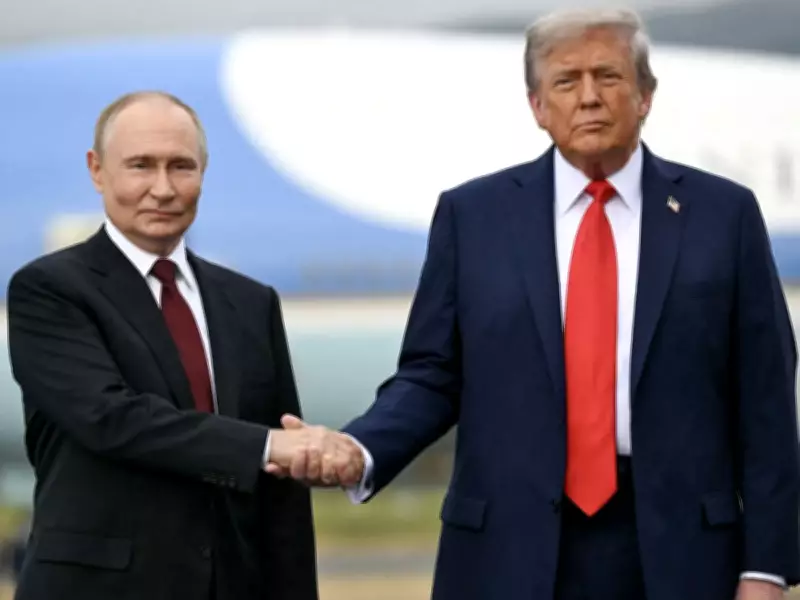
Russian President Vladimir Putin has proposed that both nations could voluntarily continue adhering to current limits after the treaty's expiration. U.S. President Donald Trump, who has described Putin's suggestion as a "good idea," has not yet provided a formal response but has indicated he would prefer "a new agreement that's much better" involving both Russia and China.
A White House official commented on the situation, noting that "President Trump has spoken repeatedly of addressing the threat nuclear weapons pose to the world and indicated that he would like to keep limits on nuclear weapons and involve China in arms control talks."
Last year, President Trump directed the Pentagon to restart nuclear testing "on an equal basis" with Russia and China, though it remains unclear whether this referred to explosive nuclear tests or testing of weapons capable of delivering atomic devices.
Implications for Global Security
The expiration of the New Start treaty potentially opens a new chapter in great-power atomic brinkmanship, with experts warning that the absence of formal arms control mechanisms could lead to increased nuclear proliferation and heightened international tensions. The treaty's termination represents not just the end of a specific agreement but potentially the conclusion of an entire era of nuclear diplomacy that has helped maintain strategic stability between nuclear powers for decades.
As the Thursday deadline approaches, the international community watches closely to see whether either nation will take unilateral steps to maintain limitations or whether the world will indeed enter a period without formal nuclear arms control agreements for the first time in generations.