NATO Leader Calls for Accelerated Allied Action on Arctic Defense Post-Trump Framework
In an exclusive interview with Reuters, NATO Secretary-General Mark Rutte has issued a clarion call for member nations to significantly and swiftly ramp up their security commitments in the increasingly strategic Arctic region. This urgent appeal comes directly on the heels of former U.S. President Donald Trump's public announcement of a preliminary "framework" for a future deal concerning Greenland, a move that has sent geopolitical ripples across the North Atlantic alliance.
The Geopolitical Context: Trump's Greenland Gambit and Allied Reassurances
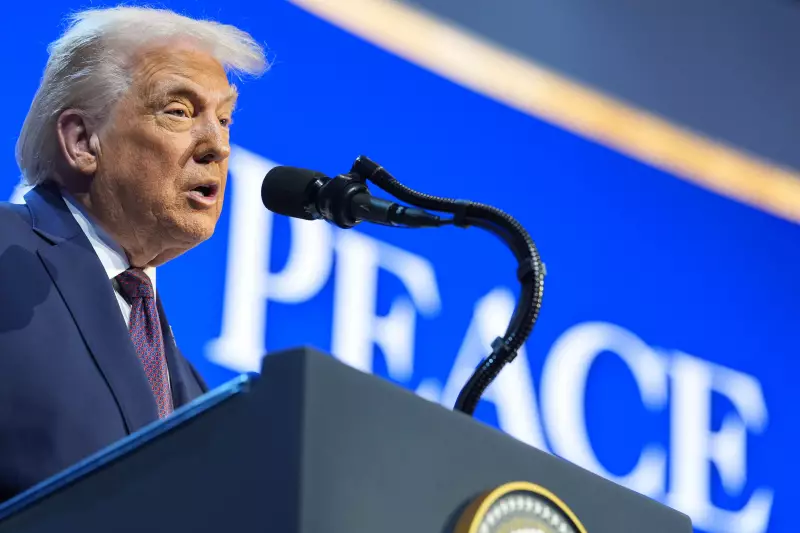
The political landscape was notably shaped by Trump's recent speech at the World Economic Forum in Davos, where he outlined his vision for a potential agreement with Denmark over Greenland. During his address, Trump explicitly stated he "won't take Greenland by force," attempting to assuage international concerns. However, he coupled this with pointed rhetoric directed at allies, including remarks that "Canada should be grateful" and that "Canada lives because of the United States," following critical comments about Prime Minister Carney's own WEF speech.
This framework announcement, which Trump claims will not involve placing new tariffs on European Union countries, has nonetheless catalyzed a profound reassessment of northern security dynamics. Rutte's comments underscore a NATO-wide recognition that the Arctic is no longer a peripheral zone of stability but a central theater for great-power competition, necessitating a robust and unified allied posture.

Rutte's Strategic Imperative: Speed and Solidarity in the High North
Secretary-General Rutte's message is unequivocal: allied nations must move with unprecedented speed to fortify their collective defense and surveillance capabilities in the Far North. The implied pact with the Trump administration appears to be a catalyst for this accelerated timeline. Rutte emphasized that European allies stand ready to defend the United States if attacked, a point of reassurance likely aimed at addressing Trump's historical critiques of NATO burden-sharing.
The strategic calculus involves countering potential adversarial advancements and securing vital sea lanes and resources. Rutte's call to action suggests that NATO's existing Arctic strategies require immediate reinforcement and tangible investment from all member states to ensure the alliance maintains a decisive advantage in this rapidly changing environment.
Broader Implications for Canada and Transatlantic Relations
The developments place Canada, with its vast Arctic sovereignty, in a particularly sensitive position. The interplay between Trump's framework, his comments on Canada, and Rutte's security directive creates a complex diplomatic and military puzzle for Ottawa. Analysts suggest that Canada must now navigate reinforcing its own northern capabilities while coordinating closely with NATO allies to meet the secretary-general's challenge, all within a potentially volatile political climate with its largest trading partner and ally.
This moment represents a critical inflection point for transatlantic security cooperation. Rutte's exclusive remarks signal that NATO's leadership views the Arctic not as a distant concern, but as an immediate priority where allied cohesion and rapid capability development are non-negotiable for maintaining regional stability and deterring conflict in the era of renewed great-power rivalry.