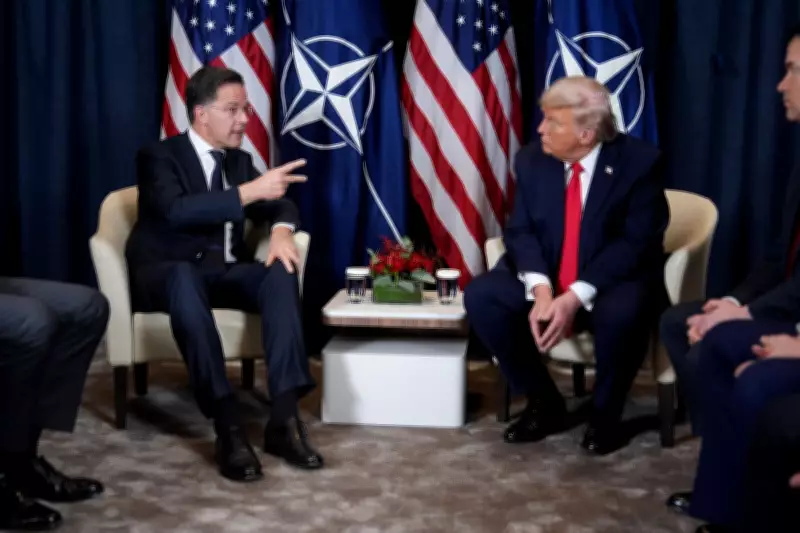
NATO's Strategic Deterrence Against Russia Faces Significant Challenges Amid Internal Discord
The North Atlantic Treaty Organization's foundational mission of deterring Russian military aggression is encountering substantial strain, according to recent analyses. A surge in trans-Atlantic infighting among key member states has critically undermined the alliance's unified front, casting doubt on its operational effectiveness in an increasingly volatile geopolitical landscape.
Escalating Internal Conflicts Threaten Alliance Cohesion
Observers note that persistent disagreements over defense spending, strategic priorities, and political alignments have eroded the solidarity once considered NATO's greatest strength. These divisions are not merely diplomatic spats; they have tangible consequences for military readiness and the credibility of collective security guarantees. The situation is exacerbated by shifting political dynamics within member nations, leading to inconsistent policy approaches that weaken coordinated deterrence efforts.
This internal discord creates opportunities for adversarial actors to exploit perceived weaknesses. Without a cohesive strategy, NATO's ability to project strength and resolve in the face of potential Russian provocations is significantly compromised. The alliance now faces the dual challenge of addressing external threats while managing its own internal fractures.

Historical Context and Current Implications
NATO was established as a bulwark against Soviet expansionism, relying on the principle that an attack on one member is an attack on all. However, the current era of trans-Atlantic tensions represents one of the most severe tests of this principle in decades. The erosion of trust and shared purpose among allies could have long-lasting repercussions for European and global security architectures.
Military analysts emphasize that deterrence is not solely about troop numbers or weapon systems; it is fundamentally about perception and political will. When allies publicly dispute core strategies, it signals vulnerability to potential aggressors. This perceptual shift may encourage riskier behavior by state actors seeking to challenge the international order.
Potential Pathways Forward for the Alliance
Addressing these challenges requires concerted diplomatic efforts and a reaffirmation of shared security commitments. Potential measures include:
- Enhanced dialogue mechanisms to resolve disputes before they escalate publicly.
- Joint military exercises that reinforce interoperability and mutual trust.
- Clear, consistent messaging to demonstrate unwavering alliance unity to external observers.
- Strategic reviews to align defense postures with evolving threat assessments.
The coming months will be critical for NATO leadership to bridge divides and restore confidence in the alliance's deterrent capabilities. Failure to do so could precipitate a more fragmented and less secure trans-Atlantic security environment, with implications extending far beyond the immediate region.