NATO's Arctic Military Exercises Target Russian Submarines and Signal Defense Commitment to Trump
Each February, NATO allies converge on Norway's western coast for intensive anti-submarine warfare training. While these annual drills have long focused on countering Russian naval threats, this year's exercise carried an additional strategic message aimed directly at former U.S. President Donald Trump.
Dual Objectives in Frigid Waters
European naval commanders leading the "Arctic Dolphin" exercise emphasized their dual mission: protecting regional security while demonstrating tangible defense contributions to American interests. Commodore Kyrre Haugen, chief of Norway's naval fleet, explained that preventing threats from reaching "the main heart of the Euro-Atlantic area" serves both European security and U.S. homeland defense.
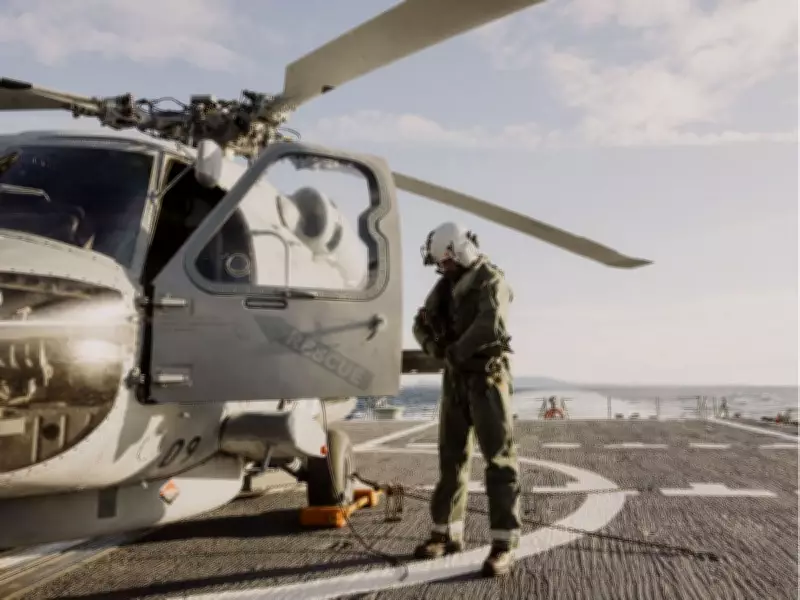
Approximately 1,000 military personnel from Spain, Norway, Poland, the Netherlands, the United Kingdom, and Germany participated in the challenging Arctic conditions. They deployed frigates, helicopters, and patrol aircraft to track two conventional submarines from Norway and Germany that simulated adversary vessels.

Technological Challenges in Arctic Warfare
The exercise revealed the unique difficulties of submarine detection in Arctic waters. NATO forces employed sophisticated sonar systems attached to warship hulls and deployed from helicopters, supplemented by P-8 surveillance aircraft using specialized sonobuoys. These technologies help determine submarine distance and speed, but Arctic conditions present exceptional obstacles.
"The challenge of the Arctic is that icy, fresh water from the North mixes with the warm, salt water from the Gulf Stream," explained military officials. This thermal layering creates hiding places for submarines, while moving ice generates noise that masks submarine sounds and creates navigation hazards for surface vessels.
Commodore Haugen noted that these conditions make the Arctic "a good place to hide if you're a nuclear submarine because it's hard to detect you."
Strategic Importance of the Arctic Region
The Norwegian Sea serves as the gateway to the increasingly important Arctic region, which hosts Russia's Northern Fleet, contains approximately one-quarter of global natural gas reserves, and features unique biodiversity becoming more accessible due to climate change. The area also includes Greenland, whose sovereignty has become a contentious issue within the transatlantic alliance following Trump's expressed interest in U.S. control.
Recent weeks have seen Trump questioning NATO's relevance and Europe's defense contributions, making this year's exercise particularly significant for demonstrating continued alliance cooperation. Naval commanders stressed that military exercises continue normally despite political rhetoric, with U.S. forces preparing for training in Norway and American aircraft carriers operating alongside British and French vessels in the region.
Demonstrating Transatlantic Solidarity
The Arctic Dolphin exercise represents more than routine military training—it serves as a tangible demonstration of European defense capabilities and commitment to shared security objectives. As geopolitical tensions evolve in the Arctic region, these annual drills reinforce NATO's collective defense posture while addressing concerns about alliance burden-sharing that have emerged in recent political discourse.
European naval leaders view such exercises as essential for maintaining operational readiness against Russian submarine threats while strengthening the transatlantic partnership that has underpinned European security for decades.