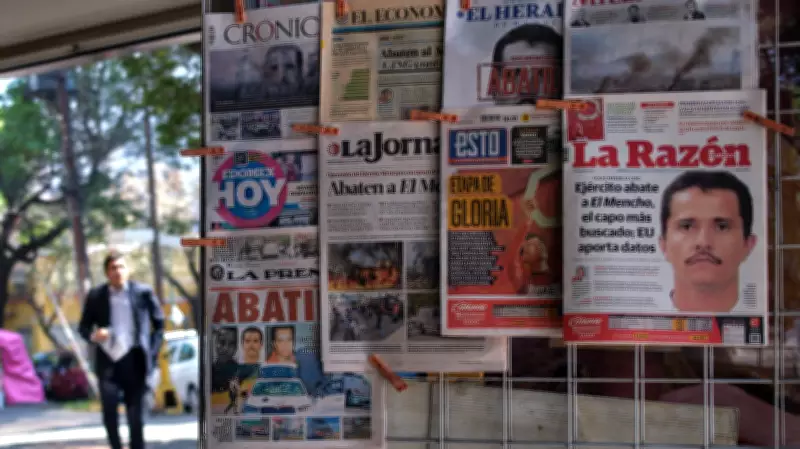
Mexican Army Kills Cartel Leader El Mencho in High-Stakes Raid
In a dramatic operation, Mexican special forces killed Nemesio Oseguera Cervantes, the notorious leader of the Jalisco New Generation Cartel (CJNG), known as El Mencho, on Sunday. The ambush, which occurred in the small town of Tapalpa in Jalisco state, was based on a tip about the drug lord's romantic liaisons, authorities revealed on Monday. This event triggered a wave of violence across Mexico, resulting in at least 62 fatalities, including 25 National Guard members and 34 suspected gang members.
Operation Details and Retaliatory Surge
According to Mexican Defense Minister Gen. Ricardo Trevilla Trejo, intelligence from a confidante of one of Oseguera's partners enabled officials to quickly plan the raid. During the operation, Oseguera's gunmen opened fire, leading to a confrontation in a wooded area where he was injured along with two bodyguards. The three were transported by helicopter to Mexico City but did not survive the journey. Trevilla, speaking at President Claudia Sheinbaum's daily press conference, choked up while offering condolences to the families of fallen officers.
The raid site yielded a significant arsenal, including rifles with grenade launchers, rocket launchers, and mortar shells. In response, cartel loyalists orchestrated a violent backlash, setting cars ablaze in 85 roadblocks across more than a dozen states. Security Minister Omar Garcia Harfuch reported at least 70 arrests in seven states, with the Attorney General's Office carrying out proceedings in 14 states, nearly half of the country.

Impact on Tourism and Economy
The violence had an immediate economic impact, particularly on tourism. Airlines canceled flights on Sunday, and shares in Mexican airline Volaris and airport operators GAP and ASUR dropped over 4% on Monday. While Aeromexico gradually resumed flights, Air Canada delayed resumptions to popular destinations like Puerto Vallarta and Guadalajara. Foreign tourists, such as Ryan Davis in Puerto Vallarta, described surreal scenes of dodging burned-out cars on the streets.
Beyond tourism, the unrest threatened key industries in Jalisco, including electronics manufacturing, agriculture for products like eggs and avocados, and tequila production. Kimberley Sperrfechter, an emerging markets economist at Capital Economics, noted that prolonged violence could disrupt these sectors and highlighted the operation as an effort by Mexico to appease the Trump administration ahead of the USMCA review.
Government Response and International Dynamics
President Sheinbaum announced that the situation was normalizing, with roadblocks under control, and deployed 2,000 troops to bolster security in Jalisco. She emphasized that while the U.S. provided intelligence to pinpoint Oseguera's location, Mexican forces spearheaded the operation without direct U.S. participation. However, U.S. President Donald Trump called on Mexico to intensify efforts against cartels, underscoring ongoing pressure.
Mexican authorities have long urged the U.S. to curb illegal firearms sales, with U.S. government data indicating that 70% of illegal arms traced in Mexico originate from the U.S. This dynamic complicates bilateral efforts to combat organized crime, as cartels continue to wield vast arsenals.
Public Fear and Future Concerns
Fabiola Cortes, a schoolteacher in Mexico City, expressed widespread fear, noting the absence of a clear successor to cartel leaders like Oseguera. We hope that, truly, our president does something for us, protects us, because honestly, fear is everywhere on the streets, she said. Security officials are monitoring for potential cartel restructuring that could unleash further violence, with specific surveillance on several CJNG leaders.
Oseguera's death marks a significant blow to the CJNG, a diversified criminal enterprise, but experts warn it may lead to more bloodshed in a country already grappling with years of killings and disappearances. The operation, while a victory for the government, highlights the persistent challenges in Mexico's fight against organized crime.