Israeli Military Alleges Hezbollah Link to Michigan Synagogue Attacker's Family
The Israeli military has made a significant claim regarding a recent incident in the United States, stating that the brother of a man involved in an attack on a synagogue in Michigan was a commander within the militant group Hezbollah. This assertion adds a complex international dimension to what was initially viewed as a domestic security matter, highlighting the interconnected nature of global extremist networks.
Details of the Allegation and Incident
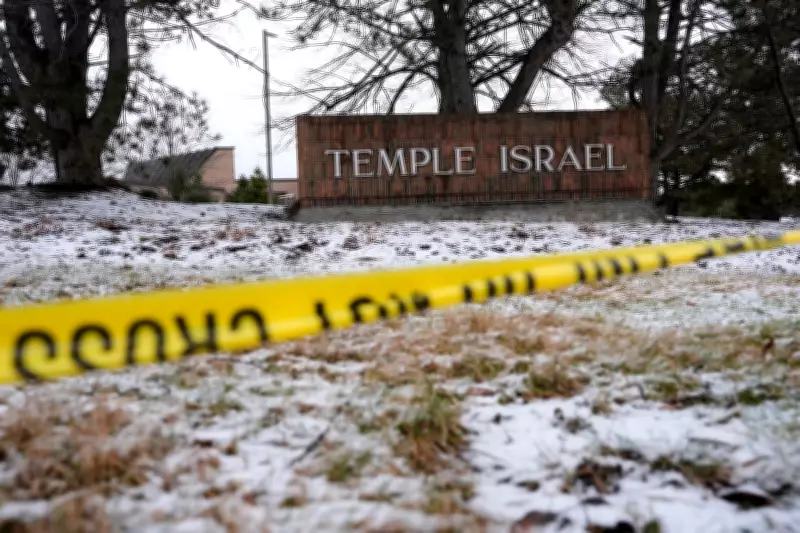
According to the Israeli military's statement, the individual who carried out the attack at the Temple Israel synagogue in West Bloomfield Township, Michigan, on March 13, 2026, had a sibling who held a leadership position in Hezbollah. The attack prompted a police response, with authorities securing the area as seen in images showing police tape outside the synagogue. While specific details about the attacker or his brother's identity were not fully disclosed by the Israeli military, the claim suggests potential ties between local acts of violence and foreign militant organizations.
This revelation comes at a time of heightened tensions in the Middle East, where Hezbollah, based in Lebanon, is known for its opposition to Israel and involvement in regional conflicts. The allegation raises questions about the extent of Hezbollah's influence beyond its traditional operational areas and its possible connections to individuals in Western countries.

Broader Context and Implications
The incident in Michigan is part of a larger pattern of security concerns globally. In related news, counter-demonstrators at a Toronto Al-Quds Day rally were charged with assault, and the Ontario government has called on federal authorities to legalize pepper spray for self-defense, reflecting ongoing debates over public safety measures. Additionally, an 81-year-old was charged with murder after a shooting in Port Alberni, B.C., underscoring the diverse nature of security challenges faced by communities.
From a political perspective, Canadian officials have been active in addressing defense and sovereignty issues. For instance, Canada and the Nordic Five have united to protect Arctic sovereignty through defense initiatives, and the federal public safety minister has emphasized an aggressive approach toward the Iranian regime in Canada. These developments highlight the multifaceted nature of national and international security efforts in response to evolving threats.
Analysis of Security and Policy Responses
The Israeli military's claim about the Hezbollah connection could influence policy discussions on counter-terrorism and intelligence-sharing between nations. Experts note that such allegations often prompt reviews of existing security protocols and cooperation frameworks to prevent similar incidents in the future. In Canada, this aligns with broader trends, such as the federal government's focus on Arctic defense and its stance on Iranian activities, which are part of a comprehensive strategy to safeguard national interests.
Moreover, the economic and social impacts of security issues are evident in other sectors. For example, the Iran war has introduced uncertainty into global energy markets, affecting oil prices and economic stability, as noted in business reports. In health and lifestyle domains, trends like 'looksmaxxing' raise concerns for boys and men, while Canadians have faced significant wage and productivity losses, according to the Fraser Institute. These interconnected issues demonstrate how security events can ripple across various aspects of society.
In conclusion, the Israeli military's allegation regarding the Hezbollah commander brother of the Michigan synagogue attacker underscores the ongoing challenges in combating extremism and ensuring public safety. As authorities continue to investigate these claims, it remains crucial for international cooperation and proactive measures to address the root causes of such threats and protect communities worldwide.