Intense Israeli Airstrikes Leave Beirut Residents Stunned and Devastated
An Associated Press reporter has provided a firsthand account of the intense Israeli attacks that have left the city of Beirut in a state of shock and devastation. The airstrikes, which occurred on Wednesday, April 8, 2026, targeted central Beirut, resulting in significant destruction and raising tensions in the region.
Scene of Destruction in Central Beirut
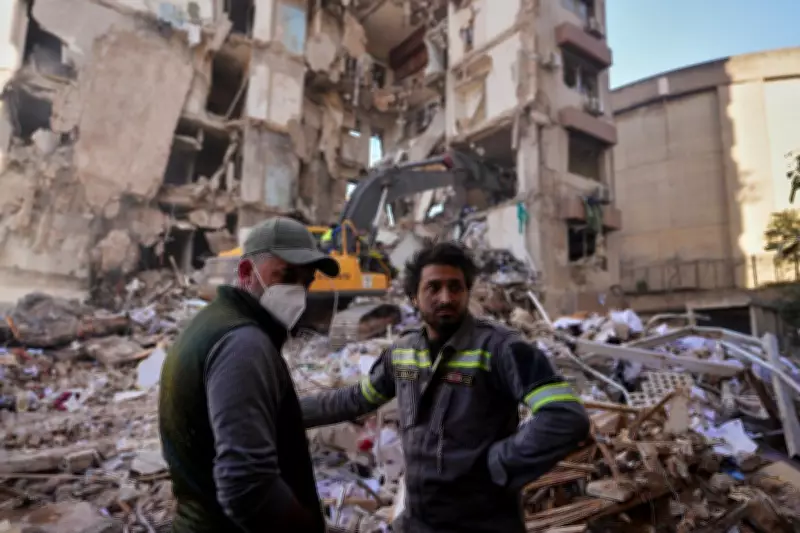
On Thursday, April 9, 2026, a Lebanese civil defense worker was seen standing with a resident at the site of a building that was completely destroyed by an Israeli airstrike the previous day. The image, captured by AP photographer Hassan Ammar, depicts the grim reality of the conflict, with rubble and debris scattered across the area. The resident, whose identity remains undisclosed, appeared visibly distressed as they surveyed the damage to their home and community.
The attacks have been described as particularly severe, with reports indicating that the intensity of the strikes caught many by surprise. Local authorities and emergency responders have been working tirelessly to assess the full extent of the damage and provide assistance to those affected. The targeting of central Beirut, a densely populated area, has raised concerns about civilian safety and the potential for further escalation in the ongoing conflict between Israel and Lebanon.

Broader Context of the Middle East Conflict
This incident occurs amidst a complex geopolitical landscape in the Middle East, where tensions have been simmering for years. The airstrikes in Beirut are part of a larger pattern of military engagements that have periodically flared up between Israel and various factions in Lebanon. Analysts suggest that such attacks could have far-reaching implications, potentially undermining ceasefire agreements and destabilizing the region further.
The timing of these strikes is particularly noteworthy, as they come at a moment when international efforts to broker peace and de-escalate conflicts in the area are ongoing. The destruction in Beirut serves as a stark reminder of the human cost of war, with families displaced and infrastructure severely damaged. Humanitarian organizations are calling for immediate aid and a cessation of hostilities to prevent further loss of life.
Impact on Local Communities and International Response
Residents of Beirut have expressed fear and uncertainty in the wake of the attacks, with many questioning the future stability of their city. The psychological impact on civilians, especially children and the elderly, cannot be overstated, as the sound of explosions and sight of destruction become a traumatic part of daily life.
Internationally, the attacks have drawn condemnation from various governments and human rights groups, who are urging for restraint and dialogue to resolve conflicts peacefully. The United Nations and other diplomatic entities are monitoring the situation closely, with calls for investigations into the targeting of civilian areas. As the world watches, the hope is for a swift resolution that prioritizes human security and regional peace.