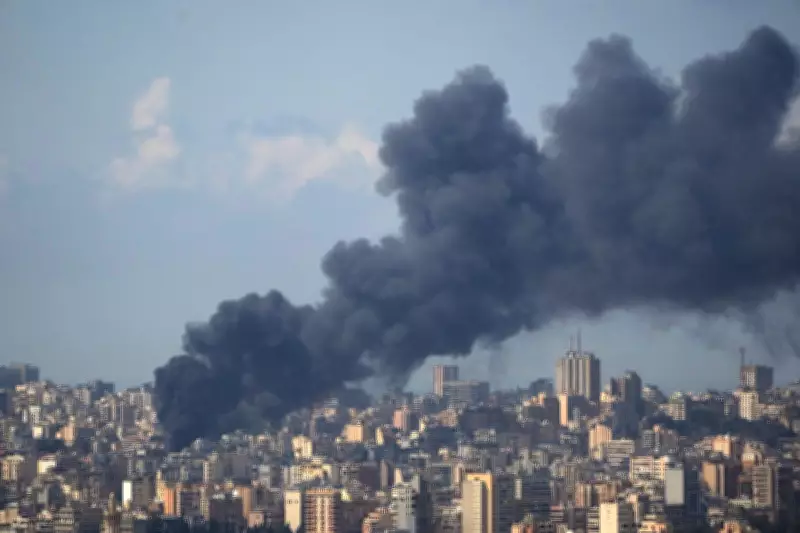
Israeli Military Conducts Deadly Strike in Central Beirut, Rejects Iran Ceasefire Terms
In a significant escalation of regional tensions, Israeli forces launched a targeted airstrike on central Beirut, resulting in multiple fatalities. The attack occurred shortly after Israel declared that a recently negotiated temporary ceasefire with Iran does not extend to Lebanese territory, directly challenging the terms of the fragile peace agreement.
Ceasefire Agreement Faces Immediate Test
The strike comes amid a complex geopolitical landscape where a two-week ceasefire between the United States and Iran was announced, contingent upon the reopening of the Strait of Hormuz. Former U.S. National Security Advisor John Bolton characterized the agreement as containing "a lot of ambiguity," while political commentators described it as "a big dramatic swing" following heightened threats from the Trump administration.
Conservative voices in the U.S. celebrated the ceasefire as a victory, with one commentator claiming "Iran begged for this ceasefire." However, the MAGA base had previously called for Trump's removal from office prior to the ceasefire decision, highlighting domestic political divisions surrounding foreign policy.

Regional Implications and Casualty Reports
The Beirut strike represents a direct challenge to the ceasefire framework and signals Israel's determination to pursue its security interests independently of U.S.-Iran negotiations. Casualty figures from the attack continue to be assessed, with initial reports indicating significant loss of life in the densely populated area.
This military action occurs against a backdrop of regional instability, including North Korea's recent missile tests toward the sea after ridiculing South Korea's diplomatic overtures. The Beirut strike further complicates an already volatile Middle East security environment where multiple state and non-state actors maintain competing interests.
Broader Context of International Conflicts
The incident highlights the limitations of bilateral ceasefire agreements in multipolar conflict zones. While the U.S.-Iran agreement focused specifically on Hormuz Strait access and nuclear tensions, Israel's action demonstrates how regional powers may pursue independent military objectives that undermine broader diplomatic efforts.
Security analysts note that such strikes risk triggering broader regional escalation, particularly given Lebanon's complex political landscape and the presence of multiple armed factions. The attack also raises questions about the enforcement mechanisms of contemporary ceasefire agreements and their applicability to third-party nations not directly involved in negotiations.
International Response and Future DevelopmentsThe international community is closely monitoring the situation, with particular attention to how Iran will respond to what it may perceive as a violation of the ceasefire spirit. Diplomatic channels are expected to be activated to prevent further escalation, though Israel's clear statement regarding the ceasefire's limited applicability suggests prepared justification for continued military operations in Lebanon.
This development underscores the persistent challenges in Middle East diplomacy, where bilateral agreements often fail to account for the region's interconnected conflicts and the independent security calculations of regional powers.