Iran's Revolutionary Guard Commander Issues Stark Warning to the United States
A high-ranking commander within Iran's Islamic Revolutionary Guard Corps (IRGC) has delivered a pointed and public warning to the United States, declaring that his force maintains its "finger on the trigger" amid escalating regional tensions. The statement underscores the volatile military posture and ongoing strategic friction between Tehran and Washington.
Heightened Rhetoric and Regional Posturing
The commander's remarks represent a significant escalation in rhetoric, directly challenging U.S. military presence and activities in the Middle East. This verbal confrontation occurs against a backdrop of longstanding animosity, with Iran frequently condemning American foreign policy and military deployments in the region.
The warning serves as a clear reminder of the IRGC's role as a powerful military and political entity within Iran, responsible for both domestic security and projecting influence abroad. Analysts suggest such statements are intended to demonstrate resolve and deter perceived American aggression.

Context of U.S. Military Presence
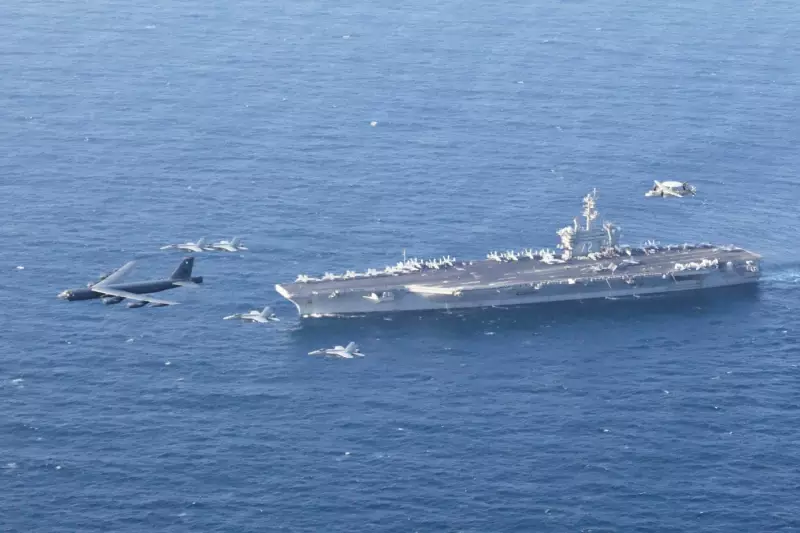
The threat is implicitly linked to the sustained U.S. naval and air force presence in strategic waterways like the Arabian Sea and the Persian Gulf. For decades, the United States has conducted joint exercises and maintained carrier strike groups in the area to ensure maritime security and uphold international navigation rights, actions that Iran often views as provocative.
Historical instances, such as joint exercises between assets like the USS Abraham Lincoln aircraft carrier and U.S. Air Force B-52H Stratofortress bombers, are cited by Iranian officials as examples of destabilizing American power projection near their borders.
Broader Geopolitical Implications
This latest warning from the IRGC commander injects further complexity into an already fraught international landscape. It highlights the persistent risk of miscalculation or accidental conflict that could draw regional actors and global powers into a broader confrontation.
The statement also arrives as international attention remains divided among numerous global crises, yet it forcefully reasserts the Middle East as a critical flashpoint where diplomatic channels remain strained and military readiness is consistently high.
Observers note that while such fiery rhetoric is not uncommon, it consistently raises the temperature of diplomatic relations and complicates efforts toward de-escalation or renewed dialogue on issues ranging from nuclear negotiations to regional security frameworks.