Iran's Supreme Leader Warns U.S. Attack Would Trigger Regional War Amid Escalating Tensions
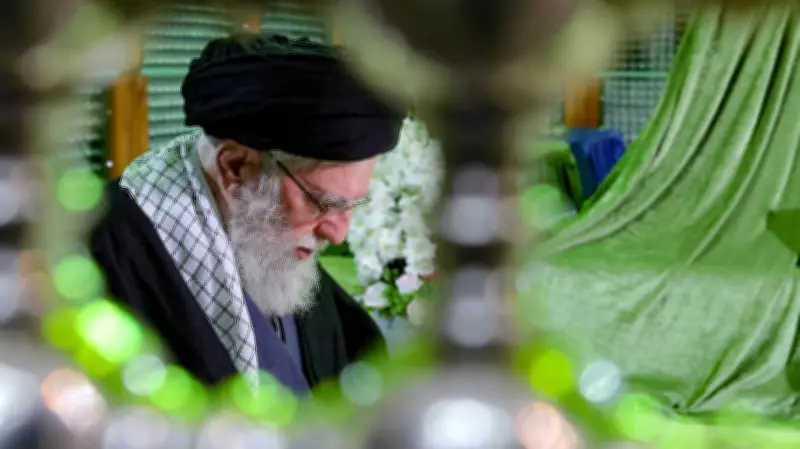
Iran's supreme leader issued a stark warning on Sunday that any military action by the United States would ignite a regional war in the Middle East, dramatically escalating tensions as American warships patrol nearby waters. The 86-year-old Ayatollah Ali Khamenei delivered his most direct threat yet while addressing a crowd at his Tehran compound during commemorations of Iran's 1979 Islamic Revolution.
Direct Military Threats and Strategic Positioning
The aircraft carrier USS Abraham Lincoln and associated American warships are currently positioned in the Arabian Sea, deployed by President Donald Trump following Tehran's bloody crackdown on nationwide protests that began in late December. Khamenei explicitly stated that "the Americans must be aware that if they wage a war this time, it will be a regional war."
While emphasizing that Iran does not plan to attack any country, the supreme leader warned that "if anyone shows greed and wants to attack or harass, the Iranian nation will deal a heavy blow to them." He accused the United States of being primarily interested in Iran's oil, natural gas, and mineral resources, suggesting American intentions to control the country.

Protest Crackdown and Escalating Rhetoric
Khamenei significantly hardened his position on the recent nationwide demonstrations, which initially focused on economic grievances but evolved into broader challenges to his leadership. He described the protests as "similar to a coup" that targeted critical government institutions, including police stations, Revolutionary Guard facilities, banks, and mosques.
According to the U.S.-based Human Rights Activists News Agency, which maintains sources within Iran:
- Over 49,500 people have been detained during the crackdown
- At least 6,713 people have been killed, mostly demonstrators
- Authorities have severed Iran's internet connection, complicating independent verification
Iran's government has reported a significantly lower death toll of 3,117, with 2,427 categorized as civilians and security forces. The discrepancy recalls historical patterns where Iran's theocracy has undercounted or failed to report fatalities during periods of unrest.
Military Exercises and International Designations
Iran had scheduled live-fire military drills for Sunday and Monday in the strategic Strait of Hormuz, through which approximately one-fifth of globally traded oil passes. The U.S. military's Central Command issued warnings against threatening American warships or disrupting commercial traffic during these exercises.
In a related development, Iran's parliament speaker Mohammad Bagher Qalibaf announced that the Islamic Republic now considers all European Union militaries to be terrorist groups. This reciprocal designation follows the EU's declaration of Iran's paramilitary Revolutionary Guard as a terrorist organization for its role in suppressing protests.
During a parliamentary session where lawmakers wore Revolutionary Guard uniforms in solidarity, Qalibaf criticized European nations for "blind obedience to the Americans" and claimed the designation would harm European interests. Lawmakers responded with chants of "Death to America!" and "Death to Israel!"
Trump's Position and Nuclear Concerns
President Trump has established two red lines that could trigger U.S. military action: the killing of peaceful protesters or mass executions of detained demonstrators. He has increasingly emphasized concerns about Iran's nuclear program, which became a focal point during negotiations preceding Israel's 12-day war with Iran in June.
The United States bombed three Iranian nuclear sites during that conflict, and recent activity at two locations suggests Iran may be attempting to obscure satellite surveillance as it works to salvage remaining infrastructure. When questioned about potential military action, Trump remained noncommittal, stating only that Iran is "seriously talking to us" about negotiations.

Trump emphasized that Iran should negotiate a satisfactory agreement to prevent nuclear weapons development but acknowledged uncertainty about whether such negotiations would succeed. The situation remains fluid as both nations navigate escalating rhetoric, military posturing, and complex geopolitical calculations in one of the world's most volatile regions.