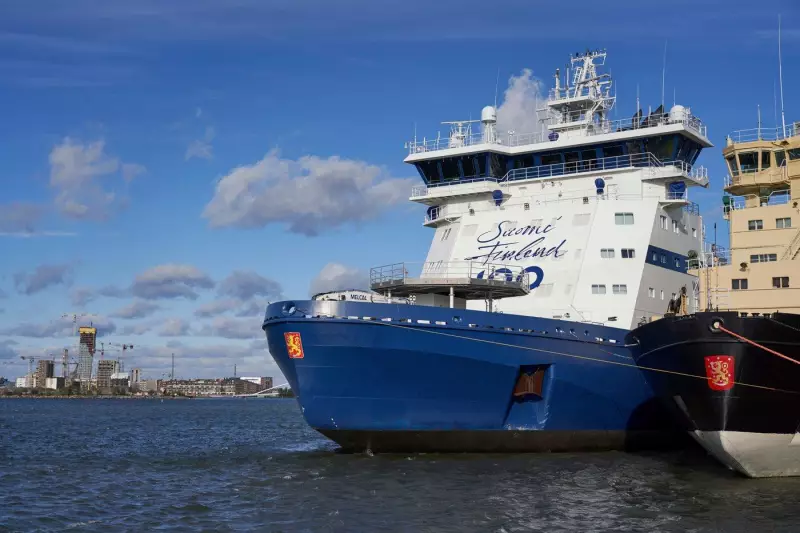
Icebreaker Technology: A Geopolitical Key to Greenland's Resources
The specialized vessels known as icebreakers, which are crucial for navigating the treacherous Arctic waters surrounding Greenland, are produced solely by countries that are either allies or adversaries of the United States. This technological monopoly underscores the significant geopolitical implications tied to accessing Greenland's vast natural resources and strategic locations.
The Strategic Importance of Icebreakers
Icebreakers serve as indispensable tools for operations in the Arctic region, enabling activities such as resource extraction, scientific research, and military patrols. Greenland, with its untapped reserves of minerals, oil, and gas, represents a focal point of international interest. The ability to operate in its ice-covered waters depends entirely on these robust ships, which can break through thick sea ice to create navigable passages.
Currently, the manufacturing of advanced icebreakers is dominated by a select group of nations. On one side, U.S. allies including Canada, Finland, and South Korea have developed sophisticated capabilities in this field. Conversely, geopolitical rivals such as Russia and China have also invested heavily in icebreaker technology, viewing it as a means to expand their influence in the Arctic.

Geopolitical Ramifications for Arctic Access
This concentration of icebreaker production among either U.S. allies or adversaries creates a complex dynamic for Arctic exploration and development. Countries seeking to engage in Greenland's economic opportunities must navigate dependencies on these external powers for essential maritime infrastructure. For instance, a nation without domestic icebreaker capabilities might need to lease vessels or form partnerships, potentially aligning its interests with those of the manufacturing country.
The situation raises questions about sovereignty and security in the Arctic. As climate change reduces ice cover, opening new shipping routes and resource prospects, the control over icebreaker technology becomes increasingly critical. It influences not only economic ventures but also military strategies, as these vessels can support naval operations in contested polar regions.
Future Outlook and Technological Developments
Looking ahead, advancements in icebreaker design, such as the integration of greener propulsion systems and enhanced ice-breaking efficiency, are likely to shape the geopolitical landscape further. Investments in domestic icebreaker fleets by Arctic nations could reduce reliance on foreign manufacturers, but the high costs and specialized expertise required present significant barriers.
In summary, icebreakers are more than just maritime tools; they are geopolitical instruments that unlock Greenland's potential. Their exclusive production by U.S. allies or adversaries highlights the intertwined nature of technology, resource access, and international relations in the Arctic, with lasting implications for global power dynamics.