Strategic Waterway Becomes Flashpoint in Escalating U.S.-Iran Conflict
As military operations between the United States and Iran continue into their third week, international attention has increasingly focused on a critical maritime chokepoint: the Strait of Hormuz. This narrow passage, spanning approximately 21 miles at its most constricted point, serves as the vital connection between the Persian Gulf and the Gulf of Oman. Bordered by Iran to the north and Oman to the south, the strait represents an indispensable conduit for global energy supplies.
Global Energy Supply Disrupted by Iranian Blockade
Following coordinated attacks by American and Israeli forces, Iran has effectively closed the Strait of Hormuz by threatening to target commercial vessels attempting transit. This aggressive move has triggered immediate consequences across international markets, driving oil prices upward and intensifying economic pressure on the United States and its allies. The Trump administration now faces complex challenges in navigating both the physical closure and its broader strategic implications.
The significance of this waterway cannot be overstated – approximately one-fifth of the world's oil supply and an equivalent proportion of global liquefied natural gas shipments typically traverse these waters. Major Asian economies including China, India, Japan, and South Korea rely heavily on these energy imports from Persian Gulf producers such as Kuwait, Qatar, and Iraq.

Iran's Tactical Advantages and Implementation of Threats
Iran possesses substantial strategic leverage over the strait due to its geographical proximity. Critical transit lanes pass within three to four miles of Iranian shores, enabling rapid deployment of drones, missiles, and naval assets. Senior Iranian military advisor Ebrahim Jabari explicitly declared on March 2 that "the strait is closed" and threatened that Revolutionary Guard forces would "set those ships ablaze" attempting passage.
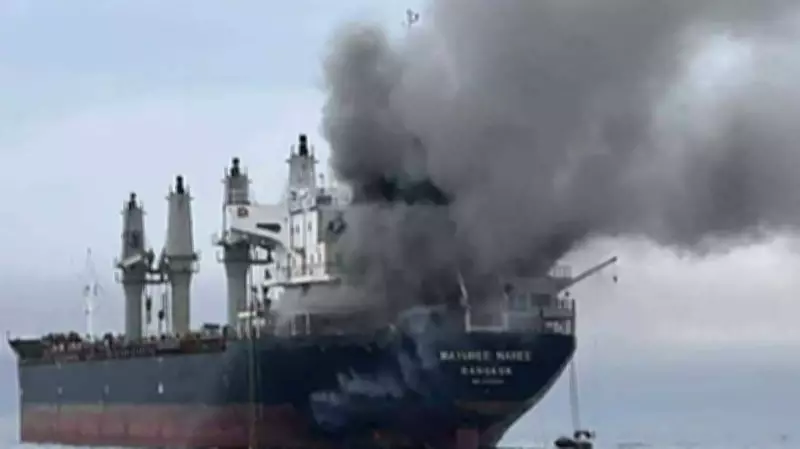
The Iranian military has demonstrated its willingness to enforce this blockade, claiming responsibility for multiple attacks on commercial vessels and reportedly deploying dozens of naval mines throughout the waterway. These actions have created severe safety concerns that have dramatically reduced shipping traffic from over 100 daily transits to merely a handful of vessels.
Economic and Military Consequences of the Closure
The blockade has created significant logistical disruptions, with approximately 400 oil tankers carrying 200 million barrels of petroleum currently stalled in the region according to CBS News reports. This massive bottleneck has strained global energy markets and raised concerns about potential shortages in importing nations.
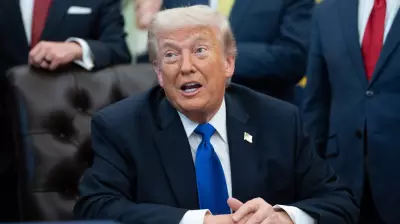
President Trump's administration is actively exploring strategies to neutralize Iranian threats and restore normal shipping operations. While American airstrikes have successfully targeted Iranian mine-laying vessels, military analysts note that comprehensive countermeasures remain challenging due to Iran's access to small, agile boats and its advantageous coastal positioning. The United States has appealed to international partners for naval support in reopening the strait, but responses have been notably restrained thus far.
Historical Context and Future Implications
While Iran has previously leveraged its control over the Strait of Hormuz during regional conflicts – most notably during the 1980s "Tanker War" with Iraq – experts characterize the current comprehensive closure as unprecedented. Tanker researcher Erik Broekhuizen emphasized this distinction in comments to NPR, noting that while Iran has threatened closure following previous incidents, the current implementation represents a significant escalation.
Internal warnings about this scenario reportedly preceded current hostilities. According to a Wall Street Journal investigation, General Dan Caine, President Trump's senior military advisor, had cautioned that Iran might retaliate against American attacks by shutting down the strategic waterway. White House press secretary Karoline Leavitt subsequently asserted that Pentagon planning for such an eventuality had been ongoing for decades and was incorporated into administration strategy well before the initiation of Operation Epic Fury.

As the standoff continues, international observers monitor potential diplomatic developments. Iranian Foreign Minister Abbas Araghchi recently indicated Tehran might permit non-American vessels to transit the strait following requests from "a number of countries," though final decisions would rest with Iranian military authorities. Meanwhile, President Trump has threatened additional strikes against Kharg Island, home to critical Iranian oil export infrastructure, potentially exacerbating existing market pressures if the strait remains closed.