In a stark escalation of tensions in the Middle East, Hezbollah has declared its preparedness for a protracted confrontation with Israel, while Israeli officials have issued severe warnings to Lebanon regarding the disarmament of the militant group. The situation intensified on Friday, March 13, 2026, with Israeli airstrikes targeting key infrastructure in Lebanon, including a vital bridge over the Litani River.
Hezbollah's Defiant Stance
Hezbollah's deputy leader, Naim Qassem, delivered a televised address emphasizing the group's readiness for a long-term conflict. "We have prepared ourselves for a long confrontation, and God willing, they (Israelis) will be surprised on the battlefield," Qassem stated. He characterized the ongoing hostilities as "an existential battle, not a limited or simple battle," underscoring the gravity of the situation from Hezbollah's perspective.
This declaration comes in the wake of Lebanon's involvement in the broader Middle East conflict, which began last week when Hezbollah launched attacks against Israel. These actions were reportedly in retaliation for the killing of Iranian supreme leader Ayatollah Ali Khamenei in strikes attributed to U.S. and Israeli forces.

Israel's Stern Warnings and Military Actions
Israeli Defense Minister Israel Katz issued a clear ultimatum to Lebanon, warning that the country would face "loss of territory—until it fulfills its central commitment of disarming Hezbollah." Katz further cautioned that Lebanon would pay an "increasing price in damage to Lebanese national infrastructure used by Hezbollah terrorists."
Israeli military operations on Friday included the destruction of the Tayr Filsay bridge over the Litani River, which Israel described as a "key crossing" for Hezbollah to move forces and equipment from northern to southern Lebanon. This marked the first acknowledged attack on Lebanese public infrastructure by Israel since the conflict's escalation. Additional strikes targeted roads in southern Lebanon, disrupting access from the north of the Litani River and the Bekaa valley, areas utilized by Hezbollah for weapon transport.
Humanitarian and Diplomatic Developments
The conflict has already resulted in significant humanitarian consequences. Israeli strikes on Friday killed eight people in the south Lebanese village of Miyeh w Miyeh near Sidon, according to Lebanon's health ministry. In response, UN Secretary-General Antonio Guterres, during a visit to Beirut, launched a $325 million humanitarian appeal to support Lebanon, which is grappling with the displacement of hundreds of thousands due to the war.
Guterres urged both sides to cease hostilities, stating, "My strong appeal to those parties, to Hezbollah and to Israel, is for a ceasefire to stop the war." Meanwhile, Lebanese President Joseph Aoun noted that he had offered to negotiate directly with Israel earlier in the week but had not received a response by Friday.
Broader Regional Implications
Israeli Prime Minister Benjamin Netanyahu reinforced the warnings to Lebanon, asserting that the Lebanese government is "playing with fire if you continue allowing Hezbollah to operate, in violation of your commitment to disarm it." The conflict underscores the deep-seated regional tensions, with Hezbollah's alignment with Iran adding layers of complexity to the geopolitical landscape.
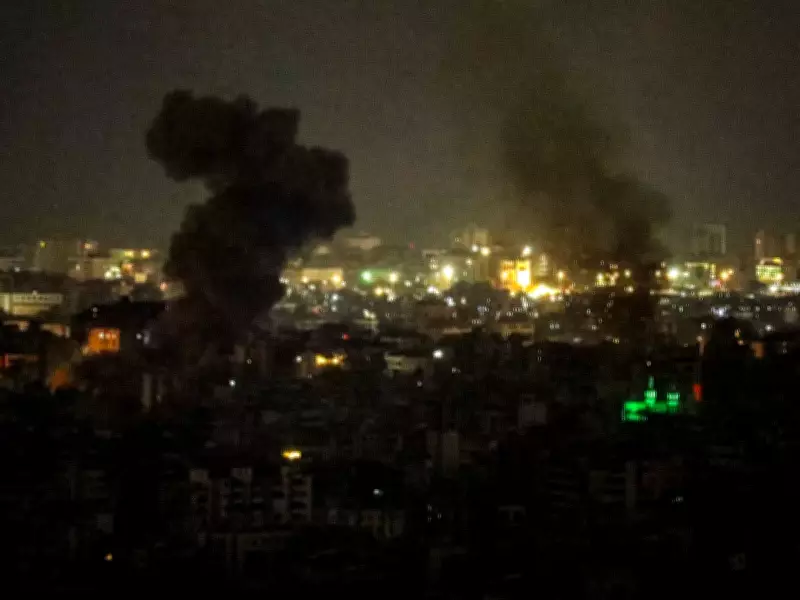
As smoke rose from the aftermath of airstrikes in Beirut's southern suburbs, the situation remains volatile. The international community watches closely, with calls for de-escalation growing amid fears of a prolonged and devastating conflict that could further destabilize the region.