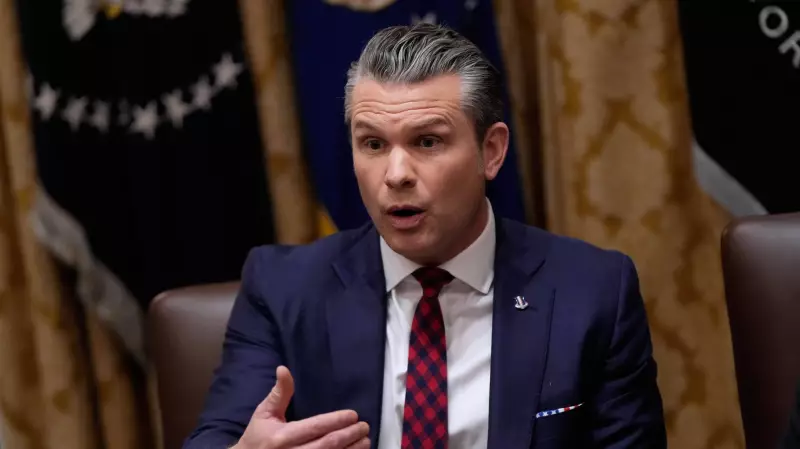
U.S. Defence Secretary Pete Hegseth, who narrowly won Senate confirmation earlier this year, is now at the centre of a political firestorm. Lawmakers are scrutinizing his leadership after a series of controversial incidents, including the use of encrypted messaging for official communications and a deadly military strike off the coast of Venezuela.
Mounting Scandals and Congressional Fury
Just three months into his tenure, Hegseth became embroiled in what's known as "Signalgate." A Pentagon inspector general's report found that he and other top officials used the Signal messaging app to discuss pending military strikes in Yemen. The report, delivered to lawmakers, concluded his actions posed a significant risk to personnel and mission security.
The scrutiny intensified dramatically after a September 2nd incident involving a U.S. special operations team. Reports indicate the team attacked survivors of an initial strike on an alleged drug-smuggling boat near Venezuela. Legal experts and some senators argue this follow-up strike may have violated the laws of armed conflict, prompting demands for Hegseth to release all videotapes of the event.

Senator Roger Wicker, the Republican chair of the Senate Armed Services Committee, announced special oversight, calling the charges "serious." Meanwhile, Democratic senators, including Chris Van Hollen of Maryland, have called for Hegseth's resignation, with Van Hollen stating the action amounted to "an extrajudicial killing" or war crime.
A "Warrior Culture" Clashes with Oversight
Since his nomination, Hegseth has promoted a radical shift in Pentagon culture. He vowed to instil a "warrior culture," even suggesting rebranding the Department of Defence as the Department of War. He has publicly criticized what he calls "stupid rules of engagement," advocating for "maximum lethality" and untying the hands of warfighters.
He defended the Venezuela strike by citing the "fog of war," claiming he saw no survivors before authorizing the second attack. Hegseth, a former Army National Guard infantry officer with deployments to Iraq and Afghanistan, has chided those questioning his decisions.
However, this approach has alarmed many in Congress. Senator Thom Tillis, a North Carolina Republican who reluctantly voted for Hegseth's confirmation, stated, "Somebody made a horrible decision. Somebody needs to be held accountable."
Political Support and an Uncertain Future
While President Donald Trump has largely stood by his defence secretary, bipartisan congressional investigations pose a significant threat. The decision by Wicker and House Armed Services Chair Mike Rogers, alongside top Democrats, to launch probes marks a rare assertion of congressional oversight over the administration.
Hegseth retains some strong allies. Vice President JD Vance, who cast a tie-breaking vote for confirmation, has defended him vigorously. Senator Eric Schmitt dismissed criticism as "nonsense" aimed at undermining Trump's policy focus.
Tensions have been simmering for months, exacerbated by Pentagon moves to restrict communications with Congress and slow information sharing on the Venezuela drug interdiction campaign. Hegseth's initial response to the strike report—a social media post of cartoon character Franklin the Turtle firing from a helicopter—further angered lawmakers who felt he was not taking the allegations seriously. Senate Democratic leader Chuck Schumer labelled him a "national embarrassment."
As the investigation proceeds, lawmakers will hear private testimony from Navy Vice Adm. Frank "Mitch" Bradley, who the White House says ordered the second strike in Venezuela. For Hegseth, this confluence of scandals represents the most defining—and potentially terminal—moment of his controversial career.