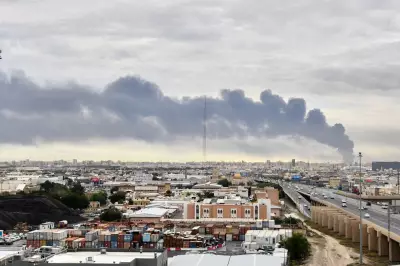
FAA Imposes Unprecedented 10-Day Flight Ban at El Paso International Airport
The Federal Aviation Administration has taken the extraordinary step of grounding all flights to and from El Paso International Airport in Texas for a period of ten days, citing what it describes as "special security concerns." The agency announced the restrictions on Wednesday, February 11, 2026, with a stark warning that the government "may use deadly force" against any aircraft violating the closed airspace if deemed "an imminent security threat."
Scope and Duration of the Airspace Closure
The flight restrictions are comprehensive, affecting all commercial, cargo, and general aviation operations at the El Paso facility. According to the FAA, the closure will remain in effect until February 20 at 11:30 p.m. Mountain Standard Time, covering a radius of approximately ten nautical miles from the airport. Notably, the agency specified that Mexican airspace is not included in this restriction. Additionally, flights are prohibited from the airspace over nearby Santa Teresa, New Mexico.
El Paso International Airport officials confirmed that the restriction was issued "on short notice," and they are currently awaiting further guidance from the FAA. In a statement released on Instagram, airport authorities advised travelers to contact their airlines directly for the most current flight status information.

Political and Community Reaction
The sudden and lengthy closure has sparked significant concern within the local community and among political representatives. Congresswoman Veronica Escobar, a Democrat whose district includes El Paso, has publicly urged the FAA to lift the restrictions, calling the ten-day shutdown "unprecedented." In a statement posted on social media platform X, Escobar emphasized that the closure is causing "significant concern within the community."
Escobar further revealed that no advance notice was provided to the city, the airport, or her office regarding the impending restrictions. She stated, "From what my office and I have been able to gather overnight and early this morning, there is no immediate threat to the community or surrounding areas." The congresswoman has formally requested that the FAA immediately rescind the temporary flight restrictions.
Speculation on Security Reasons
While the FAA has not elaborated on the specific "special security reasons" behind the closure, speculation has emerged regarding potential causes. Kyle Bailey, a former member of the FAA safety team, suggested to Fox News that the situation might involve "a national security event or a high-level VIP," noting the airport's proximity to the Fort Bliss Army base. Bailey found it particularly noteworthy that there are no corresponding flight restrictions on the Mexican side of the border.
"I think it's safe to say that it's something very big, either from a national security standpoint or perhaps testing something—equipment or something going into the air around the vicinity of those bases," Bailey added, highlighting the unusual nature of the prolonged airport shutdown.
Impact on a Major Transportation Hub
El Paso International Airport is a significant transportation hub for the region, having handled 3.49 million passengers in the first eleven months of 2025 alone. Major U.S. carriers operating at the airport include Southwest Airlines, Delta Air Lines, United Airlines, and American Airlines. The city of El Paso, with a population of approximately 680,000 residents, ranks as the 23rd largest city in the United States, underscoring the substantial disruption caused by the sudden flight ban.
The FAA's decision to implement such extensive restrictions without prior notification continues to raise questions about the nature of the security concerns and the potential long-term implications for air travel in the border region. As the situation develops, travelers and local authorities remain in a state of uncertainty, awaiting further clarification from federal aviation officials.