Prime Minister Confirms Ongoing F-35 Review Following Norad Commander's Critical Assessment
The Canadian government is continuing its comprehensive review of the F-35 fighter jet program despite recent comments from the Norad commander questioning the aircraft's critical importance to Canada's defense strategy. Prime Minister Justin Trudeau confirmed the ongoing assessment during a press briefing on March 31, 2026, emphasizing that no final decisions have been made regarding the controversial fighter jet acquisition.
Norad Commander's Controversial Remarks
The review process gained renewed attention after General Glen VanHerck, commander of the North American Aerospace Defense Command, publicly stated that the F-35 Lightning II fighter jets are "not critical" to Canada's defense capabilities. This surprising assessment from one of North America's top military officials has sparked intense debate within defense circles and prompted questions about the multi-billion dollar procurement program.
The prime minister responded cautiously to these remarks, telling reporters that "the review is ongoing, and we will make decisions based on what is best for Canada's national security and the men and women of our armed forces." He declined to speculate on whether General VanHerck's comments would influence the final decision, but acknowledged they would be considered as part of the broader evaluation process.

Background of the F-35 Procurement Debate
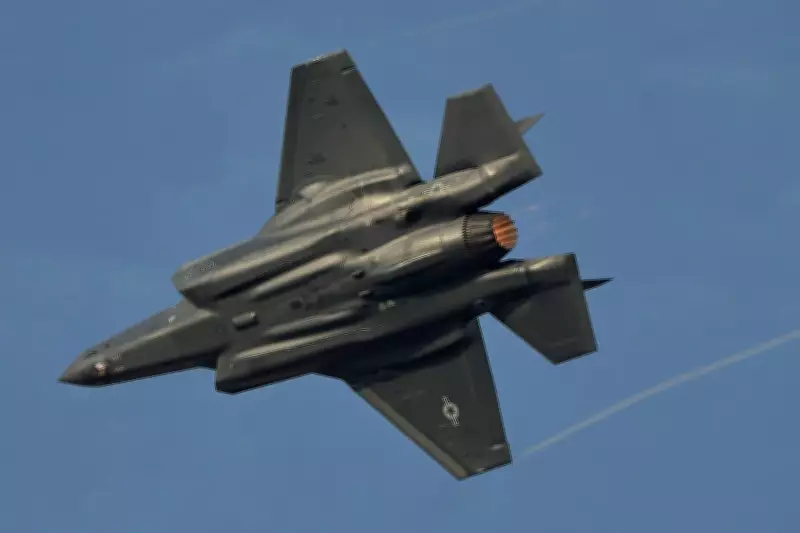
Canada's potential acquisition of F-35 fighter jets has been a contentious political issue for more than a decade. The stealth-capable fifth-generation aircraft, manufactured by Lockheed Martin, represents one of the most advanced fighter platforms in the world but comes with substantial costs and complex maintenance requirements.
The current review examines multiple factors including:
- Operational requirements for Canada's air defense
- Lifecycle costs and maintenance considerations
- Industrial benefits for Canadian aerospace companies
- Interoperability with allied forces, particularly the United States
- Technological capabilities compared to alternative aircraft
Defense analysts note that General VanHerck's comments are particularly significant because Norad represents the binational command responsible for aerospace warning and control for both the United States and Canada. His assessment that the F-35s are not critical to Canada's defense raises fundamental questions about the aircraft's strategic value within the North American security framework.
Political and Strategic Implications
The timing of these developments coincides with increasing defense spending discussions among NATO allies and growing concerns about Arctic security. Canada's aging fleet of CF-18 Hornet fighters requires replacement, with some aircraft already exceeding their intended service life by several years.
Opposition parties have seized on the Norad commander's remarks to criticize the government's handling of the fighter jet procurement. Conservative defense critic James Bezan stated that "this confusion demonstrates the government's failure to develop a coherent defense strategy," while NDP defense spokesperson Randall Garrison called for "transparency and a thorough public review of all available options."
Military experts suggest that General VanHerck's comments might reflect evolving defense priorities rather than a specific critique of the F-35's capabilities. Some analysts speculate that emerging threats, including hypersonic weapons and advanced drone technology, may be reshaping defense requirements in ways that affect traditional fighter jet assessments.
The prime minister's office has not provided a timeline for when the F-35 review will be completed, but sources indicate that a decision is expected before the end of the fiscal year. The outcome will have significant implications for Canada's defense posture, industrial policy, and relationship with key allies, particularly the United States, which has strongly advocated for allied adoption of the F-35 platform.