Edmonton's Strategic Position in Canada's Defense Future
Canada stands at a pivotal moment where national prosperity and sovereignty increasingly depend on effectively leveraging regional strengths. The federal government's commitment to boost defense spending to $62.7 billion next year, with projections reaching $150 billion by 2035, marks a significant shift in how the nation prepares for an increasingly contested global landscape. Meeting these ambitious commitments will require harnessing the capabilities of regions best positioned to deliver tangible results.
The Western Canadian Advantage
In Western Canada, that strategic advantage is unmistakably concentrated in the Edmonton region. With its research-intensive post-secondary institutions, international airport infrastructure, proximity to major military installations, and Canada's largest energy and manufacturing cluster, Edmonton possesses the unique capacity to advance national security, economic resilience, and sovereignty. This combination of assets establishes Edmonton as Western Canada's undisputed hub for defense innovation and implementation.
Coordinated Partnerships for National Security
In alignment with Prime Minister Mark Carney's vision to strengthen domestic production, secure supply chains, and equip the Canadian Armed Forces with greater operational independence, the Edmonton Region Defence Alliance (ERDA) has emerged as a coordinated partnership. This initiative brings together industry leaders, academic institutions, and government agencies to unify Western Canada's defense manufacturing capacity, accelerate technological innovation, and integrate regional firms into both national and allied supply chains. No other region in Canada is better positioned for this critical role than Edmonton.

Gateway to the Arctic and Military Presence
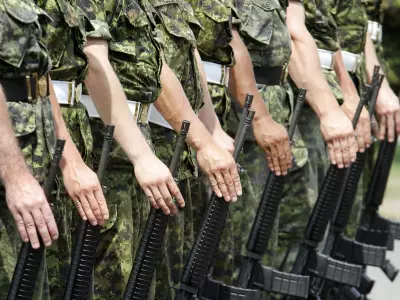
Edmonton's geographical significance cannot be overstated. As the closest major city to the North, it serves as the primary gateway to Canada's Arctic region—an area of escalating strategic importance as international competition expands in northern territories. The concentration of military personnel is substantial, with CFB Edmonton, CFB Wainwright, and 4 Wing Cold Lake placing nearly 12,000 personnel within immediate reach of Alberta's capital city.
Aviation Infrastructure and Industrial Capacity
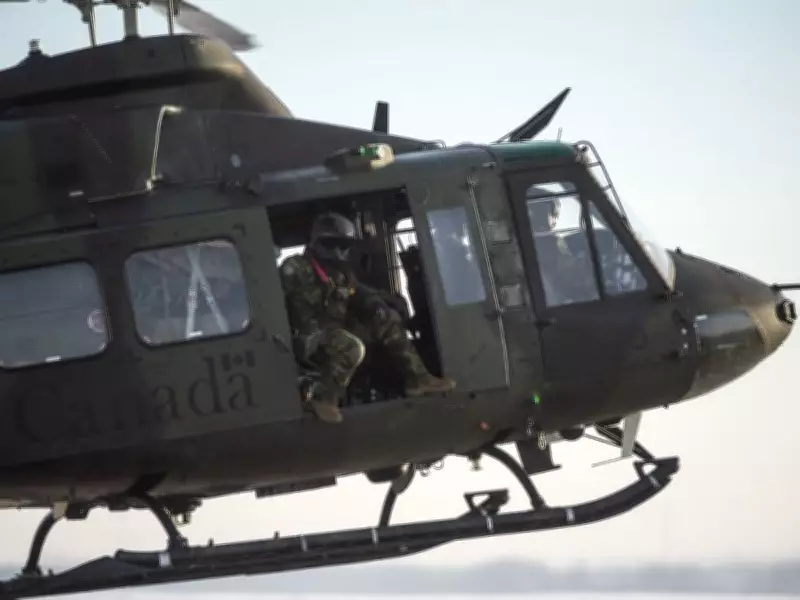
The Edmonton International Airport has been designated as the planned location for the Western Main Operating Base (MOB-West) for the Royal Canadian Air Force's CC-330 Husky fleet. This development will extend defense operations for surrounding military bases while reinforcing Edmonton's position as the northern gateway. As the largest Canadian airport by land area, YEG has also established leadership in remotely piloted aerial systems and advanced air mobility technologies.
Alberta's Industrial Heartland brings decades of accumulated strength across engineering, fabrication, construction, and precision manufacturing—capabilities that align directly with Canada's evolving defense requirements. The region provides essential materials, specialized expertise, and production capacity needed to develop and maintain advanced defense systems. Numerous national energy and manufacturing firms have already established significant operations here, creating a robust foundation for defense-sector expansion.
Academic Excellence and Workforce Development
The University of Alberta and the Northern Alberta Institute of Technology (NAIT) continue to educate and equip the nation's youngest and fastest-growing talent pool. NAIT, already one of Canada's largest skilled trades training providers and a top three applied research college nationally, is positioned as the regional anchor for scaling domestic defense workforce capabilities. This educational infrastructure ensures a steady pipeline of skilled professionals ready to support defense initiatives.

As Canada navigates an increasingly complex global security environment, Edmonton's comprehensive assets—from military infrastructure and industrial capacity to academic excellence and geographical advantage—establish it as the indispensable center for advancing national defense strategy. The region's coordinated approach through partnerships like ERDA demonstrates how regional strengths can be effectively mobilized to enhance Canada's security posture and economic resilience in the decades ahead.