Danish Veterans Stage Major Protest Over Trump's Comments on NATO Allies
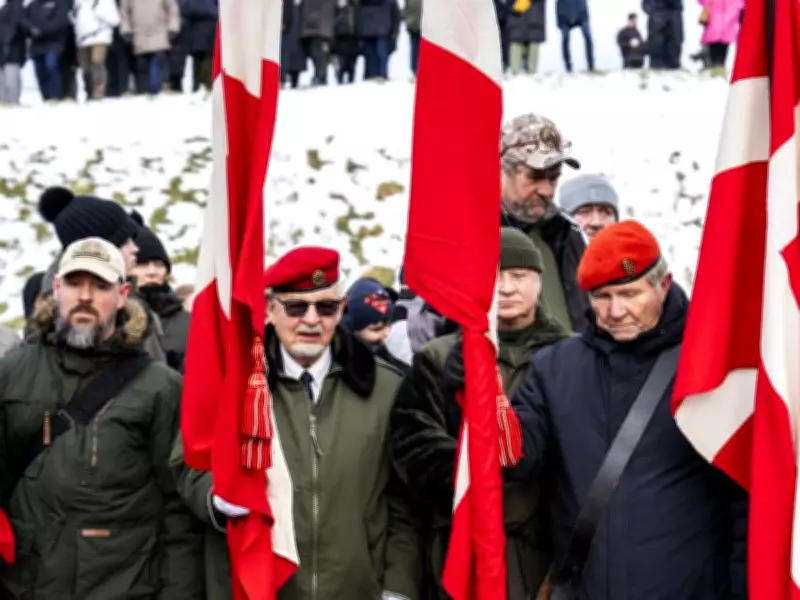
Thousands of Danish veterans and their supporters gathered in Copenhagen on Saturday to protest recent remarks by former U.S. President Donald Trump that suggested NATO troops from allied nations "stayed a little back" from front-line action during the wars in Iraq and Afghanistan. The demonstration, which took place in sub-zero temperatures, highlighted growing diplomatic tensions between Denmark and the United States.
Emotional Response to Perceived Insult
The protest began at the memorial for fallen Danish soldiers, where veterans laid a wreath and observed a minute of silence. Participants then marched approximately one mile through the Danish capital to the U.S. embassy, carrying Danish flags and banners with the protest's official name: NoWords. Organizers expressed profound outrage at what they characterized as disrespectful comments about their military service.
"Enough is enough. We are, to put it mildly, outraged to hear the American president's repeated lies, and we will not simply shrug them off," said Carsten Rasmussen, chairman of Denmark's Veterans organization and the rally's organizer. "We refuse to listen to these lies. They are an insult to those who have served in Afghanistan and Iraq, and a terrible insult to the families who have lost a family member in these wars."

High Casualty Rate Adds to Resentment
Denmark, with a population of just six million people, suffered significant losses during the Afghanistan conflict, losing 44 service members—one of the highest per-capita death tolls among U.S. allies. This sacrifice made Trump's comments particularly painful for the Danish military community and the nation as a whole.
Former Danish Chief of Defense Christian Hvidt, who served from 1996 to 2002, attended the protest and told broadcaster TV2: "Trump's comments felt like a knife in the back. I participate today to support Danish veterans and those who paid the ultimate price following their orders."
Additional Tensions Over Flag Removal Incident
The protest followed a controversial incident earlier in the week when the U.S. embassy removed 44 Danish flags that had been placed in flower boxes outside the building. Each flag bore the name of a Danish soldier killed in Afghanistan. The embassy later stated it would not have removed the flags had their significance been understood and expressed "deepest respect" for Danish veterans.
Demonstrators replaced the flags during Saturday's protest, but the incident had already drawn sharp criticism from Danish politicians. Denmark is a founding member of NATO, making the perceived disrespect particularly sensitive within the alliance framework.
Broader Context of Strained Relations
The protest occurs against a backdrop of already strained relations between Washington and Copenhagen. Tensions escalated in January when more than 30,000 people rallied across Denmark's largest cities to protest Trump's previous demands to purchase Greenland, which remains part of the Kingdom of Denmark. A separate rally was planned for later on Saturday in front of the U.S. consulate in Nuuk, Greenland's capital.
International Solidarity and Wider NATO Concerns
The demonstration attracted not only Danish participants but also some American and British veterans, according to Danish broadcaster DR. One protester carried a banner that read "Apologize Trump," reflecting the international dimension of the controversy.
Other NATO members, including Canada and the United Kingdom, have also expressed outrage over Trump's comments diminishing their losses in Afghanistan. While Trump has subsequently praised British military efforts, he has stopped short of issuing any formal apology to allied nations.
The Copenhagen protest represents a significant public response to what many in Denmark view as a dismissal of their substantial contributions and sacrifices during recent conflicts. As diplomatic relationships continue to evolve, this demonstration underscores the importance of respectful acknowledgment among military allies.