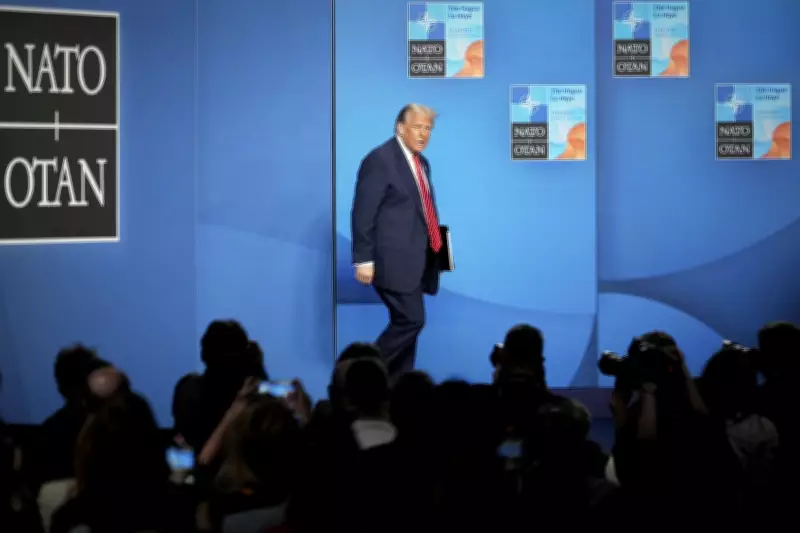
In a development stirring international concern, former U.S. President Donald Trump has reiterated threats to withdraw the United States from the North Atlantic Treaty Organization (NATO), prompting security analysts to examine the realistic prospects of such an action. The speculation follows Trump's recent comments, which echo his longstanding skepticism toward the alliance, raising alarms among member states about the future of collective defense in an increasingly volatile global landscape.
Legal and Procedural Pathways for Withdrawal
Experts point out that while Trump's rhetoric is not new, the mechanisms for a U.S. exit from NATO exist, albeit with significant complexities. Under Article 13 of the NATO treaty, any member can leave after providing one year's notice, but this process would involve intricate diplomatic and legal steps. Analysts emphasize that a withdrawal would require coordination with Congress, where bipartisan support for NATO remains strong, potentially leading to legislative hurdles or legal challenges that could delay or block the move.
Geopolitical Ramifications and Alliance Stability
The potential departure of the United States, NATO's largest military and financial contributor, would fundamentally alter the alliance's dynamics. Security specialists warn that such a move could embolden adversaries like Russia, undermine deterrence efforts in Europe, and force remaining members to rapidly increase defense spending to fill the void. This scenario might trigger a reevaluation of security partnerships worldwide, with countries seeking alternative alliances or bolstering independent defense capabilities.

During his presidency from 2017 to 2021, Trump frequently criticized NATO members for not meeting defense spending targets, labeling the alliance "obsolete" at times. His administration pressured allies to boost contributions, leading to increased budgets in several countries. However, no formal steps toward withdrawal were taken, leaving experts to debate whether his current threats are merely negotiating tactics or a genuine policy objective if he returns to power.
Expert Opinions on Feasibility and ImpactInterviews with defense scholars reveal a spectrum of views. Some argue that institutional inertia and strategic interests would prevent a full withdrawal, while others caution that political will, especially in a second Trump term, could overcome these barriers. The consensus highlights that even the threat of exit alone can weaken NATO's cohesion, affecting military planning and diplomatic trust among allies.
Broader Implications for Global Security
Beyond NATO, analysts note that a U.S. exit could reshape international relations, prompting shifts in how nations approach collective security agreements. It might accelerate trends toward multipolarity, with regional powers taking on greater roles, and could influence ongoing conflicts, such as the war in Ukraine, where NATO support has been crucial. The uncertainty underscores the need for contingency planning within allied governments.
In summary, while Trump's ability to follow through on NATO withdrawal threats is legally possible, it faces substantial political and practical obstacles. The debate continues among experts, with many stressing that the mere discussion of such a move already impacts global stability, making it a critical issue for policymakers and citizens alike to monitor closely.