Retired Canadian General Condemns Trump's 'Disrespectful' Afghanistan Remarks
Retired Major-General Dean Milner, the last commander of the Kandahar base before Afghanistan was handed back to the Taliban, has issued a forceful rebuke of former U.S. President Donald Trump's recent comments about NATO troop deployment during the war. Milner labeled Trump's assertion that NATO forces "stayed a little back, a little off the front lines" as not only false but profoundly disrespectful to the memory of those who made the ultimate sacrifice.
A Record of Sacrifice That Cannot Be Erased
"It's so far from the truth," Milner stated emphatically, reflecting on the two-decade conflict that claimed the lives of 3,486 NATO soldiers, including 158 Canadians. "We lost a lot of people there, and all of the NATO countries that sent troops had casualties too," he added, emphasizing that the 1,000-plus non-American NATO fatalities were not incurred from safe positions behind the lines.
The retired general, who personally commanded eight soldiers killed in action, expressed deep sensitivity toward any perceived disrespect toward war dead. "There is not a day that goes by that I don't think of all of the NATO troops who sacrificed their lives there," Milner revealed. He characterized Trump's comments as effectively "spitting on the graves of the fallen" and crossing "every line of decency."

Historical Context and Canadian Frontline Presence
Milner provided crucial context about Canada's military engagement in Afghanistan, countering Trump's suggestion that NATO contributions were minimal or cautious. "The bottom line is this country put Canadian troops in places in Afghanistan that was the home of the Taliban and fought them," he explained. "During much of that war we were the ones doing the fighting."
The general highlighted that under the leadership of then-General Rick Hillier, Canadian forces "never backed down from anything" in Afghanistan. This frontline commitment, Milner argued, is part of a broader historical record of Canadian military sacrifice alongside American troops in conflicts ranging from World War I and World War II to Korea and Afghanistan.
The Highway of Heroes and Unchangeable Truth
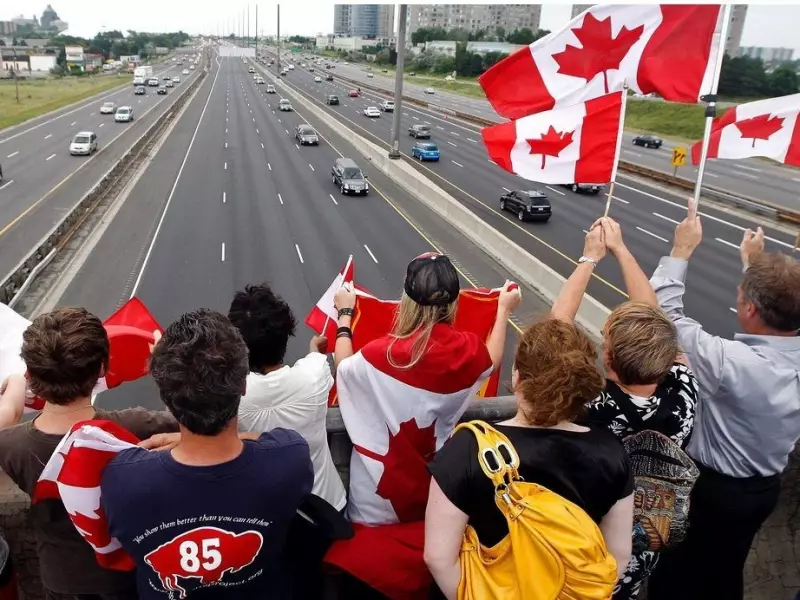
Milner pointed to the powerful symbolism of the Highway of Heroes, where 158 Canadian soldiers made their final journey home, as evidence of Canada's substantial contribution and sacrifice. "There is an unchangeable 'truth' that goes with a Canadian flag draped over a Canadian soldier's casket," he noted, suggesting that this visual testament to sacrifice cannot be rewritten by political rhetoric, no matter how powerful the speaker.
The retired commander, now president of the Royal Kingston United Services Institute, acknowledged that while Trump may have valid criticisms about NATO countries' defense capabilities, the specific claim about troops avoiding frontline duty in Afghanistan was "pure B.S." He called for Trump to correct the record and apologize, warning that failure to do so could damage future military cooperation.
Broader Implications for International Relations
Milner's comments underscore the delicate balance in international military alliances, where mutual respect for sacrifice forms the foundation of cooperation. "Respect is a two-way street," he asserted. "No one is going to disrespect our fallen troops without a strong pushback."
The general emphasized that while American leadership and sacrifice in various conflicts have been crucial, "they didn't do it alone and they were not the only country to lose troops." This perspective highlights the collective nature of NATO's military endeavors and the shared burden of loss that binds member nations together.
As the controversy continues, Milner's forceful defense of NATO troops' frontline service in Afghanistan serves as a reminder that historical accuracy and respect for military sacrifice remain non-negotiable elements of international discourse, particularly when discussing conflicts that claimed thousands of lives across multiple nations.