Canada's Arctic Vulnerability: A Stark Contrast to Global Security Shifts
Recent developments in international Arctic policy have cast a revealing light on Canada's northern territories, exposing what experts describe as one of the most demilitarized regions on Earth. While global powers increasingly focus on Arctic security, Canada's vast northern frontier remains conspicuously undefended compared to neighboring regions.
The Greenland Comparison: A Wake-Up Call for Canadian Defense
At the recent World Economic Forum summit in Davos, former U.S. President Donald Trump announced significant progress in securing access to Greenland, framing it as a strategic move to protect Arctic interests from competing powers like China and Russia. This development was further reinforced by NATO Chief Mark Rutte, who emphasized the urgent need for enhanced defense planning focused on Greenland as Arctic sea lanes continue to open due to climate change.
These international moves highlight the stark contrast with Canada's Arctic approach. While Greenland receives increasing military attention from global alliances, Canada's 160,000-kilometre Arctic coastline operates without permanent naval ports, garrisoned soldiers, or dedicated air bases. This disparity has become increasingly apparent as geopolitical tensions shift northward.

The Reality of Canada's Northern Defense Capabilities
Canada's current Arctic defense infrastructure reveals significant gaps in military preparedness. When the Royal Canadian Air Force requires aircraft presence above the 60th parallel, aircraft must deploy from CFB Trenton, located just south of Ottawa—a considerable distance from northern territories. Similarly, naval vessels destined for Arctic waters must embark from either Victoria or Halifax, with no dedicated northern docking facilities currently operational.
Even planned infrastructure improvements have faced delays. A reactivated mining dock at the top of Baffin Island, intended to provide refueling and docking capabilities, remains under upgrades with no firm operational date established. This leaves Canada's naval presence in the Arctic limited, particularly during harsh winter months when ice conditions present additional challenges.
Limited Resources and Aging Equipment
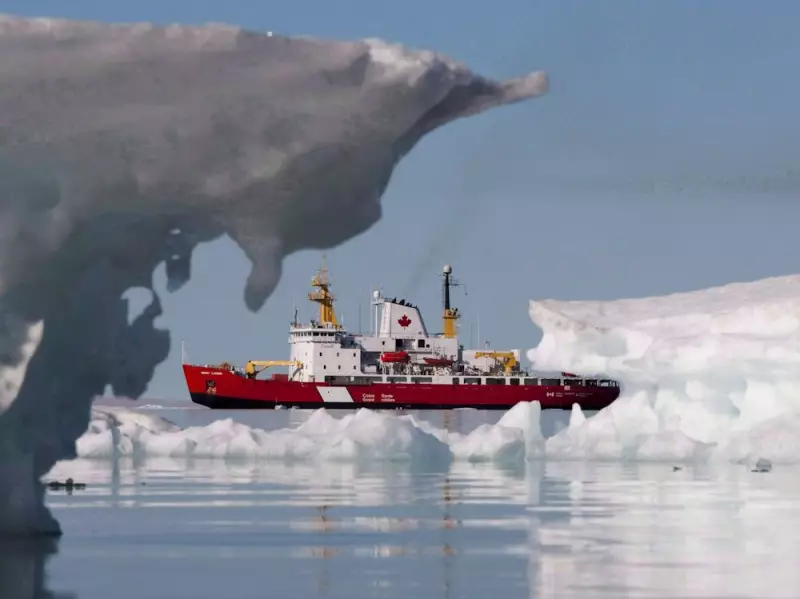
The Royal Canadian Navy's Arctic capabilities are constrained by equipment limitations. While the Coast Guard maintains icebreakers, the navy's primary Arctic vessels consist of just five Harry DeWolf-class offshore patrol ships. These vessels, described by military officials as intended for "armed presence and surveillance operations," carry minimal armament—typically just a deck gun and larger machine gun.
On land, Canada's primary Arctic defense force consists of the Canadian Rangers, a part-time reserve unit whose traditional uniform includes distinctive red hoodies and whose equipment has historically included aging bolt-action rifles. Remarkably, until 2018, many Rangers still used Lee Enfield rifles essentially unchanged since the First World War, though modernization efforts have since begun.
Political Recognition of the Security Gap
The vulnerability of Canada's Arctic position became particularly evident during recent political discussions about Greenland. When former Prime Minister Mark Carney suggested deploying Canadian troops to Greenland to counter potential U.S. annexation threats, Conservative MP Aaron Gunn pointed out the irony of the situation. "Before sending troops to Greenland, Canada should probably deploy its military to our own Arctic first," Gunn noted in a January social media post, highlighting the fundamental discrepancy in defense priorities.
This exchange underscores growing recognition among Canadian politicians that the country's northern territories represent a significant security gap. As climate change continues to open Arctic waterways and global powers increase their northern presence, Canada's demilitarized approach to its own Arctic regions appears increasingly anomalous in an era of heightened geopolitical competition.
The situation raises important questions about sovereignty, resource protection, and Canada's ability to monitor and control its northern territories as international interest in the Arctic continues to intensify.