Canada Opts Out of NATO Greenland Mission in Favor of Diplomatic Approach
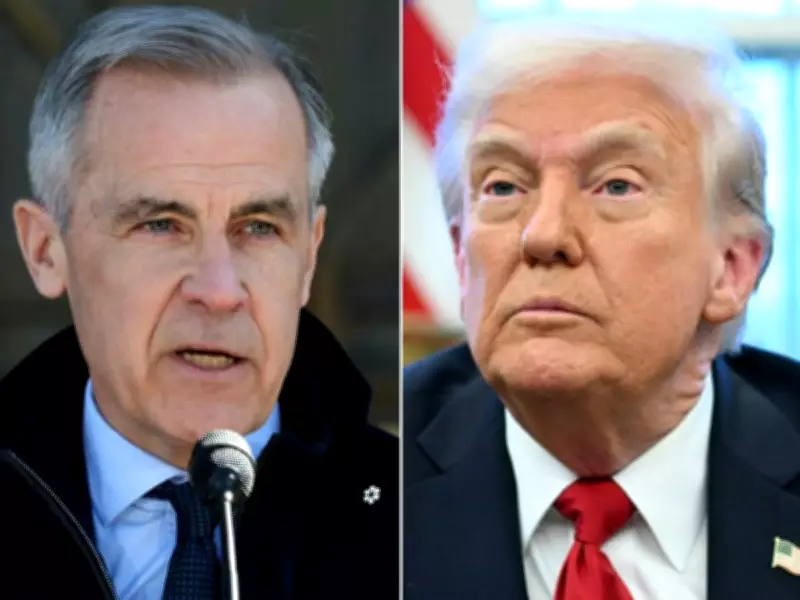
In a significant foreign policy decision, the Canadian government under Prime Minister Mark Carney has chosen not to participate in a recent NATO defense deployment to Greenland. This move represents a departure from the military commitment made by several European allies, including Denmark, Norway, Sweden, Finland, Germany, France, the United Kingdom, the Netherlands, Belgium, and Estonia.
A Shift in Defense Posture Under Liberal Leadership
The decision comes despite Foreign Affairs Minister Anita Anand's emphatic statement at the United Nations in September 2025, where she declared that defense and security constitute the first pillar of Canada's foreign policy. Minister Anand boldly asserted that "Canada does not retreat from duty" and "does not shrink from global challenge," marking what some observers have called an out-of-character assertion for the Liberal Party.
This development has sparked considerable debate among defense analysts and political commentators. The European NATO deployment to Greenland has been characterized as a "tripwire" defense initiative aimed at countering potential annexationist rhetoric from the United States under President Donald Trump. The clear and present danger expressed through this deployment is specifically directed toward American expansionist ambitions in the Arctic region.

Canada's Alternative Response to Arctic Security Concerns
Rather than committing military boots on the ground in Greenland, the Canadian government has announced an alternative approach. Foreign Minister Anand revealed that Canada will instead open a diplomatic consulate in Greenland and deploy an unarmed, non-military Canadian Coast Guard ship to the region. This response has been framed as a signature display of Canadian defense resolve and magnanimity, though critics argue it represents a softer approach than the military deployment undertaken by European allies.
In a separate development, the Canadian military will participate in a planned U.S.-led NORAD exercise in Greenland. Royal Canadian Air Force personnel will join this exercise alongside their American counterparts, operating within the framework of U.S. command and leadership. This decision has raised questions about Canada's defense priorities and its relationship with both European allies and the United States.
Historical Context and Strategic Implications
The current situation has drawn comparisons to historical moments in Canadian defense policy. Some commentators have suggested that joining the European NATO deployment would have represented Canada's "first true War of 1812 moment in over two centuries," referencing a pivotal period in Canadian military history. Instead, Canada's response has been characterized by what critics describe as military appeasement toward the United States.
When questioned about Canada's decision not to join the European deployment, Prime Minister Carney offered a historical perspective, recalling how Canada stood by the United States following the September 11 attacks. This response has prompted further discussion about Canada's defense relationships and strategic priorities in an increasingly complex geopolitical landscape.
European Relations and Future Defense Cooperation
The decision has significant implications for Canada's relationships with European allies. Industry Minister Melanie Joly has emphasized that Canada's connection to Europe is "in our DNA," referencing the historical ties that shaped Canadian culture through European colonization and protection, particularly against American influence during the country's formative years.
However, defense analysts note that meaningful alliance participation requires concrete acts of solidarity, especially during historically pivotal moments. Canada's current approach has led some observers to question whether the country can maintain strong defense relationships with European partners while opting out of significant military deployments in favor of diplomatic alternatives.

As the geopolitical situation in the Arctic continues to evolve, Canada's foreign policy decisions will likely face ongoing scrutiny from allies, analysts, and the Canadian public. The balance between diplomatic engagement and military commitment remains a central question in discussions about Canada's role in international defense cooperation and Arctic security.