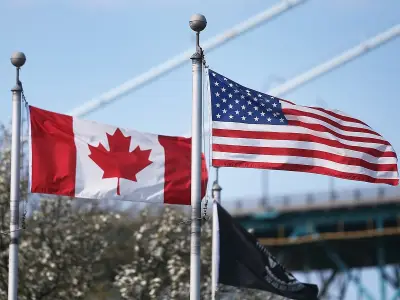
Canada is set to challenge its NATO allies to sharpen their focus on mounting security threats in the Arctic, Foreign Minister Anita Anand announced ahead of a key meeting in Brussels.
Arctic Shifts from Low-Tension to High-Priority Zone
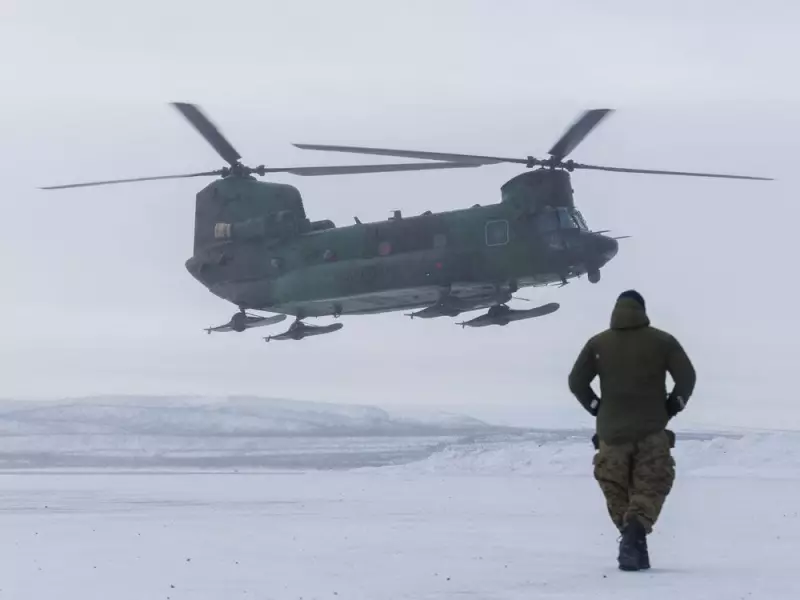
Anand highlighted the rapidly changing landscape in the far north in an interview. "We see infrastructure moving further and further north and the geopolitical environment becoming more and more challenging," she stated. The minister confirmed that Canada will initiate a significant discussion at the Wednesday gathering of NATO foreign ministers about how the alliance addresses emerging threats, specifically those in the Arctic region.
This push comes as the Arctic, once considered a stable area, is now a central arena for international competition. Melting ice is opening new sea routes, while nations like Russia and China are increasingly vying for influence and control, fundamentally altering the region's strategic importance.

Seeking Recognition for Northern Defence Commitments
A core element of Canada's argument at NATO will be the desire for Arctic nations to have their regional defence contributions formally acknowledged within the alliance's capability targets. These targets define the troops and equipment each member state must provide to meet collective security goals.
Anand has already discussed this issue with NATO Secretary General Mark Rutte, inviting him to visit the Canadian Arctic to see the challenges firsthand. "It couldn't be more important at a moment where we're putting $80 billion into Canadian defence commitments to reach two per cent this year and to reach five per cent by 2035," Anand emphasized. She noted that a substantial portion of this Canadian investment is destined for the north, funding critical infrastructure like ports, roads, and airports.
A Unified Arctic Front Within NATO
Canada is not alone in its concerns. Anand pointed out that fellow Arctic nations Finland, Sweden, Denmark, Norway, Iceland, and the United States share Canada's apprehensions about security in the region. The alliance's footprint in the Arctic has grown substantially, with Finland joining in 2023 and Sweden in 2024. This expansion means that seven of the eight Arctic nations are now NATO members, all protected under the Article 5 collective defence pledge.
The call for a more robust NATO Arctic strategy is not new. Former NATO Secretary General Anders Fogh Rasmussen has previously advocated for the alliance to develop a specific strategy with concrete capability targets for the region.
This week's discussions in Brussels will also touch on broader defence spending benchmarks. At its last summit, NATO allies committed to spending 3.5% of their GDP on defence, with an additional 1.5% allocated to defence-adjacent projects such as infrastructure and cybersecurity, areas directly relevant to Canada's Arctic build-up.