The European Commission has formally communicated that Canada must contribute a financial sum to gain entry into a significant European Union defence agreement. The required fee is set at 10 million euros, a condition that underscores the transactional nature of modern security partnerships.
The Financial Gateway to Closer Defence Ties
This development, reported on December 03, 2025, establishes a clear monetary prerequisite for Canada's deeper integration into European defence frameworks. The move signals a shift where participation in collective security initiatives increasingly involves direct financial commitments from non-member states seeking access.
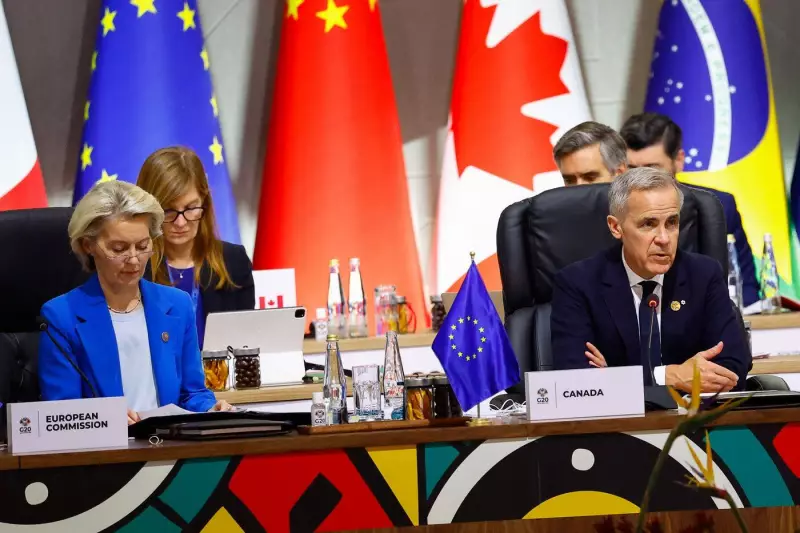
The announcement comes amid ongoing high-level engagements between Canadian and European leaders. Notably, European Commission President Ursula von der Leyen and Canada's Prime Minister Mark Carney were recently seen together at the G20 Summit in Johannesburg, South Africa, on Saturday, November 22, 2025. While the summit covered global economic issues, bilateral discussions on defence and security cooperation are believed to have occurred on the sidelines.

Strategic Implications for Canadian Foreign Policy
The €10 million fee represents more than a simple cost of admission. Analysts suggest it is a symbol of Canada's commitment to burden-sharing within the transatlantic security architecture. By paying the sum, Canada would gain access to collaborative defence projects, research initiatives, and potentially streamlined procurement processes within the EU's defence ecosystem.
This step is viewed as part of Prime Minister Carney's broader strategy to reaffirm Canada's role on the international stage, particularly in strengthening ties with European allies amidst a complex global geopolitical landscape. The decision to pursue this agreement highlights Ottawa's desire to be embedded in European security mechanisms beyond traditional NATO structures.
Next Steps and Domestic Considerations
The Canadian government must now decide whether to approve the expenditure. The 10 million euro fee will likely be scrutinized in Parliament, where opposition parties may question the value and necessity of the payment. Proponents will argue that the long-term strategic benefits of integrated defence research, industrial cooperation, and enhanced interoperability with EU forces outweigh the upfront cost.
This development places a tangible price tag on the abstract concept of "closer partnership." How Canada responds will be a telling indicator of its defence priorities and its willingness to use financial tools to achieve deeper international integration. The outcome of this decision will shape Canada-EU defence relations for years to come.