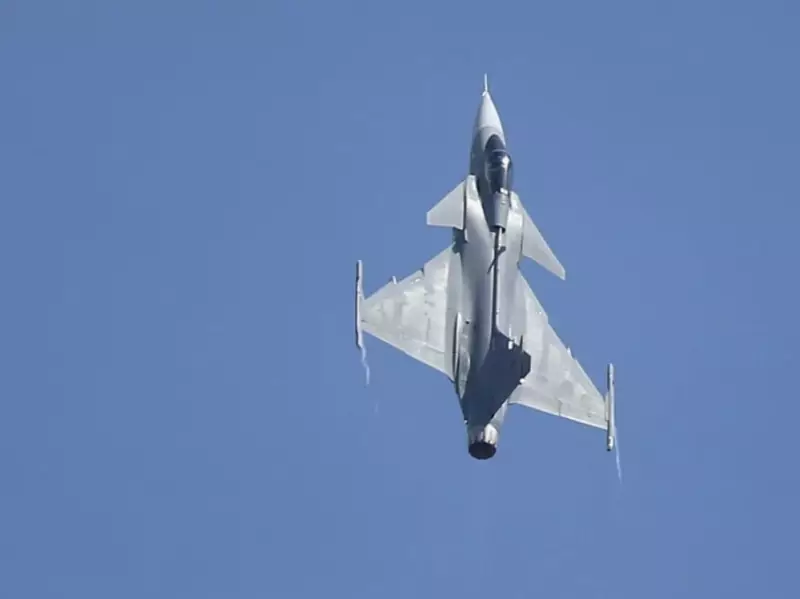
Ottawa Considers Swedish Fighter Jets for Significant Portion of Fleet
Multiple sources within the Canadian government have revealed that Ottawa is actively considering a substantial shift in its fighter jet procurement strategy. According to these insiders, the federal government is exploring the possibility of allocating approximately half of its planned fighter jet budget toward purchasing Swedish-made Saab Gripen aircraft, rather than proceeding with the full complement of American F-35s originally announced.
Diplomatic Tensions and Strategic Reassessment
The potential pivot has already sparked diplomatic friction, with U.S. Ambassador Pete Hoekstra warning of consequences for the North American Aerospace Defence Command (NORAD) should Canada reduce its F-35 commitment. Hoekstra suggested that NORAD operations might require adjustment, with the United States potentially needing to deploy more of its own F-35s within Canadian airspace to maintain continental defence capabilities.
Despite these warnings, all indications suggest Ottawa is moving toward purchasing fewer F-35s than the eighty-eight jets pledged in December 2022. Defence Minister David McGuinty confirmed to media outlets that "no decision has been reached" regarding the final composition of Canada's fighter fleet, but acknowledged ongoing evaluations of procurement options.

Carney's Davos Speech Signals Strategic Shift
The reconsideration aligns with broader strategic priorities articulated by senior government officials. In a recent speech at the World Economic Forum in Davos, a prominent cabinet minister emphasized Canada's need to develop greater "strategic autonomy" and strengthen domestic capabilities. The minister argued that allies must "diversify to hedge against uncertainty" and that "when the rules no longer protect you, you must protect yourself."
This philosophical shift suggests the government views exclusive reliance on American defence contractors as potentially compromising Canada's strategic independence. The current arrangement, which includes Lockheed Martin supplying combat systems for Canada's new warships in addition to the proposed fighter jets, has raised concerns about over-dependence on a single foreign supplier for critical defence systems.
Technical Considerations and Procurement Realities
The military has consistently advocated for the F-35 platform for nearly two decades, citing its technological superiority as representing a "generational shift in air power." Leaked Department of National Defence technical assessments from last year confirmed the F-35's dominance over the Gripen in head-to-head evaluations of technical and military capabilities.
However, practical and political considerations are influencing the procurement discussion. Canada remains committed to purchasing at least sixteen F-35s, with infrastructure already under development to support these aircraft. The first planes are scheduled for delivery this year, with initial units destined for pilot training at Luke Air Force Base in Arizona. Complete cancellation of the F-35 program is therefore not considered a viable option.
Mixed Fleet Model Gains Traction
A more plausible scenario involves adopting a mixed fleet approach similar to Germany's strategy. The German air force operates approximately 138 Eurofighter Typhoons while simultaneously ordering thirty-five F-35s. For Canada, the most likely outcome appears to be the acquisition of around forty F-35s complemented by up to eighty Saab Gripens.
The Gripen procurement could potentially proceed through a sole-source arrangement utilizing national security provisions, justified by the aircraft's second-place finish in the most recent fighter jet competition. Notably, the Swedish jets would be manufactured in Quebec, supporting domestic industrial capabilities and aligning with the government's emphasis on building strength at home.
Balancing Capability with Strategic Objectives
The emerging debate highlights the complex trade-offs between technical military superiority and broader strategic objectives. While the F-35 offers unmatched capabilities, exclusive procurement from Lockheed Martin fails to address the government's twin priorities of developing domestic defence industries and diversifying international partnerships.

As the review ordered last March continues to evaluate whether fifth-generation F-35s represent the optimal investment for Canadian defence needs, the possibility of a diversified fighter fleet represents a significant departure from previous procurement plans. The final decision will ultimately reflect how Ottawa balances immediate operational requirements with long-term strategic autonomy in an increasingly uncertain global security environment.