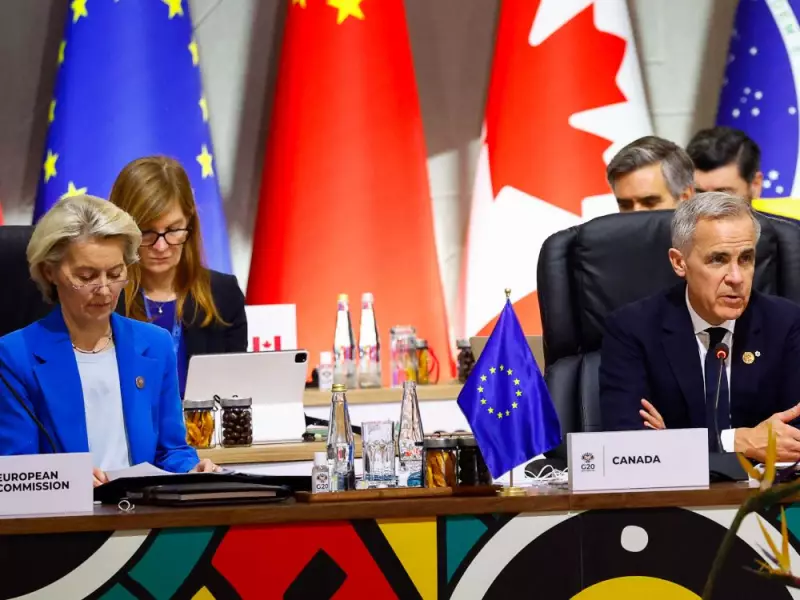
In a significant foreign policy and defence move, Prime Minister Mark Carney has quietly committed Canada to a major European Union security initiative, marking a strategic pivot with potential multi-billion dollar implications. The agreement, signed this week, makes Canada the first non-EU nation to join the bloc's Security Action for Europe (SAFE) program.
A Continental Shift in Defence Strategy
The SAFE initiative is a cornerstone of the EU's ambitious plan to rebuild its military industrial base by the year 2030. For Canada, membership provides access to a substantial pool of 150-billion euros (approximately C$243 billion) in loans designed to back defence manufacturing projects. Prime Minister Carney and European Commission President Ursula von der Leyen hailed the pact in a joint statement, calling it "the next step in our deepening cooperation and symbolic of the shared priorities of the European Union and Canada."
This development follows recent signals from Ottawa exploring alternatives to American-made fighter jets, including Sweden's Saab JAS 39 Gripen, as a potential replacement for the Lockheed Martin F-35. The SAFE agreement solidifies a trend of Canada looking across the Atlantic for defence and industrial partnerships.

Industrial Opportunity or Strategic Necessity?
According to defence experts, the primary Canadian motivation appears to be economic. Former Canadian vice-admiral Mark Norman, now a fellow with the Canadian Global Affairs Institute, told Postmedia that the move is "mostly about industrial opportunity for Canadian suppliers." He noted that, in theory, the agreement should grant Canadian companies more open access to European defence contracts, contingent on Ottawa's willingness to help them compete—a historical challenge.
Politically, the move aligns with Carney's stated objective of reducing Canada's reliance on the United States for defence procurement, a stance viewed by many as a response to the policies of U.S. President Donald Trump. However, the agreement enters uncharted territory for Canada, leaving several critical questions unanswered.
Unanswered Questions and Potential Costs
The first major uncertainty is the financial cost of membership. The Prime Minister's Office stated the deal will unlock "billions of dollars in potential defence opportunities for Canadian businesses" but provided no breakdown of any upfront Canadian financial contribution. This silence is notable given that the United Kingdom recently declined to join SAFE, citing the membership price as too steep. It remains unclear whether Canada will make a direct payment or if costs will be passed to taxpayers through higher future procurement prices.
Second, the partnership comes with stringent conditions. SAFE procurement rules prioritize "Made in Europe" equipment, mandating that projects source a minimum of 65 per cent of their components from within the EU's 27 member states. The UK attempted, and failed, to negotiate a lower threshold. Furthermore, each project requires collaboration between at least two member countries, forcing Canada to integrate deeply with European supply chains and technical standards.
Third, the timing presents a unique challenge. Canada is joining during a continent-wide arms race, as EU members rapidly rearm in response to the ongoing war in Ukraine. This surge in demand could inflate costs and leave European defence contractors in a strong negotiating position, potentially offering less favourable terms to a non-EU partner like Canada.
While the SAFE program offers Canadian defence manufacturers a potential gateway to a massive new market and aligns with a policy of diversifying procurement partners, the risks are substantial. The lack of transparent cost details, the restrictive "Made in Europe" rules, and the high-demand market environment mean Ottawa's continental defence gambit carries significant uncertainty alongside its promised opportunity.