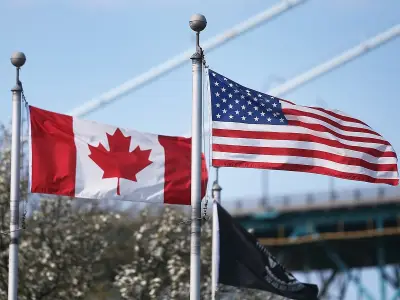
In a significant move to diversify its defence partnerships and industrial base, Canada has finalized an agreement to become the first country outside the European Union to join the bloc's flagship military procurement initiative. Defence Minister David McGuinty announced the deal on Monday, marking a strategic step for the nation under Prime Minister Mark Carney's government.
A Landmark Agreement for Canadian Industry
The program, known as the Security Action for Europe (SAFE), represents a massive €150 billion (approximately $243 billion) fund designed to streamline and finance joint European defence projects. Minister McGuinty highlighted that this membership will unlock substantial opportunities for Canadian businesses to compete for contracts within the program.
"This will allow Canada, for example, to participate by supplying capabilities such as ammunition, missiles, drones, artillery systems, infantry weapons and beyond," McGuinty stated. He described the potential economic and strategic benefits for Canada as "enormous," noting it should catalyze private investment in the domestic defence sector and attract new, reliable suppliers for Canada's own military needs.

Strategic Shift Away from U.S. Dependence
This development follows a broader foreign policy and defence strategy pursued by Prime Minister Carney, who has publicly emphasized the need to reduce Canada's military and economic dependence on the United States. Earlier this year, Carney inked a broader security pact with the EU, laying the groundwork for this deeper integration.
The Prime Minister has argued that Canada must spend fewer of its defence dollars in the U.S. while simultaneously working to diversify Canadian exports away from its southern neighbour. Joining the SAFE program is a concrete manifestation of this policy, offering a direct avenue for Canadian defence firms to access the vast European market.
Entry Fee and Negotiation Success
While the deal is secured, one critical detail remains unresolved: the cost of entry. Minister McGuinty confirmed that Canada's access fee is still being finalized. The negotiation process saw Canada succeed where another close ally, the United Kingdom, reportedly failed. According to Bloomberg News, the UK balked at a proposed entry fee of €6.75 billion, which ultimately scuttled its agreement with the EU.
Canada's successful negotiation to become the inaugural non-EU participant in SAFE underscores a deliberate and calculated diplomatic effort. It positions the country uniquely within the transatlantic defence landscape, providing a privileged gateway to one of the world's largest defence procurement pools.
The finalization of the entry fee will be the next key milestone, but the agreement in principle signals a major shift in Canada's defence procurement strategy and its international industrial partnerships for years to come.