Border Patrol Agents in Fatal Shooting of ICU Nurse Continue Working Despite Ongoing Investigation
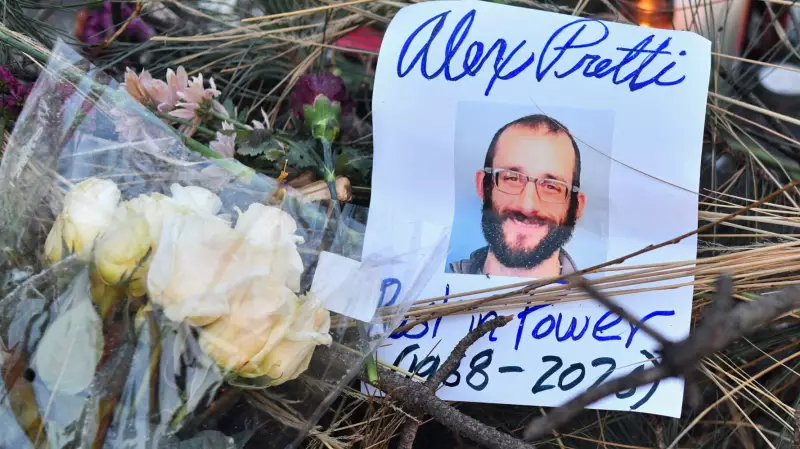
In a development that has sparked significant controversy and public outcry, the federal immigration agents responsible for fatally shooting ICU nurse Alex Pretti last Saturday have not been placed on administrative leave and are continuing to work in other locations. This revelation comes directly from Border Patrol Chief Gregory Bovino, who addressed reporters on Sunday regarding the incident that occurred in Minneapolis.
Chief Bovino defended the decision to keep the agents on active duty, stating emphatically, "All agents that were involved in that scene are working, not in Minneapolis, but in other locations. That's for their safety. There's this thing called doxing. And the safety of our employees is very important to us. So we're going to keep those employees safe."
Contradictory Accounts and Video Evidence Raise Serious Questions
The Department of Homeland Security has maintained that Pretti approached federal immigration officers while brandishing a firearm, a claim that appears to be directly contradicted by multiple video recordings of the encounter. Video footage clearly shows Pretti holding only a cellular phone, not a weapon, as he interacted with agents during what witnesses describe as a protest situation.

According to detailed video analyses conducted by several media organizations, the incident unfolded with disturbing clarity. Multiple agents initially pepper-sprayed both Pretti and a female protester. When Pretti attempted to assist the woman, agents forced him to the ground, restrained him, and proceeded to beat him while he was in a prone position. Minneapolis Police Chief Brian O'Hara has since revealed that Pretti was believed to possess a valid permit to carry a firearm, though no weapon was visible in the footage.
The most critical moment captured on video shows one agent removing a firearm from a holster at Pretti's side while other agents continued to restrain him. Subsequently, another agent appeared to shoot Pretti in the back at extremely close range while colleagues pinned his arms near his head. Shockingly, additional bullets were fired into the motionless man, with at least two agents discharging what appears to be a minimum of ten rounds total.
Law Enforcement Experts Question the Shooting's Justification
Charles Ramsey, the former police commissioner of both Philadelphia and Washington, D.C., offered a stark assessment when speaking with CNN. "From what I see right now, this does not look like a justified shooting," Ramsey stated unequivocally. "The guy is prone on the sidewalk... and they're still firing rounds into him."
Diane Goldstein, a former Redondo Beach Police Department lieutenant who now serves as executive director of the Law Enforcement Action Partnership, expressed grave concerns about the agents remaining on duty. "It is absolutely inappropriate for the agents who shot Pretti to be back at work," she asserted. Goldstein emphasized that administrative leave for officers involved in shootings serves multiple crucial purposes, including protecting community wellbeing and allowing officers to address potential post-traumatic stress disorder following such traumatic incidents.
Pattern of Controversial Practices and Policy Gaps Emerges
The Department of Homeland Security has declined to respond to numerous questions regarding their current use-of-force protocols, their procedures for determining whether officers who shoot individuals should be placed on leave, and whether Agent Jonathan Ross—who killed Renee Good earlier this month—is currently working. This lack of transparency compounds existing concerns about accountability within the agency.
A troubling precedent exists with Border Patrol Agent Charles Exum, who shot Marimar Martinez in Chicago last October. According to Martinez's attorney, Exum returned to work "within, I think, three days of the incident." Text messages later revealed Exum boasting about the shooting, with messages stating: "I'm up for another round of 'fuck around and find out'" and "I fired 5 rounds, and she had 7 holes. Put that in your book boys."

Scrutiny of DHS Use-of-Force Policies Intensifies
The most recent use-of-force policy available on the DHS website dates from 2023, established during the Biden administration. This document explicitly states that DHS law enforcement officials "may use deadly force only when necessary," specifically when someone "poses an imminent threat of death or serious bodily injury to the law enforcement officer or to another person."
When this policy was introduced, the Southern Border Communities Coalition—a California-based advocacy organization—described it as "a step in the right direction" while simultaneously noting that it "falls short of meeting international human rights standards and does not do enough to protect human life." According to coalition data, 362 people have been killed in encounters with Customs and Border Patrol since 2010, highlighting the urgent need for comprehensive reform.
Despite the policy's call for a "use of force review council or committee," it provides minimal guidance regarding the composition or functions of such oversight bodies. This ambiguity creates significant gaps in accountability mechanisms.
Political Context and Concerning Rhetoric
Stephen Miller, who served as a homeland security adviser and architect of the Trump administration's immigration agenda, has previously suggested that DHS agents possess "immunity" to employ violence during immigration enforcement operations. In an October appearance on Fox News, Miller declared: "You have immunity to perform your duties, and no one—no city official, no state official, no illegal alien, no leftist agitator or domestic insurrectionist—can prevent you from fulfilling your legal obligations and duties."
Disturbingly, DHS reposted this message earlier this month following the killing of Renee Good, raising questions about the agency's commitment to proportional force and accountability. As investigations into Alex Pretti's death continue, the absence of administrative leave for involved agents, combined with contradictory evidence and policy shortcomings, has created a perfect storm of controversy surrounding border enforcement practices and officer accountability.