

Constitutional Rights Charity Slams Arrest of Windsor Ice Skating Protester
A peaceful demonstration advocating for municipal budget transparency on a public ice rink in Windsor has resulted in a controversial arrest that is now drawing sharp criticism from constitutional rights advocates. The incident, which occurred earlier this month, has raised significant questions about freedom of expression protections in Canada.
The On-Ice Protest for Transparency
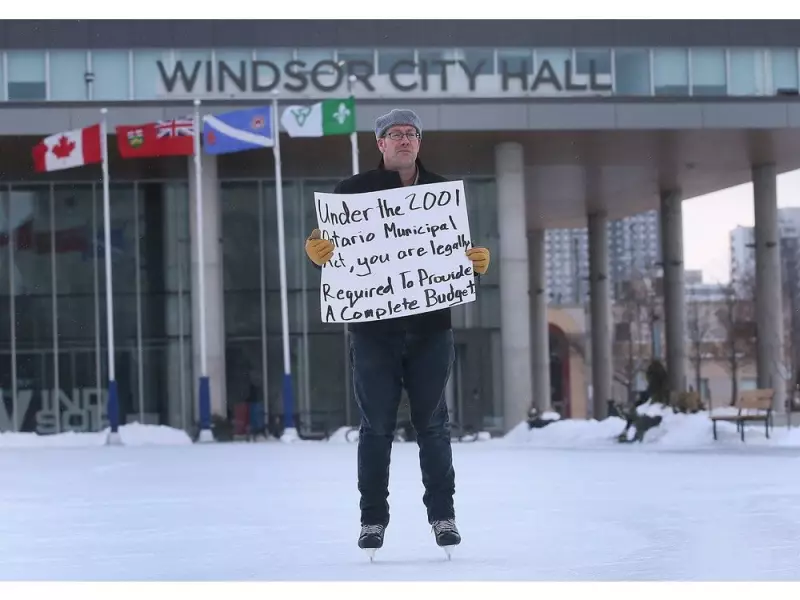
Spencer Allossery, a 50-year-old Windsor resident, took to the ice at the city hall rink on January 5, 2026, with a homemade sign calling for greater budget transparency. His protest was specifically inspired by news coverage revealing numerous blank pages in public city budget documents—spending changes proposed for the 2026 operating budget that were only accessible to city councillors and senior administrators.
Allossery's sign referenced the 2001 Ontario Municipal Act, stating clearly: "Under the 2001 Ontario Municipal Act, you're legally required to provide a complete budget." As a city council committee met inside Windsor City Hall, Allossery skated laps around the outdoor rink, periodically stopping to allow passersby to read his message.

From Peaceful Protest to Handcuffs
The situation escalated when city security personnel ordered Allossery to leave the premises. When he refused, police were called to the scene. According to Allossery's account, he was subsequently handcuffed, removed from what he describes as public property, and issued a $65 ticket under the Trespass to Property Act.
"It blows my mind that police officers are arresting people in a public park with a sign," Allossery stated in an interview with the Windsor Star. The arrest has transformed what began as a solo demonstration into a significant constitutional debate about the boundaries of free expression in public spaces.
Constitutional Foundation Takes Action
The Canadian Constitution Foundation, a Calgary-based legal charity dedicated to defending Canadians' constitutional rights and freedoms, has now intervened in the case. The organization is calling for the trespassing charge against Allossery to be dismissed and is seeking written apologies from both the City of Windsor and the Windsor Police Service.
"We think this is an egregious violation of the right to freedom of expression," said Josh Dehaas, a lawyer with the foundation. "The courts have been really clear that outside of city hall is the quintessential place where you should be able to express yourself to your fellow citizens. And this is on a political matter, which is considered to be the core type of speech that is most protected in Canada."
Legal Arguments for Protected Speech
Dehaas emphasized that Allossery's choice of location—a public recreational space—does not diminish his constitutional protections. "If the conduct was very disruptive, regardless of where it is, then that might be a legally justified reason to limit the speech," he explained. "But that's not the case when you're peacefully holding up a sign or talking to other people about their constitutional rights."
The foundation's position highlights the tension between municipal authority and individual rights, particularly when it comes to political expression in public spaces traditionally associated with civic discourse.
Municipal Response and Budget Context
Both the City of Windsor and Windsor Police Service have declined to comment on the specific incident, citing potential court proceedings. A city spokesperson stated in an email that Windsor "does not comment on matters before the court," while police offered a similar response about withholding comment due to possible legal proceedings.
The protest occurred against the backdrop of Windsor Mayor Drew Dilkens's proposed 2026 budget, which was tabled on December 29 and included 54 in-camera items that appeared as blank pages in public documents. Approximately one week after Allossery's arrest, the city announced that staff had reviewed these confidential budget items at the mayor's request and decided to reveal 29 of the previously hidden items.
This development suggests that Allossery's protest may have contributed to increased transparency, though the constitutional implications of his arrest continue to resonate beyond municipal budget discussions.






