

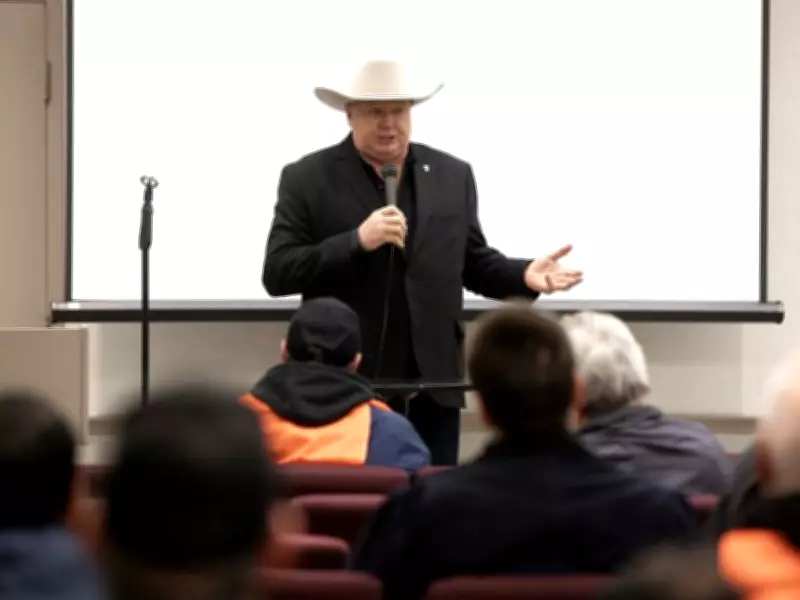
In a compelling commentary, columnist Lorne Gunter asserts that genuine national unity cannot be achieved unless Central Canadian politicians and journalists begin taking Alberta's longstanding grievances seriously. While explicitly stating he is not a separatist, Gunter warns that dismissive attitudes toward Alberta's concerns are fueling discontent that could undermine Confederation itself.
The Persistent Belittlement of Alberta
Gunter describes how central Canadian leaders consistently portray Alberta as "the bad guys of Confederation" whenever the province objects to what he characterizes as the systematic fleecing of its resources. He argues this pattern of belittlement continues despite political changes, though he suggests it might be less severe under Prime Minister Mark Carney than it was during Justin Trudeau's administration.
Disproportionate Financial Burden
The columnist presents a detailed analysis of Alberta's outsized contribution to federal programs, particularly equalization payments. He notes that while there are four "have" provinces—British Columbia, Alberta, Saskatchewan, and Ontario—Alberta contributes "far and away" the most substantial share.

Consider these striking comparisons:
- Ontario possesses more than three times Alberta's population
- Yet Ontario contributes only a fraction of what Alberta provides annually
- These funds primarily support programs benefiting Liberal-voting regions
Historical Frustrations and Changing Formulas
Gunter, who has lived his entire life as an Albertan, expresses personal disgust and frustration with what he perceives as unequal treatment. He contrasts the federal response to Quebec's occasional separatist rumblings with the reaction to Alberta's concerns.
"Quebec is lavished with praise and money every time it so much as hiccups about leaving," Gunter observes, while "Alberta is disparaged for being divisive and unpatriotic."
The Quebec Exception
The commentary delves into specific policy details, noting that Quebec's per capita income now reaches approximately 90 percent of the national average. Historically, provinces needed to be at about 75 percent or lower to qualify for equalization payments.
Gunter asserts that the threshold has been deliberately adjusted since the program's 1957 inception specifically to maintain Quebec's "have-not" status, ensuring the province continues receiving roughly half of all federal equalization transfers.
He further notes the apparent contradiction that Quebec can simultaneously block infrastructure projects like East Coast pipelines—potentially limiting other provinces' prosperity—while still receiving its full annual transfer payments from Ottawa.
Limited Hope for Reform
Despite knowing what he describes as "the whole list of grievances" shared by most Albertans, Gunter expresses minimal optimism about meaningful change under the Carney government. He points to historical precedent, noting that even Stephen Harper's Conservative government failed to reform the equalization formula during its tenure.
The fundamental question Gunter poses: If Harper couldn't achieve reform, what realistic chance exists that Prime Minister Carney will even attempt meaningful changes to address Alberta's concerns?
The column serves as both a detailed accounting of Alberta's specific complaints and a broader warning about the consequences of continuing to dismiss provincial grievances that many Albertans view as fundamental to fair treatment within Confederation.






