

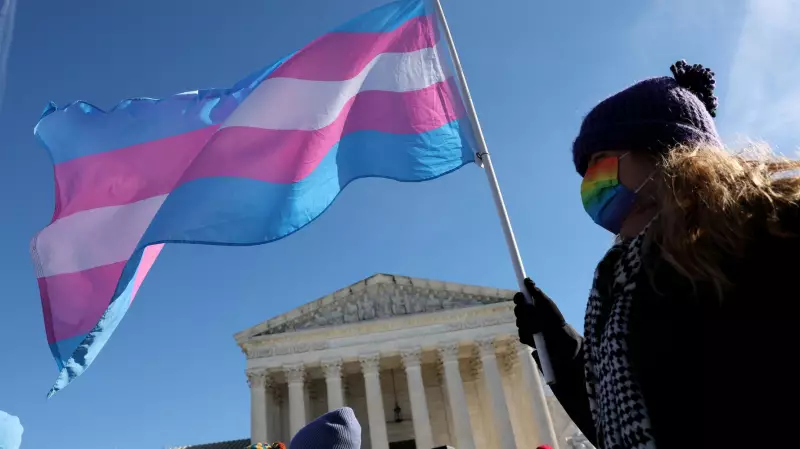
The U.S. Supreme Court is set to hear oral arguments in two pivotal cases on Tuesday that will examine whether state laws prohibiting transgender girls and women from competing on women's sports teams violate federal law and the Constitution. The back-to-back hearings for Little v. Hecox from Idaho and West Virginia v. BPJ could deliver sweeping legal implications for transgender rights and sex discrimination in education.
The Core Legal Challenges
Both lawsuits, brought by the American Civil Liberties Union (ACLU) on behalf of transgender student-athletes, argue that state bans violate the Equal Protection Clause of the 14th Amendment. The plaintiffs also contend that West Virginia's law specifically breaches Title IX, the federal statute prohibiting sex discrimination in federally funded education programs.
The plaintiffs' claims are narrowly focused. They are not arguing for all transgender girls to be allowed on women's teams, but specifically for those, like the plaintiffs, who have undergone hormone therapy to mitigate perceived physiological advantages. Lindsay Hecox, a trans woman who was a freshman at Boise State University in 2020, sued Idaho after being barred from trying out for the women's track team. Becky Pepper-Jackson, now 15, sued West Virginia after being blocked from trying out for her school's girls' track team.

A Nationwide Battle Reaches the High Court
Idaho's House Bill 500, passed in 2020, was the nation's first law banning transgender women and girls from women's athletics. It includes a controversial provision allowing anyone to dispute a student's sex, potentially subjecting them to what advocates call invasive verification of reproductive anatomy, testosterone levels, or genetic makeup. West Virginia's House Bill 2917 followed a similar model.
These cases arrive at the Supreme Court amid a heated political and cultural conflict. Currently, 27 states have laws barring trans women and girls from women's sports teams. The legal push is heavily backed by conservative groups like the Alliance Defending Freedom (ADF), which helped draft model legislation and is now representing both Idaho and West Virginia before the Court. The ADF reportedly authored at least 130 anti-equity bills in 2023 alone.
Broader Implications for Privacy and Discrimination
Legal experts say the Court's decision could answer critical questions about the level of legal protection afforded to transgender people. The plaintiffs hope the Court applies "heightened scrutiny," a standard used in civil rights cases, recognizing transgender people as a group historically subject to discrimination.
Advocates warn that upholding these laws could legitimize broader privacy invasions for all student-athletes, citing examples like Florida schools briefly asking for menstrual history. There is also concern about increased harassment, not only of transgender girls but also of cisgender girls whose appearance or athleticism leads to suspicion.
Kel O'Hara, a senior attorney at Equal Rights Advocates, noted these laws "encourage increased gender policing" and create "a culture of suspicion and mistrust." The roots of such sex verification, she points out, trace back to Nazi Germany's practices ahead of the 1936 Olympics and today disproportionately target women of color from the Global South.
The Supreme Court's rulings could either solidify the patchwork of state bans or establish a new federal precedent protecting transgender students' rights under Title IX and the Constitution, shaping the landscape of school sports for years to come.






