

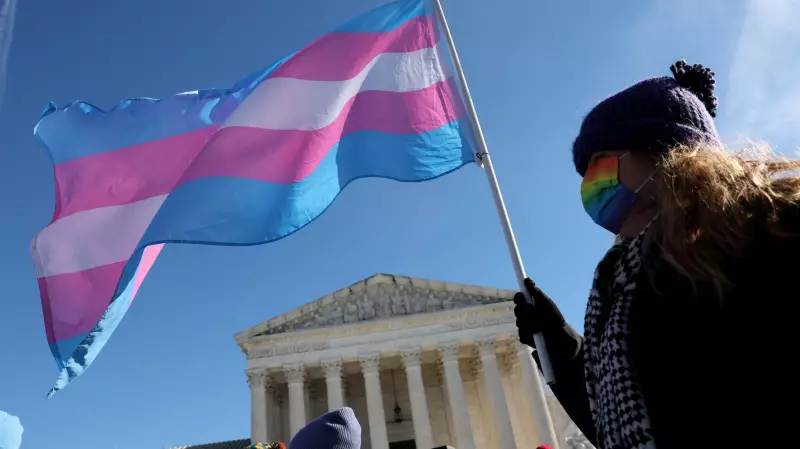
The U.S. Supreme Court appeared deeply divided on Tuesday as it began hearing oral arguments in two landmark cases challenging state laws that ban transgender girls and women from participating on women's sports teams. The justices grappled with whether these bans violate the Constitution's Equal Protection Clause and Title IX, the federal law prohibiting sex discrimination in education.
Idaho's Law Under Scrutiny
The first case, Little v. Hecox, centers on Lindsay Hecox, a senior at Boise State University. Hecox sued Idaho over its 2020 law, arguing it violated her constitutional right to equal protection. She initially won in lower courts. However, in September 2025, Hecox argued her case is now moot because she no longer plays or intends to play college sports in Idaho.
Liberal Justices Sonia Sotomayor and Ketanji Brown Jackson highlighted the intense negative attention Hecox has faced. They suggested that forcing an unwilling plaintiff to continue a high-profile lawsuit was problematic. Meanwhile, conservative justices probed foundational legal questions. Justice Neil Gorsuch, who authored the significant 2020 Bostock v. Clayton County decision protecting transgender employees, asked Idaho's solicitor general if transgender people should be considered a legally protected class.

Justice Amy Coney Barrett questioned the law's broad implications, asking if it could bar a six-year-old from playing on a team matching their gender identity. Idaho's representative claimed, without evidence, that young boys have an inherent athletic advantage by that age.
Kathleen Harnett, Hecox's lawyer, countered that her client, after over a year of testosterone suppression and estrogen therapy, does not have a physiology similar to a cisgender woman. Harnett also noted that examples of trans athletes excelling in women's sports are exceedingly rare.
A National Movement Reaches the High Court
The second case heard Tuesday afternoon, West Virginia v. BPJ, involves Becky Pepper-Jackson, now 15. She sued three years ago after being barred from trying out for her school's girls' track team, despite having received medication that prevented her from undergoing male puberty. Lower courts agreed the state law violated her rights under the Equal Protection Clause and Title IX.
Hecox and Pepper-Jackson are the only known athletes in their respective states who would be directly affected by these laws. Their cases represent the culmination of a five-year wave of anti-LGBTQ+ legislation. The conservative Christian legal group Alliance Defending Freedom, which helped author dozens of such bans, is now representing both Idaho and West Virginia before the Supreme Court. In total, 27 states have passed restrictions on transgender athletes.
The Trump administration has backed Idaho's law, with lawyer Hashim Mooppan arguing the statute is legitimate due to the small number of trans women in sports. This stance is seen as ironic by advocates, given former President Donald Trump's broader efforts to roll back transgender rights. Data underscores how few athletes are impacted: the president of the National Collegiate Athletic Association told Congress in December 2024 that of roughly 550,000 college athletes in the U.S., only about 10 are transgender.
Broad Implications for Law and Society
Advocates warn the Supreme Court's decisions in these cases will have far-reaching consequences. The rulings could determine the fate of similar bans across the country and set precedent on critical legal questions surrounding privacy, sex discrimination, and the broader treatment of transgender people under the law.
Idaho defends its law as necessary to protect women and girls from competitors with perceived "biological advantages." However, the legal battles highlight the complex intersection of medicine, identity, and fairness in athletics. The court's task is to balance these concerns with fundamental guarantees of equal protection.
As the nation watches, the Supreme Court's deliberations mark a pivotal moment for civil rights and the future of sports inclusion in America. This is a developing story.






