Supreme Court Halts California's School Policy on Gender Identity Disclosure
The United States Supreme Court issued a significant ruling on Monday, temporarily blocking the state of California from enforcing a controversial policy that restricted public schools from informing parents if their child expresses gender nonconformity or attempts to change their name or pronouns. This decision, delivered through the court's emergency shadow docket in the case Mirabelli v. Bonta, reinstates a lower court's ruling that would permit schools to disclose such information to parents regarding their child's gender expression.
Ideological Split and Legal Reasoning
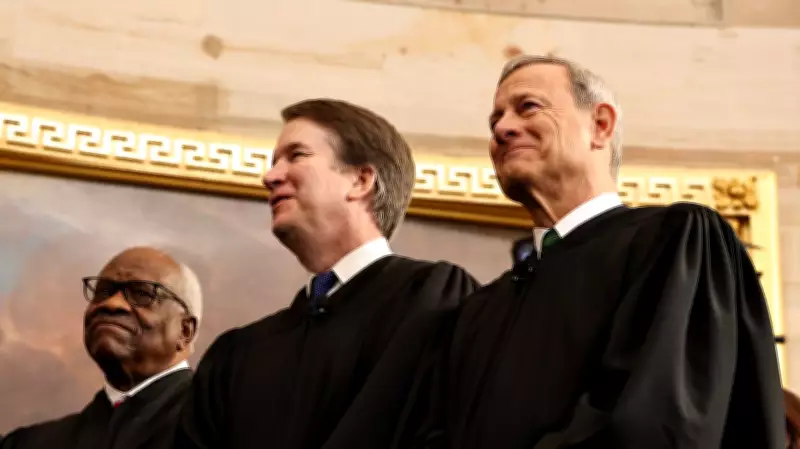
In an unsigned opinion that was not unanimous, the court appeared divided along ideological lines with a 6-3 split. All three liberal justices dissented from the ruling. The opinion emphasized that parents asserting free exercise claims hold sincere religious beliefs about sex and gender, feeling a religious obligation to raise their children accordingly. The court stated that California's policies violate these beliefs, referencing its previous decision in Mahmoud v. Taylor, which allowed parents to opt their children out of elementary school curricula containing books with LGBTQ+ themes.
Background of the California Law
The case challenged a 2024 California law, signed by Democratic Governor Gavin Newsom, which mandated that public school employees cannot disclose any information about a student's sexual orientation, gender identity, or expression to anyone without the student's explicit consent. This legislation was the nation's first to ban forced outing policies in schools, contrasting sharply with anti-trans laws in other states that require schools to inform parents about a child's gender identity. A group of parents sued, arguing that the law violates the Constitution and that school employees should be required to inform them about their own children's changes in gender identity.

Judicial Opinions and Dissents
The ruling specifically noted that while it only granted reinstatement on behalf of parents, the lawsuit also claimed the policy violated teachers' free speech rights by prohibiting them from informing parents. The justices were notably split in their positions:
- Justices Clarence Thomas and Samuel Alito would have granted the relief in full for all parties.
- Justice Sonia Sotomayor would have denied it entirely.
- Justice Amy Coney Barrett wrote a concurring opinion, joined by Chief Justice John Roberts and Justice Brett Kavanaugh.
- Justice Elena Kagan wrote a dissent, joined by Justice Ketanji Brown Jackson.
Kagan's dissent strongly criticized the court's use of the shadow docket, highlighting issues such as inadequate briefing, the absence of oral arguments, and the rushed timeframe. She argued that the court's terse and dismissive ruling prematurely resolves complex legal questions that demand careful reflection and explanation.
Future Implications and Related Cases
The Supreme Court is likely to revisit this issue in the near future. The justices have been asked to hear arguments in a similar case, Foote v. Ludlow School Committee, though they have not yet agreed to take it. Both cases follow less than a year after the court's decision in Mahmoud, which handed conservatives a victory on education and LGBTQ issues in June 2025. That ruling increased pressure on schools to adhere to conservative and anti-LGBTQ agendas, intensifying the focus of right-wing culture wars on educational institutions.
This latest development underscores the ongoing national debate over parental rights, religious freedom, and the protection of LGBTQ students in schools, setting the stage for further legal battles and policy discussions across the country.