Quebec Language Authority Initiates Extensive Secret Shopper Operation
The Office québécois de la langue française (OQLF) is preparing to launch its most comprehensive secret shopper investigation in three years, deploying undercover observers to 7,800 retail establishments across Quebec. This ambitious operation, scheduled to conclude by November, will involve nearly 14,000 store visits to document whether workers greet and serve customers in French, English, or both languages.
Expanded Scope and Methodology
Unlike previous investigations conducted at approximately six-year intervals, this new inquiry comes just three years after the last report was published in 2024. The provincial government has allocated up to $350,000 for a private firm to execute the study, with results expected by March 31, 2027. Two companies—Segma Recherche and Advanis—have submitted bids to oversee the investigation through Quebec's public tender system.
Observers will follow strict protocols during their visits, first noting "the language of the first words spoken by the employee to welcome you to the store" as the greeting language. They will then document the language used in response to their questions as the service language. If service begins in a language other than French, observers must request French service and record whether employees switch languages, seek French-speaking colleagues, or are unable to provide service in French.

Geographic Focus and Demographic Considerations
Nearly half of all visits will occur in Montreal, with particular attention directed toward areas with significant anglophone and immigrant populations. The OQLF plans to analyze Montreal results across five specific zones: Côte-des-Neiges, Snowdon and Town of Mount Royal; Pointe-Claire; western downtown between Parc Avenue and Claremont Avenue in Westmount; the St-Laurent Boulevard corridor between Little Italy and Old Montreal; and the remainder of the island.
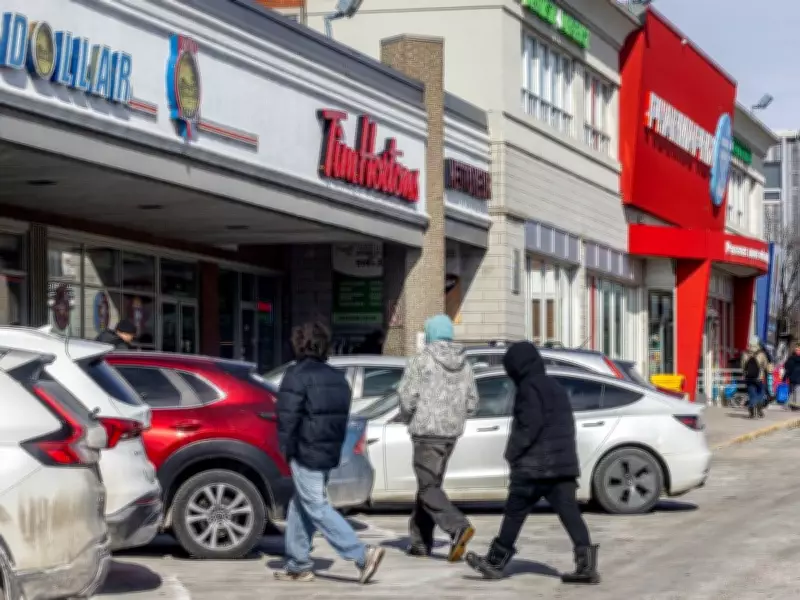
Major shopping centers will receive concentrated scrutiny, with Fairview Pointe-Claire scheduled for 183 visits, Place Versailles for 177, Galeries d'Anjou for 160, Royalmount for 148, and Carrefour Angrignon for 140 visits. The investigation will also extend to Laval, the South Shore (Brossard, Boucherville and Longueuil), Gatineau, Quebec City, and Sherbrooke/Magog.
Historical Context and Previous Findings
The 2024 OQLF report revealed that across Quebec's urban areas, 78% of customers were greeted in French, while 12% received English greetings and 10% encountered bilingual greetings like "Bonjour-Hi." However, Montreal Island showed a concerning trend, with French-language welcomes declining 13 percentage points between 2010 and 2024, from 84% to 71%. On Montreal's West Island, only 49% of greetings were in French, with 31% in English and 20% bilingual.
Regarding service language, French was available in 98% of visits across all urban areas studied. On Montreal Island specifically, customers were unable to obtain service in French in 3% of visits. These findings occur against a backdrop of ongoing concern among Quebec's francophone majority about the status of French, with polls consistently indicating most believe the language is in decline.
Observer Composition and Methodological Questions
The public tender document specifies that observation teams "must be composed of members representative of the local clientele, particularly with respect to age, gender and ethnocultural background." This mirrors wording from the 2024 study, where approximately 60% of the 10,378 visits were conducted by observers from visible minorities—a significant departure from the 2010 study when teams "represented the Quebec majority" and "did not have visible ethnic traits."
OQLF spokesperson François Laberge defended the methodology, stating that teams "reflected a diversity of profiles similar to those that may represent the clientele in these urban areas" rather than matching specific neighborhood demographics. Statistics Canada data shows visible minorities comprise 38% of Montreal Island's population and 27% of the wider Montreal region including Laval and the South Shore.

Previous studies have suggested that store personnel may be more likely to greet customers in English if they appear to be from visible minorities. A 1996 Quebec government study found that "the visibility of people's distinguishing features exerts an influence on the language of welcome," while a 2008 Conseil supérieur de la langue française study documented instances of "linguistic profiling" where white francophones addressed minority-group members in English, assuming they didn't speak French.
Institutional Context and Budget Increases
The OQLF's annual budget has more than doubled to $49 million since the Coalition Avenir Québec government took power in 2018. According to the Charter of the French Language (Bill 101), the language authority must report at least every five years on "the use and status of the French language, and the behaviour and attitudes of the various linguistic groups." Laberge explained that the OQLF is revisiting the issue now due to its mandate to monitor changes in Quebec's linguistic situation.
The methodology of these investigations has faced scrutiny beyond observer composition. In response to a 2024 access-to-information request, the OQLF redacted details about "problems" encountered by Segma Recherche during that year's study, citing potential harm to commercial interests. The Gazette has challenged this decision through Quebec's access-to-information commission, though proceedings were suspended pending an unrelated court case regarding journalist representation at commission hearings.
As Quebec prepares for this extensive linguistic investigation, the results will likely fuel ongoing debates about language preservation, commercial practices, and the complex relationship between demographic diversity and linguistic norms in Canada's predominantly French-speaking province.