

Quebec's Constitutional Project Enters Critical Phase Amid Political Turmoil
Quebec Justice Minister Simon Jolin-Barrette's ambitious plan to establish a written constitution for the province faces a crucial test this week as public hearings resume on Bill 1 (Quebec Constitution Act, 2025). The controversial legislation arrives at a politically sensitive moment, with the ruling Coalition Avenir Québec government showing signs of internal division and facing widespread opposition from multiple sectors of Quebec society.
Minister's Personal Commitment Amid Leadership Transition
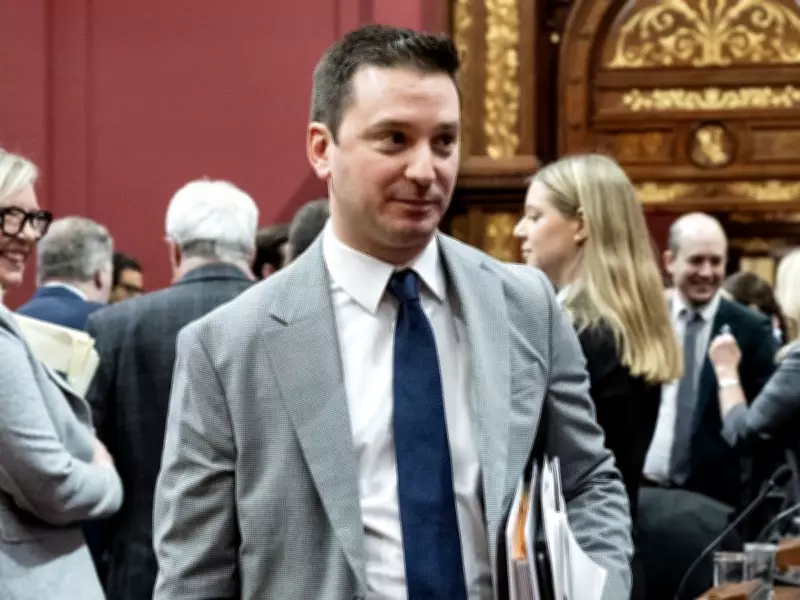
Simon Jolin-Barrette recently stepped aside from the race to succeed Premier François Legault, citing both family considerations and his determination to advance the constitutional project. The 38-year-old minister represents the CAQ's identity-focused wing, having been the driving force behind two signature policies: Bill 21 (banning religious symbols for government workers) and Bill 96 (the major overhaul of the Charter of the French Language).
In explaining his constitutional vision, Jolin-Barrette emphasized that Quebec needs its own constitution to "defend the values that unite us, to protect our language, which will always be fragile, and to strengthen our autonomy." The proposed legislation represents what former premier Legault framed as a legacy project meant to affirm "the constitutional existence of the Quebec nation" and become "the law of all laws."

Mounting Opposition and Controversial Provisions
The sweeping constitutional bill touches multiple areas of Quebec law, affecting everything from the hierarchy of rights to union powers and the independence of public institutions. While hailed by groups promoting French language rights and secularism, the proposal has drawn fierce criticism from numerous quarters.
Key criticisms include:
- Concerns about stripping away minority and human rights protections
- Allegations of concentrating excessive power in government hands
- Worries about undermining citizens' ability to challenge rights-infringing laws
- Exclusion of Indigenous perspectives from the constitutional framework
The Barreau du Québec has warned of a "drift towards authoritarianism" that threatens the rule of law, while the Canadian Civil Liberties Association stated in its brief that the bill "lacks political legitimacy and facilitates the authoritarian drift into which the Quebec government has embarked." A lawyers' group has even asked the United Nations to intervene.
Internal CAQ Tensions Surface
As external opposition mounts, pressure is emerging from within the CAQ itself. Leadership candidate and former economy minister Christine Fréchette, widely seen as the front-runner to succeed Legault, has signaled reservations about aspects of the proposed legislation. She suggested last week that "elements" of Jolin-Barrette's bill could be "reoriented" or "redirected," though she declined to specify which provisions.
Jolin-Barrette's response highlighted potential internal tensions, with the minister asserting that "I will decide what will and won't be adjusted in the bill," suggesting he views the constitution as his personal project rather than a party initiative.
Upcoming Hearings and Political Context
Eight days of hearings at the National Assembly's institutions commission begin this month, promising heated debates. Supporters include Droits collectifs Québec, which argues the constitution would protect important Quebec laws within the Canadian system, and the Mouvement laïque québécois, which praises measures affirming secularism.
However, most presenting briefs come from opponents, including:

- Several anglophone organizations like TALQ and the Task Force on Linguistic Policy
- The Assembly of First Nations Quebec-Labrador, which notes Indigenous Peoples are "completely excluded" from the framework
- Mouvement démocratie nouvelle, which calls the government's approach "illegitimate and undermines Quebec democracy"
The political timing adds complexity to the constitutional debate. With the CAQ lagging in polls, Legault as a lame-duck premier, a leadership race underway, and elections approaching in October, the party faces questions about whether it should force through such significant legislation without broader support. As one critic noted, adopting a constitution without cross-party backing could undermine its legitimacy, especially given the government's current political vulnerabilities.





