The Origins of Political Profanity: Pierre Trudeau's 1971 'Fuddle-Duddle' Moment
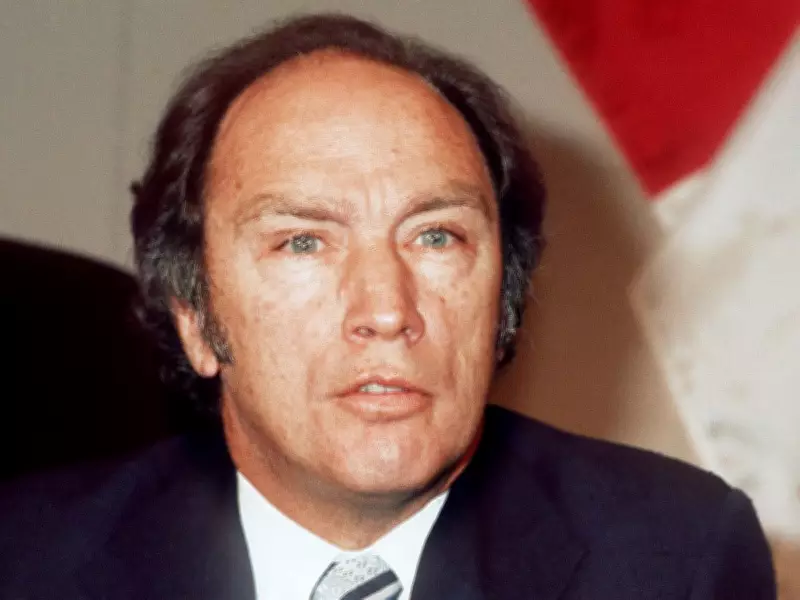
In Canadian political lore, few incidents are as iconic as the 1971 parliamentary exchange where former Prime Minister Pierre Elliott Trudeau was accused of mouthing the words "f--k off" in the House of Commons. This event, famously dubbed the "fuddle-duddle" incident, marks the first recorded use of the F-bomb in Canadian political history, a moment that continues to resonate in discussions about language and decorum in government.
A Historical Context for the F-Word
The F-word itself has a long and storied past, with its first documented appearance dating back to 1528, when an anonymous monk scribbled it in the margins of a manuscript on morality. Over centuries, it evolved into a versatile term used as a noun, verb, adjective, or adverb across many languages. In Canada, its political debut came in 1971, when two Progressive Conservative MPs alleged that Trudeau had uttered the profanity during a heated debate.
When confronted by journalists, Trudeau responded with his characteristic wit, deflecting the accusation by asking, "What is the nature of your thoughts, gentlemen, when you say 'fuddle duddle' or something like that?" This clever evasion allowed him to sidestep direct confirmation, though his son, Justin Trudeau, later clarified that his father did indeed use the stronger language.

The Evolution of Profanity in Modern Politics
Since Trudeau's time, the use of the F-word in political spheres has become more common, reflecting broader societal shifts in language norms. In the United States, for instance, a recent investigation by the New York Times revealed that Democratic lawmakers frequently employ the term on social media, with Arizona Senator Ruben Gallego using it 77 times since 2020. The word often targets political opponents, such as the Trump administration or immigration policies, and has even appeared in paid political advertisements.
In Canada, politicians have followed suit, with notable figures like former Toronto Mayor Mel Lastman and Conservative MP Cheryl Gallant using the F-word in public statements. Even former Prime Minister Stephen Harper was known to use it when frustrated, once exclaiming, "I want to know why nothing ever happens unless I use the word f--k!" However, not all leaders embraced such language; Jean Chretien, for example, maintained a reputation for avoiding profanity entirely.
Cultural Impact and Parliamentary Norms
The "fuddle-duddle" incident highlights the tension between informal expression and parliamentary decorum. While the F-word remains technically unparliamentary and is often frowned upon in formal settings, its increased visibility in politics underscores changing attitudes toward language. This shift mirrors global trends, where profanity is used to convey passion, frustration, or authenticity in political discourse.
As Canadian politics continues to evolve, the legacy of Trudeau's 1971 moment serves as a reminder of how language shapes public perception and political identity. Whether viewed as a breach of etiquette or a sign of humanizing candor, the F-word's journey from whispered insult to mainstream political tool reflects deeper transformations in communication and culture.