

Minnesota's Constitutional Challenge to Federal Immigration Enforcement
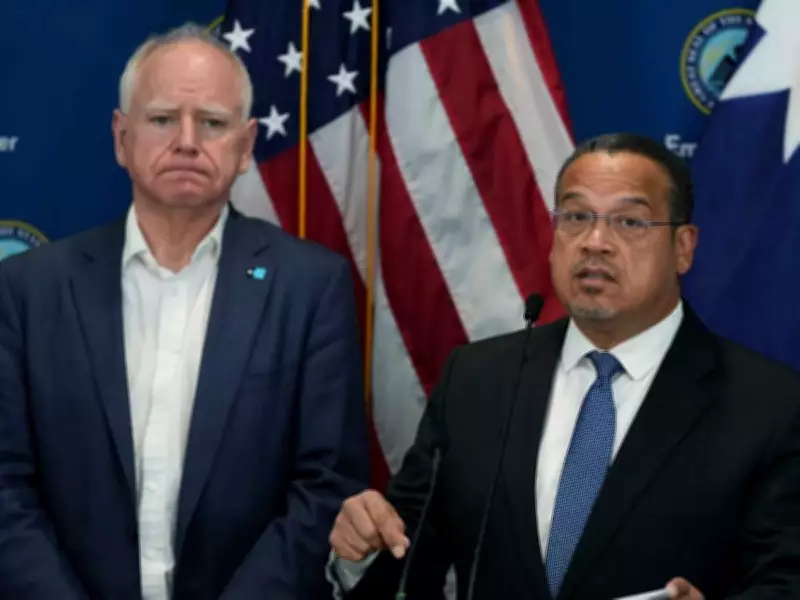
Minnesota Attorney General Keith Ellison has initiated a significant legal confrontation with the federal government, filing a lawsuit on January 12, 2026, against Homeland Security Secretary Kristi Noem and Immigration and Customs Enforcement Acting Director Todd Lyons. The lawsuit represents a direct challenge to the Trump administration's immigration enforcement policies within the state.
The Core Constitutional Argument
In his formal complaint and subsequent press conference, Ellison argued that ICE's enforcement "surge" in Minnesota constitutes a violation of the Tenth Amendment and the sovereign powers granted to states. The lawsuit, filed on behalf of Minnesota along with municipal co-plaintiffs Minneapolis and St. Paul, asserts that the state's designation as an illegal alien "sanctuary" should shield it from federal immigration law enforcement.
The legal position taken by Minnesota's Democratic leadership suggests that states possess the authority to "nullify" federal laws they deem unconstitutional within their jurisdictions. This argument directly challenges the Supremacy Clause of Article VI of the Constitution, which traditionally establishes federal law as "the supreme law of the land" over state law.

Historical Precedents of State Nullification
The concept of state nullification of federal law has deep historical roots in American politics, with outcomes that have proven problematic throughout history. In 1798 and 1799, Thomas Jefferson and James Madison authored the Kentucky and Virginia Resolutions in response to the Alien and Sedition Acts, arguing that states could declare unconstitutional federal laws null and void within their borders.
The most dramatic historical example occurred during the nullification crisis of 1832-33, when South Carolina passed the Ordinance of Nullification declaring federal tariffs unconstitutional. This confrontation escalated tensions that eventually contributed to the Civil War, with South Carolinian John C. Calhoun emerging as the most prominent advocate for both nullification and secession.
During the civil rights movement, segregationists invoked similar "states' rights" arguments to defy federally mandated desegregation. The Southern Manifesto of 1956 claimed the Tenth Amendment permitted states to resist the Supreme Court's Brown v. Board of Education decision, while Arkansas Governor Orval Faubus used these principles to block Black students from attending Little Rock Central High School in 1957.
Modern Political Implications
Minnesota's current leadership, including Governor Tim Walz, Minneapolis Mayor Jacob Frey, and Representative Ilhan Omar, has embraced arguments that critics compare to historical figures like Jefferson Davis and George Wallace. While these modern politicians would likely reject such comparisons, the constitutional principles they're invoking share striking similarities with past nullification movements.
The Trump administration has signaled a potentially severe response to Minnesota's resistance. Trump border czar Tom Homan announced that the administration is prepared to draw down federal personnel in Minnesota if the state continues its non-cooperation. President Donald Trump has reportedly been considering invoking the Insurrection Act of 1807, following the precedent set by President Abraham Lincoln in response to the attack on Fort Sumter in 1861.
Broader Constitutional Questions
This legal confrontation raises fundamental questions about federalism and the balance of power between state and federal governments. The outcome could establish important precedents for how states interact with federal immigration enforcement and other areas of federal policy.
The Minnesota case represents more than just an immigration dispute—it touches on core constitutional principles that have divided American politics since the nation's founding. As the legal proceedings unfold, they will likely influence similar debates in other states considering resistance to federal policies.

This constitutional showdown occurs against a backdrop of increasing polarization in American politics, with states increasingly asserting their authority in areas traditionally dominated by federal policy. The resolution of Minnesota's lawsuit could have lasting implications for the interpretation of states' rights and federal authority in the 21st century.





