

Federal Judge Issues Sharp Rebuke Over Removal of Slavery Exhibit in Philadelphia
A federal judge delivered a forceful warning to Justice Department lawyers during a contentious hearing in Philadelphia on Friday, labeling their arguments as "dangerous" and "horrifying." The exchange centered on the abrupt removal of an outdoor exhibit detailing the history of slavery at the President's House Site on Independence Mall, a location where nine individuals were enslaved by George and Martha Washington.
Exhibit Removal Sparks Legal and Historical Controversy
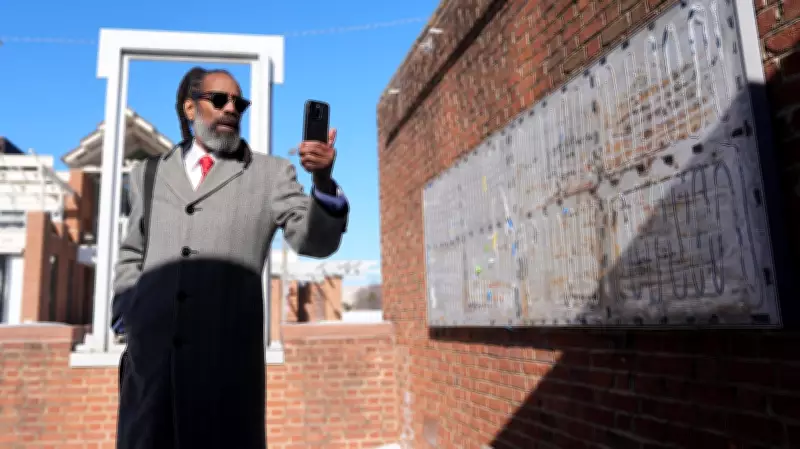
The city of Philadelphia, which collaborated with the National Park Service on the exhibit two decades ago, was shocked to discover workers using crowbars this month to remove plaques, panels, and other materials. These displays narrated the stories of the enslaved people, some of which had only been uncovered in the past twenty-five years. The materials were subsequently placed in a pickup truck and moved to storage, raising concerns from the bench about potential damage.
Senior U.S. District Judge Cynthia Rufe, an appointee of President George W. Bush, presided over the hearing. She heard extensive testimony from former city officials involved in the original planning, noting the city had contributed $1.5 million to the project. Judge Rufe plans to personally inspect both the storage area and the site before ruling on the city's request to restore the exhibit.

'You Can't Erase History'
Judge Rufe's remarks cut to the core of the dispute. "You can't erase history once you've learned it. It doesn't work that way," she stated emphatically. The removal followed President Donald Trump's executive order aimed at "restoring truth and sanity to American history" across museums, parks, and landmarks.
Assistant U.S. Attorney Gregory in den Berken argued that the Park Service routinely updates its exhibits and that "the government gets to choose the message it wants to convey." Judge Rufe interrupted him, stating, "That is a dangerous statement you are making. It is horrifying to listen to. It changes on the whims of someone in charge? I'm sorry, that is not what we elected anybody for."
Legal Arguments and Public Reaction
The Justice Department contended that the government cannot be compelled to tell a specific historical narrative. In contrast, lawyers for the city and advocacy groups argued the Park Service does not possess "carte blanche" to interpret national history arbitrarily.
Attorney Michael Coard, representing an advocacy group supporting the exhibit, criticized the administration's position. "It's one thing to whisper that type of dictatorial power. But to send lawyers into a public courtroom to make that argument is absolutely frightening," he said. "I'm really worried about the state of America."
The exhibit previously included biographical details about the nine enslaved individuals. Now, only their names—Austin, Paris, Hercules, Christopher Sheels, Richmond, Giles, Oney Judge, Moll, and Joe—remain engraved on a cement wall at the site.
Community Response and Pending Decision
The removal has elicited a strong emotional response from the community. Visitors have been seen shedding tears, leaving flowers, and posting a handmade sign that reads, "Slavery was real." Judge Rufe acknowledged the timing is particularly sensitive, with a surge of visitors expected for the 250th anniversary of the nation's founding this year.
She has asked Justice Department lawyers to ensure no further disturbances occur at the site while she prepares her ruling. The case highlights a profound debate over historical interpretation, government authority, and the preservation of difficult chapters in American history at a landmark location in Philadelphia.






