

It's a common misconception that the fundamental freedoms enjoyed by Canadians sprang to life fully formed in 1982 with the adoption of the Charter of Rights and Freedoms. While the Charter has undeniably shaped the modern legal landscape, this view overlooks a rich, deeper tradition of liberty that stretches back to the nation's earliest days.
The Man Who Defied Halifax's Elite
One of the most powerful examples of this tradition is the story of Joseph Howe. Decades before Confederation and more than a century before the Charter, Howe—a newspaperman, publisher, and future Father of Confederation—secured a landmark victory for freedom of the press in 1835.
Howe was a firm believer in the "liberties of the freeborn Englishman." As the publisher of the Novascotian in Halifax, he took this belief to its logical conclusion. That year, he printed an anonymous letter that meticulously detailed the corruption and graft of the colony's ruling class. The letter named names, implicating judges, magistrates, and politicians in financial misconduct.

A Courtroom Gamble for Liberty
The reaction from the Halifax establishment was swift and severe. Howe was charged with seditious libel, a serious criminal offence that carried the very real threat of imprisonment and financial ruin. In a telling sign of the power dynamics at play, no lawyer in Halifax would agree to represent him.
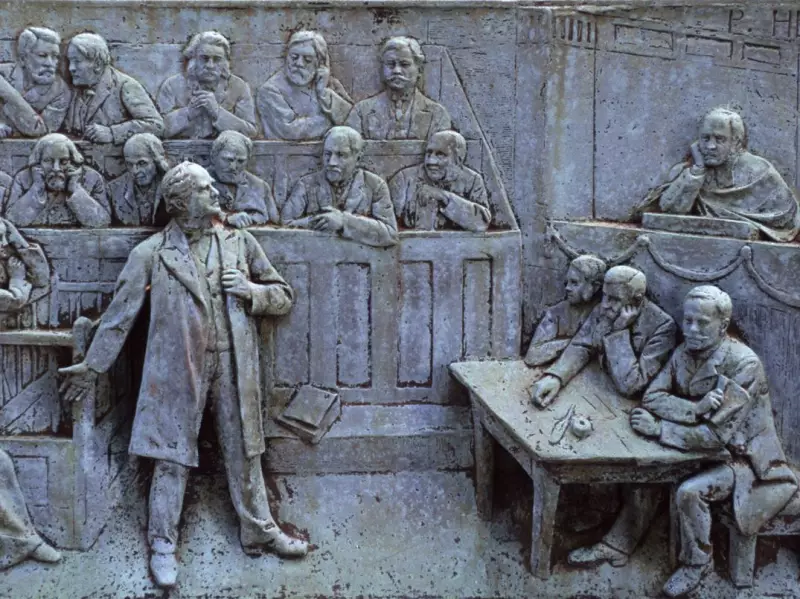
Undeterred, Howe made the bold decision to defend himself. With little formal legal training but immense confidence in both his cause and the common sense of ordinary people, he stood before the court to face the colony's Attorney General. For six hours, Howe presented his case directly to the jury. He meticulously demonstrated the truth of the published allegations, argued that his motives were purely in the public interest, and framed the trial as a defence of liberty itself.
This was a strategic masterstroke. At the time, truth was not a legal defence against a libel charge. Howe's argument circumvented this technicality by appealing directly to the jury's sense of justice, making them the ultimate arbiters of not just the law, but of principle.
A Legacy That Predates the Nation
The jury's acquittal of Joseph Howe was a resounding victory. It established a crucial precedent: that the press could act as a watchdog on power, and that a jury of citizens could uphold that right even when the letter of the law seemed opposed. This event stands as a testament to a Canadian tradition of freedom that is ancient, not novel.
Howe's triumph reminds us that the roots of Canadian liberty run deep. While the Charter of Rights and Freedoms is a pivotal document in our national story, it built upon foundations laid by individuals like Howe, who staked their reputation and freedom on the belief that justice and transparency were the birthright of all.
The story of the 1835 trial is more than a historical footnote; it is a core chapter in the ongoing Canadian journey to define and defend our freedoms, a journey that began long before the country itself was formally constituted.






