

B.C. Premier's 'Treason' Accusation Against Alberta Separatists Ignites Legal Firestorm
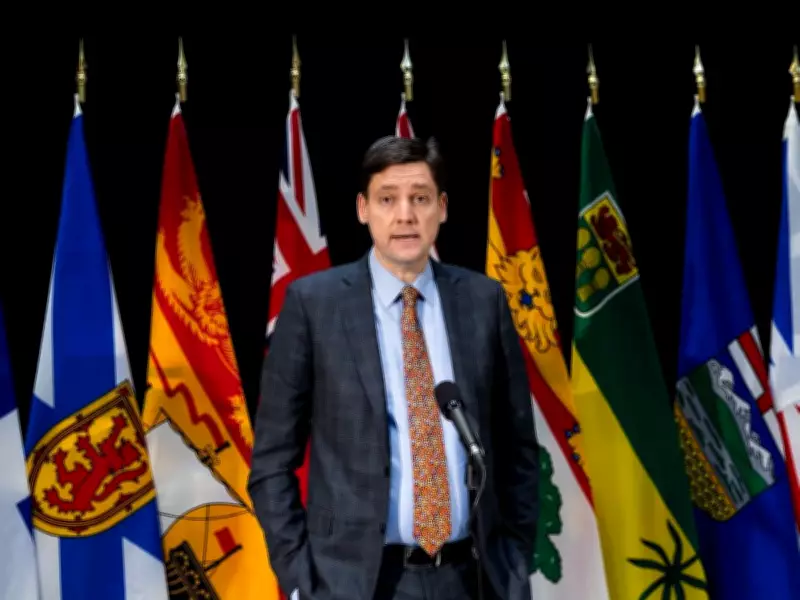
British Columbia Premier David Eby has ignited a significant legal and political controversy by labeling the activities of Alberta separatists as "treason." His comments, made ahead of a first ministers' meeting in Ottawa, have sparked intense debate about the legality of foreign outreach by provincial independence movements.
The Context of Eby's Controversial Statement
Premier Eby was specifically referring to three trips that members of the Alberta Prosperity Project (APP) claim to have made to Washington, D.C. in 2025. According to the separatist group, these visits involved meetings with unnamed officials from the Trump administration, with discussions first reported late last year. The APP asserts that these conversations covered substantial ground, including potential U.S. recognition of an independent Alberta following a successful referendum, defense and trade cooperation in the event of separation, cross-border oil pipeline routes, and even discussions about a multibillion-dollar loan to facilitate Alberta's transition to independence.
Legal Experts Challenge the 'Treason' Characterization
Legal authorities were quick to question Eby's use of the term "treason." Canada's treason law, established in 1893, sets an exceptionally high bar for such charges, requiring acts like "killing Her Majesty" (referring to Queen Victoria) or directly aiding a military attack against Canada. Given these stringent requirements, most legal experts consider the application of treason charges to these diplomatic meetings as highly unlikely.

However, Eby's comments have raised legitimate questions about the legality of these meetings, particularly in light of recent expansionist rhetoric from the United States targeting Canada and other Western Hemisphere nations. The situation has prompted examination of whether Canada has laws comparable to those in other countries that regulate private citizens' diplomatic engagements.
Canada's Legal Framework for Private Diplomacy
Unlike the United States, which has the Logan Act of 1799 prohibiting unauthorized private citizens from conducting diplomacy with foreign governments, Canada lacks equivalent legislation. Global Affairs spokesman John Babcock confirmed this in an email, stating, "The short answer would be 'no', we don't have a Logan law." He further clarified that private citizens are not required to clear foreign talks with the federal government.
Nevertheless, Justice Department spokesman Ian McLeod emphasized that while private citizens may freely communicate with foreign officials, such discussions remain subject to existing criminal laws prohibiting espionage, sedition, and the unauthorized sharing of state secrets. McLeod noted that determining whether any activity violates these offenses "is a determination for law enforcement."
Historical Context and Political Reactions
Eby is not the first prominent figure to use strong language regarding the APP's activities. Former Alberta premier Jason Kenney previously referred to APP lawyer Jeff Rath as a "treasonous kook" in spring 2025 after Rath appeared on Fox News to promote the separatist cause. This historical context adds layers to the current debate about appropriate terminology and legal boundaries.
Jeff Rath, representing the APP, has confirmed that he and two other high-ranking members visited Washington, D.C. three times in 2025, with their most recent meeting allegedly occurring at the U.S. State Department headquarters in December. These revelations have intensified scrutiny of the group's foreign engagements.
The Broader Implications for Canadian Federalism
This controversy extends beyond legal technicalities to touch on fundamental questions about Canadian federalism, provincial rights, and the boundaries of political dissent. The debate highlights tensions between provincial autonomy and national unity, particularly as separatist movements engage with foreign powers. As these discussions continue, they raise important questions about how Canada's legal system addresses emerging challenges to national cohesion in an increasingly interconnected world.

The situation remains fluid, with legal experts, political leaders, and constitutional scholars continuing to analyze the implications of Eby's statements and the APP's activities for Canadian law and intergovernmental relations.





