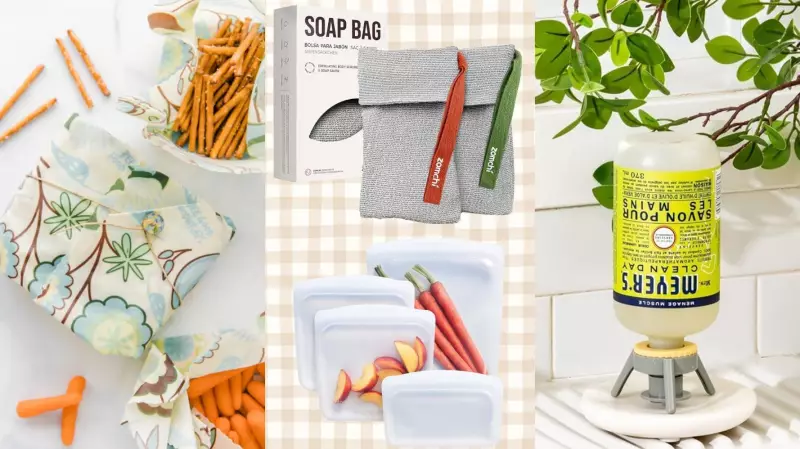
With rising costs impacting household budgets and potential supply chain disruptions affecting product availability, many Canadians are seeking smart ways to stretch their dollars and reduce reliance on single-use items. Inspired by personal experience and expert warnings about elevated prices, here is a curated list of practical, sustainable products designed to help you save money and minimize waste.
Smart Solutions for Food and Kitchen Savings
One major area feeling the pinch is the grocery bill. Food waste is a common and costly problem. Produce-extending refrigerator drawer liners, available on Amazon for $13 for a pack of four, can help. These trimmable, reusable sheets absorb excess moisture and improve air circulation to keep fruits and vegetables fresh longer. They are made from a food-safe, BPA-free material.
To replace disposable plastic wrap, consider organic beeswax wraps. Sold on Etsy for $8 and up, these reusable sheets are made from natural cotton infused with beeswax, oils, and pine resin. They seal over food items and can be washed with cool water and soap, effectively mimicking "nature's peel and rind."

For versatile and durable food storage, Stasher reusable silicone bags are a top choice. A 4-pack is $43 on Amazon (regularly $55). These bags are non-porous, inhibiting bacterial growth, and can be frozen, microwaved, boiled, and oven-used. They are a permanent replacement for plastic zipper bags, which experts warn may become harder to find.
Another innovative storage option is Food Huggers, a 5-pack of silicone sleeves for $18 on Amazon. They stretch over opened cans, jars, and cut produce, providing an airtight seal while taking up less space than traditional containers. They are BPA-free and dishwasher-safe.
Extending the Life of Everyday Products
Getting the most out of products you already buy is key to saving. For bar soap users, exfoliating soap-saving bags ensure no sliver goes to waste. A 2-pack costs $12 on Amazon. These bags allow you to use every last bit of soap while gently exfoliating your skin.
To get every drop from bottles, Flip-It bottle tops are a clever solution. Featured on Shark Tank, this 2-pack for $16 lets bottles stand securely upside down, draining contents to the top. They are made from BPA-free, dishwasher-safe plastic.
The Spatty is another tool designed for total product extraction. For $10 on Amazon, this flexible, non-toxic spatula scrapes out the last bits from jars and bottles of condiments, cosmetics, and more.
For tubes of toothpaste, lotion, or cream, a pair of stainless steel turnkeys ($10 on Amazon) uses an ergonomic rolling handle to squeeze out every last ounce, promising easy use and rust resistance.
Sustainable Swaps for Home and Personal Care
Replacing disposable household items with reusable versions offers long-term savings. Swedish dishcloths, a 10-pack for $20 on Amazon, are a biodegradable, machine-washable alternative to paper towels. Made from cellulose and cotton, they are super-absorbent and work on virtually any surface.
For back-to-school or home office needs, an endlessly reusable smart notebook like the RocketBook merges function and technology. Priced from $28 on Amazon, its 36 special pages are fully erasable. You can save your notes digitally via a QR code using the compatible pen, then wipe the page clean.
In personal care, a silicone scalp scrubber ($8 on Amazon) not only promotes scalp health and blood flow but also helps save on shampoo by creating a richer lather with less product.
For menstrual hygiene, reusable options offer significant cost savings. The Saalt menstrual cup, made from medical-grade silicone, costs $29 on Amazon and can last up to 10 years. It's a comfortable, leak-resistant alternative to tampons. For those who prefer another option, Bambody period underwear is a highly-rated absorbent alternative. A 3-pack costs $35 on Amazon, is made from bamboo fabric, and can absorb up to two tampons' worth of liquid.

By integrating these reusable and product-extending items into daily life, Canadians can take proactive steps to combat rising costs, prepare for potential shortages, and make a positive environmental impact by reducing single-use waste.