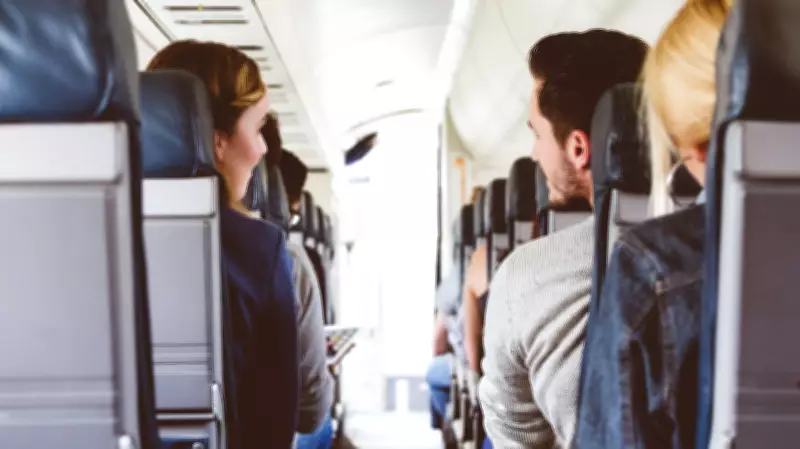
The Rise of the 'Seat Divorce' Among Traveling Couples
The man in seat 42E appears genuinely perplexed. I've just leaned across and requested he pass my water bottle to "that woman" in 42F. He glances at my wife, Cece, then back at me, slowly connecting the dots. "Do you want to switch seats?" he inquires, already beginning to stand up. We're merely five minutes into a lengthy Melbourne to Dallas journey. We politely refuse his offer, and he settles back into his seat with visible uncertainty.
A Growing Trend of Separate Seating
For several years now, we've been practicing what we call a "seat divorce" during flights. Cece strongly prefers an aisle seat. So do I. Rather than forcing one of us to endure the discomfort of a middle seat, we simply stopped sitting together. Sometimes we find ourselves in the same row with a complete stranger occupying the seat between us. Other times, Cece might be seated several rows away. Regardless of the arrangement, a few hours into the flight, we typically meet in the aisle for a brief conversation before returning to our separate seats.
We are certainly not alone in this practice. Alexa Moore and her husband, both tall individuals who despise middle seats, reached a similar conclusion. After years of reluctantly taking turns in the middle, they abandoned the pretense that it was acceptable. Now they deliberately book aisle seats and allow strangers to occupy the space between them.

During a flight to St. Croix last year, the woman seated between them asked Moore five separate times if she wanted to switch seats. "She believed she was about to gain the advantage of my exit row aisle seat," Moore recalled. "I shut down that idea very quickly."
The Psychology Behind the Judgment
However, the impulse to intervene extends beyond opportunistic seatmates. Tawanna Marie Woolfolk, a licensed clinical social worker, suggests this reaction is quite revealing. "We have been culturally conditioned to equate visible proximity with relational health," Woolfolk explained. "Sitting side by side has become shorthand for 'we're doing well.'" When a couple intentionally chooses space, she noted, that separation is often misinterpreted as conflict. "This says less about the couple themselves and more about our collective discomfort with intimacy that doesn't perform itself on demand."
The Moores have developed their own routines despite sitting apart. They wake each other from across the aisle when snacks are served. Upon landing, there's no dramatic reunion scene. "It almost feels like we didn't spend any time apart because we shared the experience of being on the same flight," Moore observed.
Intentional Connection Versus Continuous Proximity
That seamless feeling is precisely the objective, according to Dan Auerbach, an emotionally focused therapist who leads a practice of more than forty psychologists and relationship therapists. "Connection is often stronger when it's chosen, not merely continuous," he stated. "Sitting side by side for many hours can easily fade into background noise. Choosing to walk toward each other, exchange movie recommendations, or share a quick laugh—that represents intentional connection."
Some couples have transformed this separation into a highly organized system. Natalie Houston and her husband have taken hundreds of flights together over the past two years. She requires the left aisle seat so her elbow has sufficient room while she edits videos. Her husband, Matt, prefers the window seat. Even after 260 flights, he still watches every takeoff with the wonder of a first-time flyer, she remarked.
Their ideal configuration is a window and aisle seat in the same row with the middle seat remaining empty. When that isn't possible, they select two aisle seats and text each other throughout the flight. "What entrée did you order?" "What are you watching?" "Do you want to start the same movie simultaneously?"
"We're fully functioning adults who text each other from just eighteen inches away," Houston said. "It's absolutely ridiculous. And remarkably efficient."

Accidental Discovery and Flexible Systems
Once, while flying standby, they secured the last two available seats on a long-haul flight, positioned nowhere near each other. Houston boarded last and discovered herself in a middle seat between a married couple who had already settled in. There were personal items occupying her seat. Hope shone in their eyes. She offered to let them sit together. "No, no," they both responded simultaneously. For the entire flight, they passed various items over her. They whisper-yelled about chargers. They asked each other what they had ordered for dinner.
"I thought, okay, I completely understand. My husband and I do the same thing," Houston recalled. "But what they didn't grasp was that we plan for this situation. I slept through most of that flight, so I survived. I suspect they did not, however. If you're going to adopt this approach, you truly need a system."
The seat divorce began entirely by accident for Veronika Romane. She and her husband used to skip seat selection to save money and consistently ended up in different rows. "Over time, we both realized that we actually preferred sitting apart on most flights," she explained.
Now they typically sit one row apart, both in window seats. Her husband leans back to pass her cookies midflight. She affectionately calls him a "determined snack smuggler." A flight attendant once joked that they must be "either happily married or currently engaged in a very polite argument."
The arrangement isn't rigid or inflexible. When their dog passed away, they deliberately chose to sit together on their next two trips. "It helped us be there for each other during that difficult time," Romane shared.
The Potential Downsides of Prolonged Proximity
By hour fourteen on a long-haul flight, most passengers are thoroughly exhausted. You're not at your most patient, and sitting next to anyone for that duration can begin to feel overwhelming.
"Under stress, closeness can shift from genuine connection to perceived obligation," Woolfolk elaborated. "Instead of co-regulating emotions, partners may end up merely co-enduring the experience, maintaining an appearance of intimacy rather than actually experiencing it."
Expert Concerns and Alternative Perspectives
Not everyone is convinced of the seat divorce's effectiveness, however. After thirty years of clinical work, social worker Stacy Pelletieri sees a potential red flag. "You do not have the row to yourself either way. You're still surrounded by strangers," she pointed out. "So, if you're choosing strangers over your spouse simply because you need space, this speaks to an inability to create space from your partner unless you are physically separated."
She describes sitting next to her husband on long flights, each absorbed in their own movie or book, while still enjoying the physical closeness. They hold hands during turbulence. "In healthy relationships, you can be sitting right next to your partner and still establish a boundary when necessary," she asserted. "Being able to say, 'I'm going to read a book now.' To be physically close but still engaged in your own separate activity." She concedes that if both individuals genuinely just want an aisle seat, it may simply reflect a personal preference and nothing more profound.
Auerbach remains less concerned about potential implications. "Not every practical decision constitutes a psychological statement," he remarked. "If both partners want a window seat and neither feels slighted, it's probably just good back care."
A Successful Conclusion to the Journey
Halfway through our flight, Cece and I reconnect at the galley. We exchange notes on the movies we've been watching, complain about our inability to sleep, and grab a snack from the flight attendant before returning to our respective seats. When we finally land in Dallas, after seventeen hours spent apart, we're neither worn down nor irritable. We're genuinely glad to see each other. "We survived another long flight," I tell her. Cece nods in agreement. Our seat divorce, it seems, works perfectly every single time.