How Theme Nights Can Eliminate Dinner Decision Fatigue for Busy Families
Deciding what to prepare for dinner every single night represents a surprisingly draining mental task that becomes even more challenging when feeding an entire family. The constant pressure to plan meals can create significant decision fatigue, leaving little mental bandwidth for other aspects of daily life. To address this common household challenge, content creator Amy Palanjian developed a straightforward dinner framework that has transformed how her family approaches evening meals.
The Simple Framework That Changed Everything
Amy Palanjian, the recipe developer and cookbook author behind Yummy Toddler Food, implemented a weekly theme system for her family dinners. In her household, Sundays are designated for soup, Mondays feature pasta dishes, Tuesdays focus on quesadillas or burritos, Wednesdays center around chicken, Thursdays utilize freezer items, Fridays celebrate pizza, and Saturdays become clean-out-the-fridge dinners.
"I always have a starting place, which means I go into dinner planning with my options already narrowed," explained Palanjian, a mother of three, in a viral Instagram post. "Plus, it gives me a chance to be flexible to use the ingredients I have or that are on sale. AND it builds in routine for my kids who like things to be predictable."

Palanjian began implementing this structured approach in 2019 after her third child was born, drawing inspiration from her children's daycare menu rotation. She observed how her kids learned to enjoy a wider variety of foods through predictable yet flexible lunch schedules and adapted this concept for family dinners, documenting the approach in her cookbook Dinnertime SOS.
Flexibility Within Structure
The beauty of theme nights lies in their adaptability. While each day has a designated category, considerable flexibility exists within those parameters.
"So if I assign 'pasta' to Mondays, I know I will be making pasta, but within that theme I can choose which type of pasta and which type of sauce," Palanjian elaborated. "That can be based on the season, the groceries we have on hand, our preferences, or a craving. Or even my energy level or when and whether I have a lot or a little time to cook."
Palanjian regularly adjusts her theme nights throughout the year, swapping Sunday soup night for grilling during summer months. "It's really flexible and you can adjust it however you like," she emphasized. "So I am not locked in to anything other than the general idea, which means I am always considering the context of my life on any given night."
Other Families Embrace the Approach
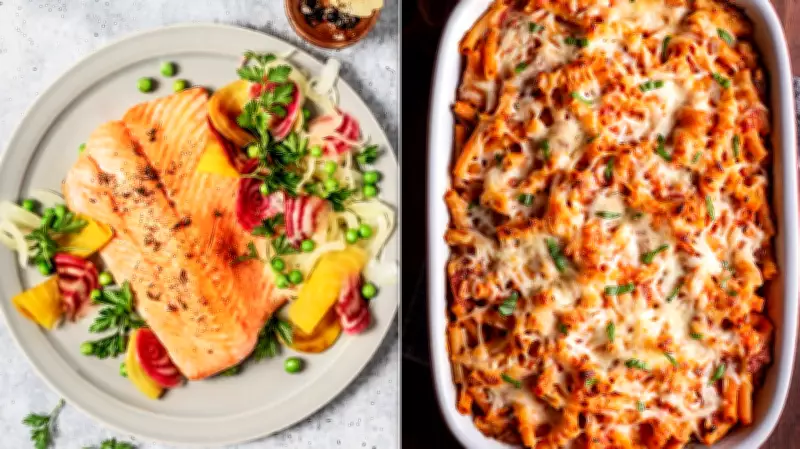
Lindsay Taylor, creator of the @the.food.doula Instagram account and author of The Nourished Mother, recently adopted a similar method with her own family. She assigns different proteins to each day—one night for salmon, another for chicken, another for steak—and has found this dramatically reduces meal planning stress and time commitment.
"In my own busy family with kids, and in the work I do creating recipes for postpartum and early motherhood, I've found that a big part of the overwhelm around meal prep and cooking is how mentally draining it can be," Taylor told HuffPost. "There are so many micro decisions involved! It goes beyond the emotional and mental capacity many of us have to dedicate to dinner."
Taylor doesn't even need to plan complete meals in advance. She prepares proteins during spare moments—air frying salmon bites or marinating chicken thighs—and lets remaining components come together based on available ingredients and energy levels. She also incorporates intentional themes, like designating Thursdays as "plant protein night" to ensure regular consumption of lentils and beans.
Nutritional Benefits and Practical Implementation
Registered dietitian Maya Feller of Maya Feller Nutrition confirms that structured dinner approaches can significantly benefit individuals and families who prefer having plans in place while reducing decision fatigue.

"This technique gives you flexibility within the routine based on personal preferences, as well as what foods are accessible," said Feller, author of Eating from Our Roots. "It allows the home cook to have variety within the category. For example, pizza could be make-your-own or frozen. And pasta could include any vegetable or protein."
Feller recommends selecting categories that are both realistic and appealing to household members. "For example, in my home, we really like stir fry so perhaps we would choose that as one of our themes," she suggested. "I love soup, but it's not a favorite among everyone, so I would not choose a soup night. In order to be successful, the themes need to be foods that you actually enjoy."
Customization and Permission for Simplicity
Palanjian emphasizes that this dinner framework is entirely customizable and welcomes shortcuts. "You can do breakfast for dinner, sandwiches, cereal, takeout, snack night," she noted. "Doing this doesn't mean you need to make everything from scratch. The purpose is to give your brain a break, not make more work for yourself."
Both experts encourage removing pressure to constantly create novel dishes. "The truth is, repetition is perfectly normal and nourishing," Taylor affirmed. "If Monday is curry night, for instance, and you have one go-to curry, that's OK! You can make small changes: have it on quinoa or a bed of cabbage instead of rice one week, try the same recipe with a different protein, all while keeping the time and energy expense feeling manageable."
This structured yet flexible approach to meal planning offers busy families a practical solution to dinner decision fatigue while creating predictable routines children appreciate and maintaining enough variety to prevent culinary boredom.