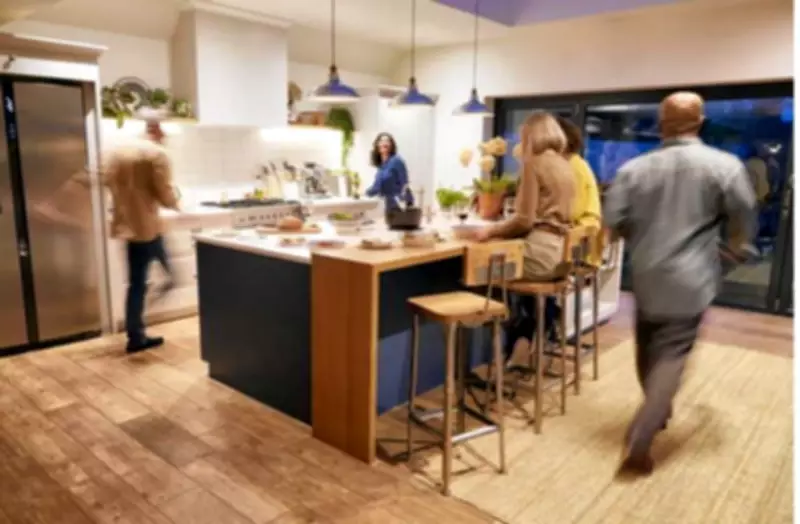
Kitchen Triangle vs. Zones: Modern Design Challenges Traditional Layout
For decades, kitchen designers have relied on the "kitchen triangle" as a fundamental principle for creating efficient, functional spaces. This concept arranges the three primary workstations—the oven, sink, and refrigerator—so that imaginary lines connecting them form a triangle, minimizing movement and streamlining meal preparation.
"The kitchen triangle is almost like breathing," explains Rebekah Zaveloff, co-founder of Imparfait Design Studio, in an interview with House Beautiful. "The concept is based on avoiding hard turns—ideally, you take one step and pivot rather than walking multiple steps. Fewer steps equals less time, which equals more efficiency."
The Rise of Kitchen Zones
However, a new approach is gaining traction among designers and homeowners alike: the concept of kitchen zones. This modern layout divides the kitchen into dedicated areas for specific tasks, such as food preparation, cooking, cleaning, and leisure activities. Unlike the rigid triangle, zones offer flexibility and adaptability to contemporary lifestyles.

"The kitchen work triangle is a consideration, but definitely just the starting point for us," says designer Sarah Robertson of Studio Dearborn. "Beyond the work triangle, we consider who is using the kitchen, cooking style, traffic patterns, the household makeup, their ages and abilities, entertaining styles, natural light, access to the outdoors … and then we also want to consider how all of that may change over time!"
Personalized Functionality
Kitchen zones are tailored to individual needs, incorporating areas like coffee stations, baking corners, drink bars, and even homework or work-from-home spaces. Ramsin Khachi, owner of Khachi Design Group, outlines the typical zones in an article for Canadian Home Trends magazine:
- Storage for non-consumables
- Storage for consumables
- Food preparation zone
- Cooking zone
- Cleaning zone
He emphasizes that secondary personalized areas are crucial, such as a work zone or a space for friends to join in the cooking experience. "The goal is to strategically set up the zones so that each member of a household can move easily throughout the space and enjoy their daily tasks and rituals," Khachi notes.
Balancing Aesthetics and Practicality
While the kitchen triangle focuses on efficiency through geometric simplicity, zone-based designs prioritize a holistic approach that integrates functionality with aesthetics. Khachi adds, "I often say—'A pretty kitchen is much like a pretty girlfriend or boyfriend. The looks are not enough if what’s inside is bad.' Any good design involves a great deal of planning for function as well as esthetics."
As modern living evolves, with open-concept layouts and multifunctional spaces becoming the norm, the kitchen triangle is no longer the sole standard. Designers are increasingly blending traditional principles with innovative zone concepts to create kitchens that are not only efficient but also personalized and adaptable to changing needs.
Ultimately, whether through triangles or zones, the heart of the home remains a place where design must serve both practical demands and the joy of gathering, proving that functionality and beauty can coexist in today's kitchens.