Area Rugs: The Unsung Heroes of Interior Design and Practical Home Solutions
Area rugs are the unsung heroes of a well-designed space. While they undoubtedly enhance aesthetics, their true value lies in the practical problems they solve. From cold toes to echoey rooms, scuffed floors to drifting furniture, a strategically placed area rug can correct these issues with one confident move.
Practical Benefits Beyond Beauty
In open-plan living areas, furniture can often appear visually afloat. Area carpets provide essential anchor points, drawing boundaries that define specific zones rather than leaving pieces looking disconnected. They transform collections of furniture into cohesive, intentional spaces.
Hard surfaces like wood or tile floors bounce sound, creating hollow, echoey environments. Rugs serve as aural softeners, absorbing noise and making rooms feel more intimate and comfortable. This is particularly valuable in multi-level dwellings where sound travels easily between floors.

Rugs add both literal and visual warmth to interiors. They provide insulation against cold floors while softening rooms dominated by straight lines and rectilinear furnishings. Texture becomes the antidote to sterile, show-home aesthetics that can feel devoid of soul and personality.
Protection and Flexibility
Area carpets guard floors in high-traffic pathways and protect against damage from chair legs, dropped items, and accidental spills. Essentially, they take the hit so your flooring doesn't have to, extending the life and appearance of your investment.
Perhaps most appealingly, rugs represent an easy design reset. Unlike paint (which requires commitment) or furniture (which represents significant investment), a rug offers substantial visual impact that can be conveniently swapped with changing seasons, evolving moods, or shifting trends.
Material Considerations
Wool stands as the all-round champion—warm, resilient, and excellent at hiding wear. Cotton options are lighter and often washable, making them ideal for kitchens, children's spaces, and cottage living.
Jute and sisal offer wonderful texture but can be hard on bare feet and challenging to clean after spills. Synthetic materials frequently feature stain-resistant properties, while silk or viscose variants, though beautiful, demand ongoing maintenance and careful handling.
Construction Types
- Flatweaves like kilims and dhurries are thin, easy to clean, and perfect under dining chairs or around doors requiring clearance.
- Low pile rugs represent the practical sweet spot, facilitating easy vacuuming and shake-outs.
- High pile or shag rugs provide exceptional coziness, ideal for bedrooms and snug seating areas, though less suitable for high foot traffic zones.
- Tufted rugs offer softness but may not endure as well, with pile prone to dipping and uneven wear over time.
Proper Sizing Guidelines
The most common rug mistake involves selecting something too small. A rug should connect furniture rather than sitting isolated like a postage stamp in the middle of a room.
In living rooms, sofa and chair front legs should ideally sit on the rug, with all legs on softer ground being the optimal arrangement. Typical successful sizes include 8×10 feet, while 9×12 foot options work well in larger spaces.
For dining rooms, choose flatweave or low pile rugs for easy cleaning, ensuring they extend beyond table legs so chairs remain on the rug when pulled out. Approximately 24–30 inches of extension on all sides represents a good rule of thumb.
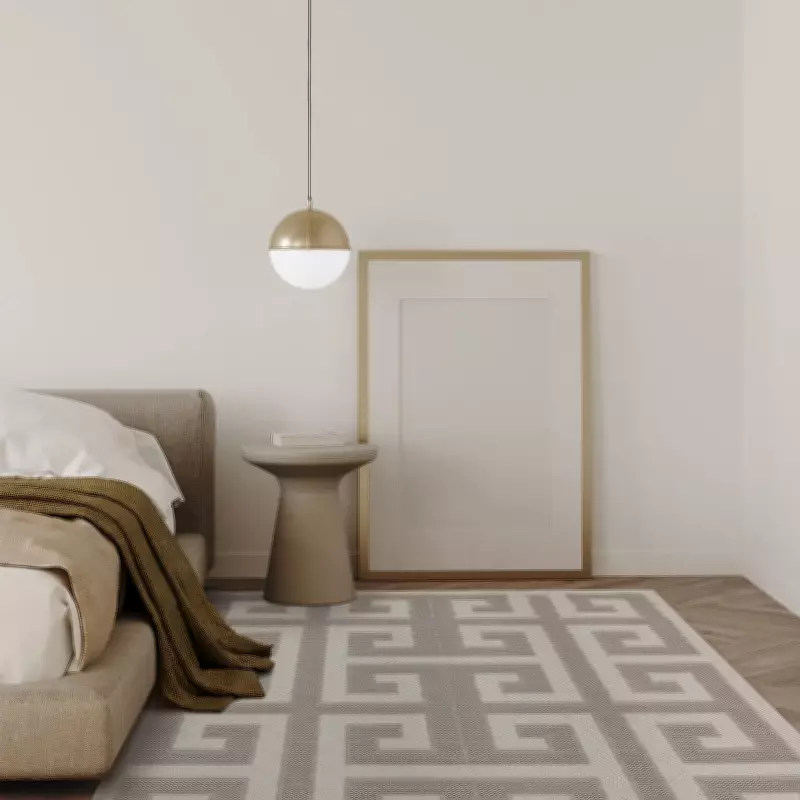
In bedrooms, appropriately scaled rugs (typically 8×10 feet under queen beds and 9×12 feet under king beds) should extend sufficiently so feet land on soft terrain upon exiting the bed. When possible, even larger dimensions enhance comfort, which reigns supreme in sleeping spaces.
Color and Pattern Strategies
Paler rugs visually open spaces but show wear more readily. Dark rugs effectively hide stains but highlight lint and pet hair. Mid-toned choices—oatmeal, greige, taupe, and muted green—prove most forgiving of everyday life.

Pattern serves as a valuable ally, camouflaging footprints, crumbs, and general household chaos. Geometric designs read crisp and modern, while stripes can subtly lengthen or widen perceived space dimensions.
Always use a rug pad to protect floors and prevent slipping. Affordable options are readily available at retailers like IKEA.
Canadian Sources for Quality Rugs
Several Canadian retailers offer excellent rug selections:
- EQ3 and Gus Modern provide contemporary, well-proportioned designs
- Area Rug Shop covers wide style and price point ranges
- Simons delivers trend-driven updates
- Ruggable and Korhani offer dependable, affordable selections
In summation, area carpets function as project "fixers" that make furniture appear anchored rather than randomly parked. When thoughtfully selected and properly placed, they bring everything together, creating cohesive, comfortable, and practical living environments.